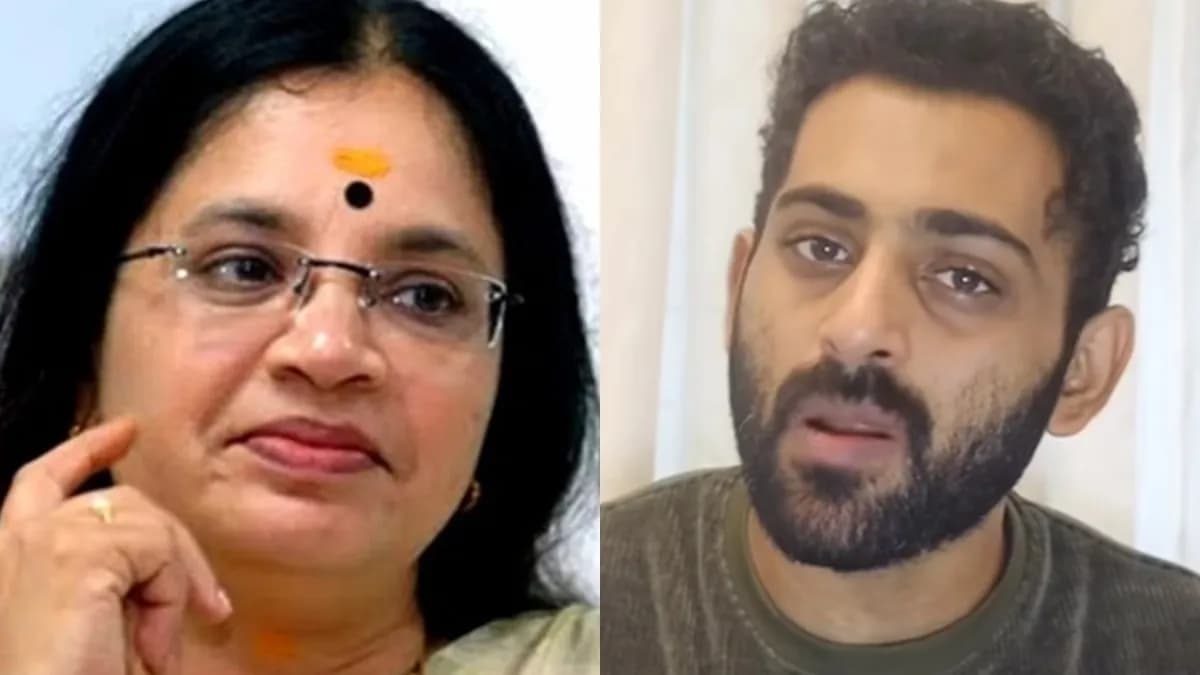
Bhagyalakshmi, the veteran Malayalam television host and anchor, has said she intends to pursue legal action against a YouTube content creator over videos she says crossed a line by dragging her children into public commentary. In a sharply worded statement that has since travelled quickly across social media, the anchor questioned the authority of online commentators to discuss or touch upon her family, framing the matter as a boundary that no outsider has the right to breach.
The statement, whose title translates roughly to "Do not touch my children, what right do you have?", makes clear that Bhagyalakshmi's objection is not to criticism of her own work but to the involvement of her children in content she considers intrusive. She is described as preparing to move legally against the YouTuber concerned, marking an escalation from a verbal warning to a formal complaint. No specifics of the proposed case, including the forum or the relief sought, have been confirmed.
The remarks land in an already charged debate in Kerala about the conduct of online commentators, particularly those who build audiences by dissecting the lives of television and cinema personalities. Bhagyalakshmi, a familiar face in Malayalam households through her long career as an anchor and presenter, is among the public figures most frequently discussed on such channels, and she has previously spoken about the personal toll of unregulated commentary.
A line drawn around family
The core of her intervention is the distinction between a public figure and a public figure's household. By naming her children directly in her statement, Bhagyalakshmi signals that she accepts scrutiny of her professional life while rejecting any suggestion that her role on screen makes her family fair game. That position has resonated with several colleagues in the Malayalam television industry, where anchors and actors have increasingly found their relatives pulled into online commentary they never consented to.
Her use of a question rather than a threat in the title is telling. The phrasing challenges the presumption behind much of this content, namely that visibility in one sphere grants strangers licence in another. It also puts the onus on creators to justify their choices rather than on their subjects to absorb them.
Why this case matters beyond one anchor
Kerala's YouTube commentary ecosystem is vast, competitive and largely unregulated. Channels that review television shows or discuss celebrity news often stray into personal territory in pursuit of engagement, and the people on the receiving end have few quick remedies. Legal routes exist, but they are slow, costly and rarely pursued by those who depend on public goodwill for their livelihoods. When a figure of Bhagyalakshmi's standing announces she will use them, it draws attention to how thin the protections currently are.
The announcement also raises practical questions about how such a complaint would be framed. Content that discusses a public figure's children may be seen as objectionable without necessarily meeting the threshold for defamation, and any action would likely turn on the specific claims made in the videos. That legal complexity has not dampened discussion of the case online, where supporters have read her statement as a long-overdue assertion of limits.
The wider scrutiny of online commentary
This is not the first time Malayalam entertainment figures have pushed back against what they describe as harassment dressed up as commentary. Actors and presenters have periodically called out channels for spreading unverified claims, and a handful have taken disputes to the police. Those episodes have generally faded without producing lasting standards, in part because the audience for such content remains enormous and the appetite for regulation among platforms is limited.
What distinguishes Bhagyalakshmi's intervention is its narrowness. She is not calling for a boycott or a blanket condemnation of YouTube commentary as a genre; she is asserting a single, specific boundary about her family. That focus may make it harder to dismiss as an emotional outburst and easier to treat as a test case for where public life ends and private life begins.
What happens next
Whether the threatened legal action materialises, and in what form, remains to be seen. For now, the anchor has made her position unambiguous: her children are off limits, and she is prepared to let a court, rather than a comment section, decide the question. In an industry where reputations are increasingly shaped by voices outside it, that decision carries weight well beyond her own household.
Source: Filmibeat Malayalam