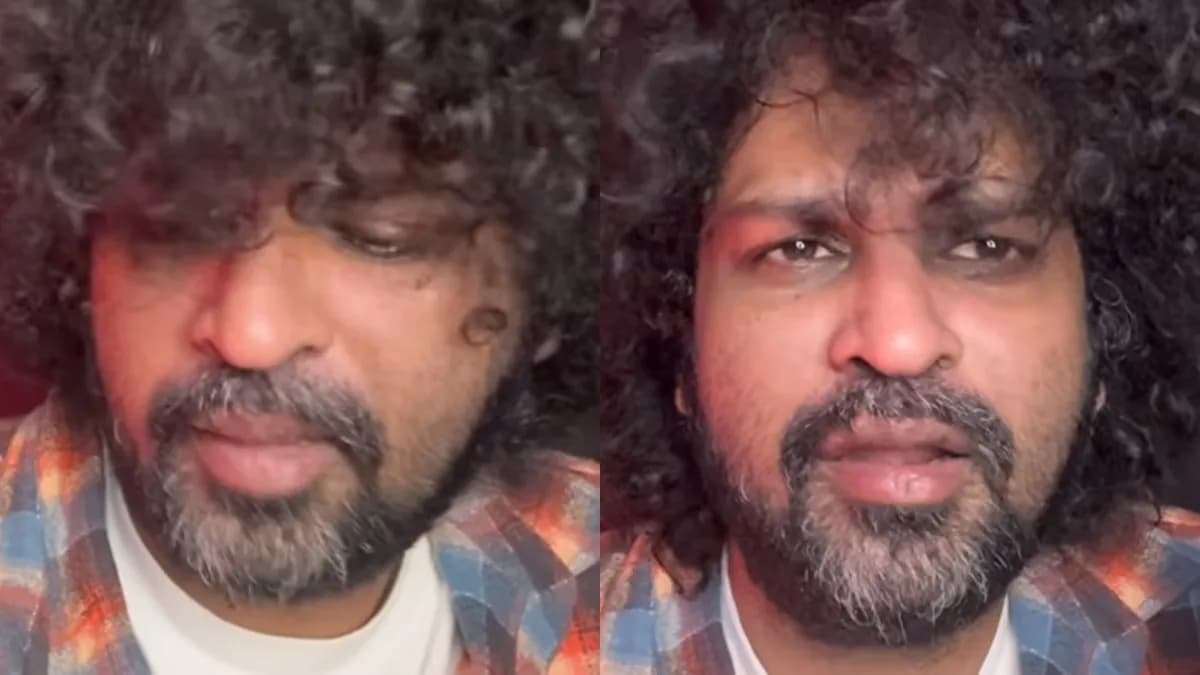
A simmering public feud in Malayalam cinema has intensified after the actor Ashwanth launched a fierce and, by his own account, unfiltered attack on the industry establishment, warning that the very people who run the business seem to want artists to destroy themselves. In remarks that have circulated widely and stirred heated debate among film workers and fans, he accused industry insiders of wanting practitioners to "perish like this," claiming that those in positions of influence take a certain satisfaction in watching talent unravel rather than helping it thrive. The comments, delivered in an emotional and increasingly tangled register, have been read as the latest chapter in a long-running dispute over working conditions, representation and the treatment of artists within the Malayalam film industry.
The actor's remarks, as they spread online, were marked by a tone of anger and exhaustion. At one point he suggested that filmmakers and the gatekeepers around them appear to wish for people like him to collapse - that the industry's appetite is for self-destruction rather than self-improvement. He also acknowledged that his own words were jumbled and that he spoke without full composure, a moment of candour that has divided opinion. Supporters describe it as the raw frustration of a performer who has spent years navigating an unforgiving system; critics, including some within the industry, argue that the outburst was intemperate and does little to advance the causes he claims to champion.
For readers unfamiliar with the dispute, Ashwanth's latest salvo follows a pattern of increasingly public commentary from him about the power structures within Malayalam cinema. He has consistently maintained that the industry's decision-making is concentrated in a small circle and that those outside it are left to fight for scraps of opportunity and dignity. The current controversy centres on his assertion that the establishment not only tolerates but quietly encourages the decline of working artists - a charge that, if taken at face value, amounts to a damning indictment of how the business treats its own.
The remarks have landed at a delicate moment for the Malayalam film industry, which in recent years has been grappling openly with questions of workplace safety, pay disparities and the concentration of influence among a handful of production houses and senior figures. Debates over the formation and functioning of industry bodies, the accountability of producers and the protections available to artists have moved from private WhatsApp groups and greenroom conversations onto public platforms. Ashwanth's intervention, blunt and unfiltered as it is, compresses those debates into a single, uncomfortable accusation: that the ecosystem prefers broken artists to emboldened ones.
Reaction from within the industry has been predictably split. Several younger artists and technicians have privately echoed his frustration, even while stopping short of endorsing his language. Some have argued that his willingness to speak out - however chaotically - exposes a real problem that polite commentary has failed to shift. Others, particularly those aligned with established production interests, have dismissed the remarks as a distraction, suggesting that grievances should be raised through formal channels rather than aired in public. Neither side has issued a formal statement, and no industry body has responded directly to the substance of his charges.
What gives this episode its edge is the way it captures a broader mood. Malayalam cinema has produced some of the most acclaimed work in Indian film in recent years, but its commercial landscape remains precarious for all but its biggest names. Artists and technicians frequently describe a system in which access depends on networks and favour, where outspokenness carries professional risk, and where the line between mentorship and control is thin. Ashwanth's claim that the industry wants its people to "perish" is rhetorical, but it lands because it articulates a fear many in the business quietly share: that the people who hold power have little incentive to change the terms on which everyone else works.
There is also a personal dimension that observers have been quick to note. The actor's admission that his tongue got tangled and that he spoke without full awareness has been seized on by critics as evidence that the outburst should not be taken seriously. But his defenders counter that the substance matters more than the delivery, and that dwelling on his state of mind risks obscuring the genuine complaints beneath the noise. Either way, the clip has done what formal complaints often fail to do: it has put the question of how the Malayalam film industry treats its own squarely back in the public conversation.
For now, the story remains in the realm of claim and counter-claim. No formal complaint has been filed in the wake of his remarks, and there is no indication yet of any institutional response. What is clear is that Ashwanth has once again positioned himself as an uncomfortable voice within a closely knit industry, one whose attacks are difficult to dismiss entirely even when they are hard to parse. Whether his words lead to any concrete reckoning, or become another passing controversy, will depend on whether others in Malayalam cinema are willing to pick up the argument he has started - and whether the industry's gatekeepers choose to answer his charge or ignore it.
Source: Filmibeat Malayalam