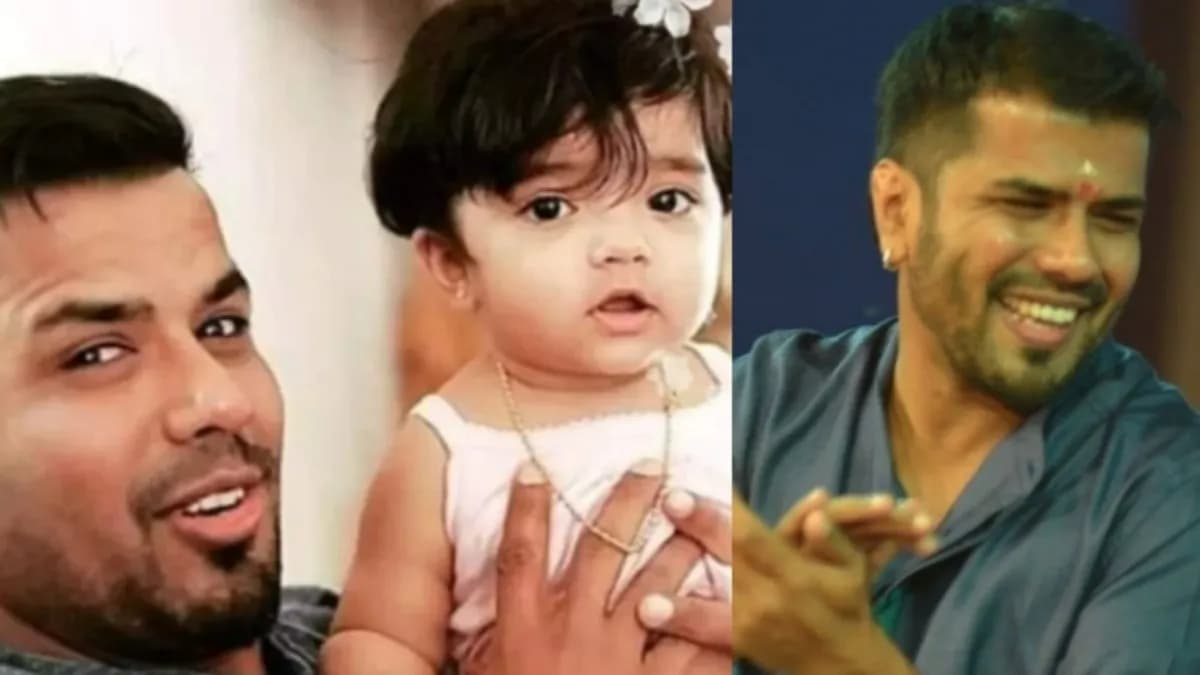
A grieving note circulating on social media has reignited one of Malayalam music's most painful losses, arguing that the drummer who died alongside Kalabhavan Mani's troupe in 2016 was not the man the headlines mourned - and that the artist at the centre of that tragedy has no one left to testify on his behalf. The post, which has travelled widely across Facebook and WhatsApp in recent days, makes the case that the performer who died before his time was not Balabhaskar alone, and that a quieter casualty of the same episode has slipped out of public memory.
The note does not name a single villain or make a formal accusation. Instead it lingers on absence - the absence of witnesses, the absence of a fair hearing, the absence of anyone willing to speak for a man who, in the writer's telling, was caught in a snare not of his own making. That framing has been enough to send the post viral, drawing comment from music lovers, former bandmates and casual listeners who remember the period around the accident as a blur of rumour and half-truth.
For those who came to Malayalam film music in the 2000s, the violinist at the centre of the tragedy was a familiar presence - a child prodigy turned stage performer whose fusion sets and film work made him a fixture at concerts across Kerala and beyond. His death, days after a road accident near Thiruvananthapuram, was reported at the time as the loss of a singular talent. The viral note does not dispute that. Its quarrel is with what it calls the incomplete record - the sense that the story was closed before it was fully told.
A death that refused to stay simple
The accident itself was never a straightforward news item. It arrived with a second fatality, a surviving passenger, and a swirl of questions about what had happened on the road that night. Over the years, those questions hardened into theories, and theories hardened into camps. The note now in circulation does not add fresh evidence. It restates an older grievance: that in the rush to memorialise one artist, another was reduced to a footnote.
That second artist, according to the post, was a working musician - a collaborator whose role in the tragedy was never examined with the same care. The note's most quoted line translates roughly to the idea that the one who truly died before his time was not the famous name everyone invokes, but the man standing beside him. It is a rhetorical flourish, not a factual claim, but it has landed hard with readers who feel the same way about how the episode was covered.
Malayalam cinema and its music world have a long habit of mourning loudly and investigating quietly. When a beloved figure dies young, the industry's response is immediate and emotional; the follow-through is slower. The viral note taps directly into that asymmetry. It asks, in effect, who speaks for the session player, the accompanist, the man whose name appears in the credits but not in the obituaries.
Why the note is spreading now
There is no obvious trigger for the post's resurgence. No anniversary, no new development, no court date. That is often how these things work in Kerala's online spaces - an old wound reopens because someone finally puts the right words to it. The note's language is plain and accusatory in tone but vague in detail, which makes it easy to share and hard to fact-check. Several pages have reposted it with their own captions, widening its reach without adding context.
What the post does not do is name a suspect, allege a crime, or present documents. It speaks instead of a "betrayal" suffered by an artist and of a silence that has settled around him. That abstraction is precisely what gives it staying power. Readers fill in the blanks themselves, and the blanks are where the argument lives.
For the families involved, the renewed attention is unlikely to feel like justice. Both deaths left behind people who have spent years asking their own questions, and neither the police case nor the public conversation has delivered the kind of closure that satisfies everyone. The note does not pretend to solve that. It simply refuses to let one name stand in for two.
A reminder that memory is selective
The deeper point, and the reason the post has outlived the usual news cycle, is about how the Malayalam film and music industry chooses its martyrs. Talent is celebrated; circumstance is ignored. A famous violinist becomes a legend, while the drummer who shared his last journey becomes a line in a police report. The viral note does not demand a retrial. It demands a reckoning with that imbalance - and, more modestly, a moment of acknowledgment for a man who, in its words, has no witness left to speak for him.
Whether that acknowledgement arrives is another matter. Social media has a short memory of its own, and viral grief rarely translates into institutional action. But for now, the note is doing what it set out to do: forcing readers to pause at a name they had stopped thinking about, and to wonder, briefly, whether the story they were told was the whole story.
Source: Filmibeat Malayalam