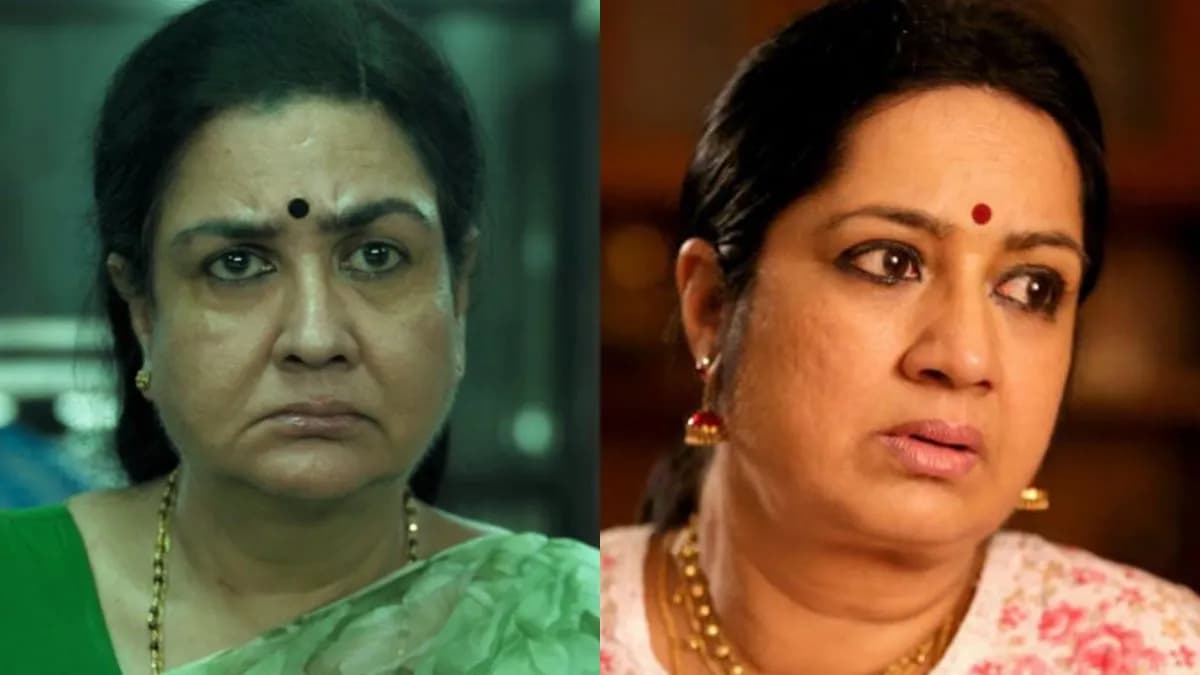
Veteran Malayalam actor Urvashi has spoken candidly about a pair of scenes she believes carried a weight only one performer could truly bear, naming the late Kalpana as the artist she still cannot imagine anyone else replacing. In remarks that have resonated across the industry, Urvashi said the sequences in question demanded a presence so singular that no other actor, herself included, could have done them justice. Her tribute carries a double edge: admiration for Kalpana's craft and a frank acknowledgment that the loss remains unfilled.
Urvashi's point is not that the scenes were technically difficult. It is that they required a particular emotional register, a blend of comedy and ache, that Kalpana had made her own. In Urvashi's assessment, stepping into those moments meant stepping into a performer's entire being, and that, she suggested, was never a matter of mere substitution. The observation has struck a chord among those who followed Kalpana's career, because it frames the loss in artistic rather than sentimental terms.
Kalpana, who died in 2016, built a reputation across more than three decades in Malayalam cinema as an actor who could detonate a scene with timing and then turn it tender without warning. She was equally at home in broad comedy, character work and the kind of sharp-edged supporting roles that quietly hold a film together. Directors cast her knowing she would find the pulse of a scene, often adding a layer the script had only hinted at. Within the Malayalam film industry, she is remembered not simply as a comic talent but as a performer whose range was frequently underestimated because she made difficult work look effortless.
A craft built on instinct, not imitation
What Urvashi's comment exposes is the awkward truth about how the industry remembers its comedians. Kalpana was often discussed through the lens of humour, yet her finest work drew on a well of lived experience and emotional precision. Urvashi, herself one of Malayalam cinema's most gifted actors, is well placed to make that distinction. Both women came up in an era when female performers were expected to slot into narrow templates, and both refused. Kalpana's ability to shift a scene's temperature in a single beat is the quality that makes her, in Urvashi's view, irreplaceable in the roles she inhabited.
That framing also explains why Urvashi's tribute has spread so quickly. It is one actor publicly conceding that another actor owned something she could not borrow. In an industry where ego is often quietly guarded, the honesty is notable. Urvashi's remark is not a throwaway compliment, it is a statement about the limits of performance, and about how few artists leave behind a space that no one else can occupy.
Malayalam cinema and the irreplaceable performer
The wider conversation Urvashi's words have triggered is about legacy. Malayalam cinema has produced a remarkable number of actors whose absence is felt less as nostalgia and more as a structural gap. Kalpana fits that description. Her films continue to circulate, her scenes continue to be quoted, and younger performers continue to study how she found humour inside heartbreak. But the roles she might have taken in the years since her death remain, in Urvashi's phrasing, unclaimed.
There is no film matched to this headline, no project to promote, no release to anticipate. What remains is a memory and an argument: that some performers are not replaced, only missed. Urvashi's tribute stands as one of the more clear-eyed assessments of that idea to emerge from the Malayalam film fraternity in recent years. It honours Kalpana without turning her into an abstraction, and it admits, plainly, that certain scenes belong to certain people.
For audiences who grew up watching both actors, the sentiment lands with particular force. Urvashi and Kalpana shared a screen era, a comic language and a willingness to be unglamorous in service of a scene. To hear one name the other as the only possible choice is to hear a colleague's respect rather than a eulogy. It is, in the end, a working actor's judgment about another working actor's craft; and the loss it describes is the kind that no casting decision can undo.
Source: Filmibeat Malayalam