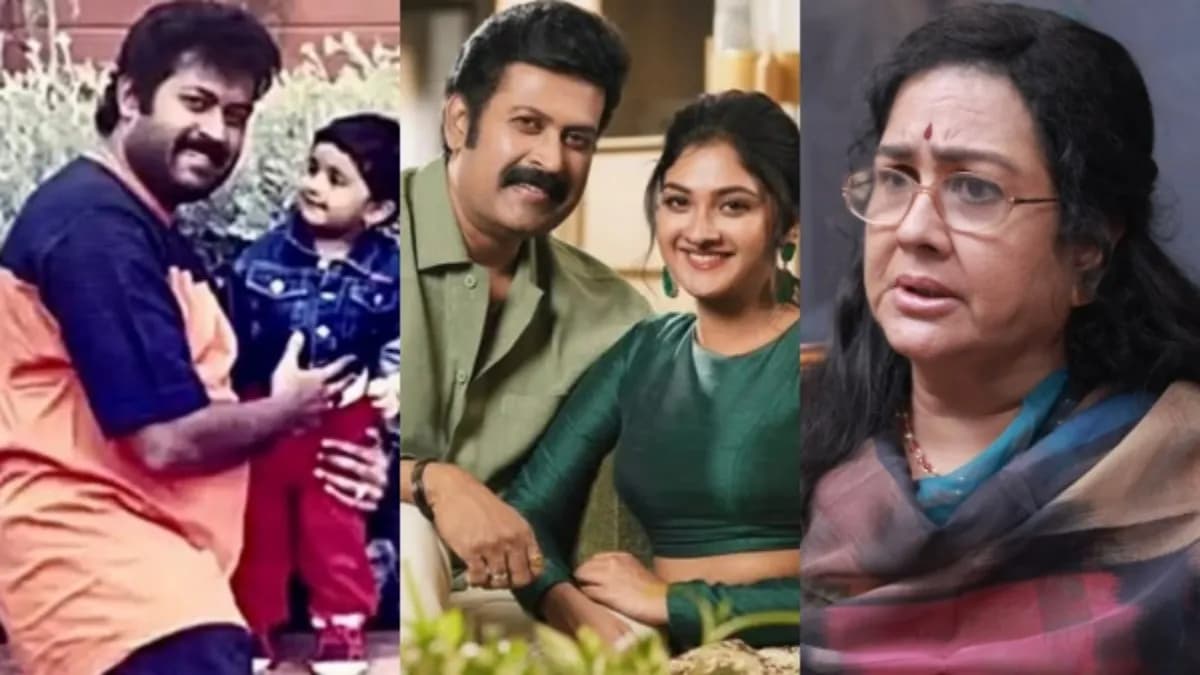
Veteran Malayalam actress Urvashi has offered a candid reflection on her own conduct around younger co-stars, framing it as a deliberate choice to help newcomers rather than an exercise of authority. In remarks that have circulated widely among Malayalam cinema followers, the actor described her tendency to tease and test young performers as a kind of intentional mischief, and insisted that nothing she did escaped the notice of those closest to her. The comments arrive at a moment when conversations about power, hierarchy and mentorship on South Indian film sets have become unusually frank.
Urvashi, one of the most recognisable character actors in Malayalam cinema with a career spanning more than four decades, made the remarks while discussing the way senior artists interact with newcomers. According to her, the playful provocations she directed at junior colleagues were never hidden from view, and she pointed out that everyone had already seen what she was up to. She also tied the behaviour to a kind of protective instinct she has long associated with her screen persona, suggesting that the young women she worked with understood her intentions better than outsiders might assume.
The actress was speaking about her habit of what she called showing off as part of possessiveness, a phrase that captures the mixture of affection and control that has defined several of her popular roles. In her telling, the impulse to meddle, tease and occasionally dominate younger actors on set came from the same place as her fondness for them. She stressed that the younger generation of performers knew exactly what she was doing and why, a point she returned to more than once during the interview.
Her words carry added weight because of how closely the public associates her with sharp-tongued, possessive women on screen. Urvashi has built a reputation for characters who are warm and cutting in equal measure, and audiences have long delighted in the way she can turn a single line into a small act of aggression. That persona has made her a fixture in family dramas and comedies alike, and it has also made her a natural interview subject whenever the industry debates how seniority should be exercised.
A Career Built on Confrontation and Comedy
Urvashi entered Malayalam cinema as a teenager and quickly established herself as an actor capable of carrying both comic and dramatic material. Over the years she has worked across generations of talent, appearing alongside the biggest stars of the eighties and nineties as well as with actors who are only now building their careers. That range gives her a vantage point few of her contemporaries can claim, and it explains why her comments about mentoring younger performers have drawn attention beyond the usual fan circles.
She has also been unusually willing to speak about the emotional cost of a long career. In previous interviews she has touched on the demands of sustaining a public life, the difficulty of ageing in an industry obsessed with youth, and the way female performers are scrutinised differently from their male counterparts. The latest remarks fit that pattern: they are less a defence of bad behaviour than an acknowledgment that she has never pretended to be easy to work with.
What makes her comments notable is the refusal to apologise. Urvashi does not suggest that she has changed her ways or that she regrets the way she treated junior colleagues. Instead she presents her behaviour as transparent, already witnessed, and understood by the people it affected. Whether audiences accept that framing is another matter, but it is consistent with a performer who has never courted universal approval.
Why the Comments Are Landing Now
The wider Malayalam film industry is in the middle of a prolonged reckoning with questions of workplace conduct, gender and accountability. Conversations that once stayed inside green rooms now play out in public, and senior artists are increasingly asked to explain how they treated those with less power. Urvashi's remarks sit awkwardly within that conversation, because they describe behaviour that could be read either as affectionate mentorship or as the exercise of seniority over newcomers.
Neither reading can be settled by a single interview, and Urvashi herself does not attempt to settle it. She simply states what she did, notes that it was visible to everyone, and leaves the judgement to others. For a performer whose career has been defined by characters who say exactly what they think, that may be the most in-character response possible.
Source: Filmibeat Malayalam