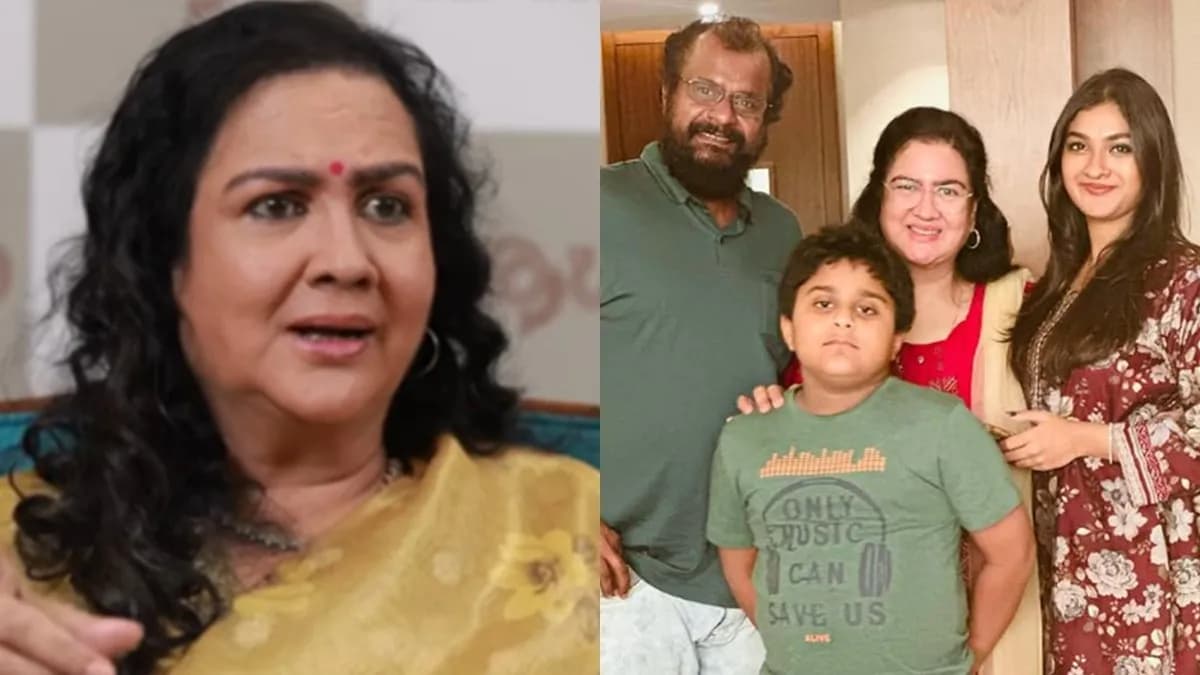
Veteran Malayalam actress Urvashi has offered a measured, deliberately unglamorous portrait of a man she knows well, pushing back against the tendency to place public figures on a pedestal. In remarks that have circulated widely over the past day, she described him as an ordinary human being and made clear she would not call him a Buddha, saying he does not possess the capacity to think in that way. The statement, translated from Malayalam, amounts to a quiet refusal of sainthood - a reminder that the person at the centre of the discussion remains, in her words, plain flesh and blood.
The phrasing carries weight precisely because of who is speaking. Urvashi has spent decades in Malayalam cinema as one of its most instinctively natural performers, a woman whose comic timing and emotional register have made her a fixture across generations of films. When she chooses to describe someone as an everyday man rather than an enlightened figure, the comment lands less as criticism than as a corrective - an insistence on seeing a human being whole, flaws included, rather than as an idea.
A Rejection of Elevation
Her remark about the capacity to think in a particular way is the sharpest part of the statement. By saying he lacks that ability, she is not belittling him. She is declining a frame that others have tried to impose. The comparison to the Buddha, invoked and then explicitly refused, is the language of reverence - and reverence, she suggests, is the wrong tool here. A Buddha is a category unto himself, beyond ordinary reasoning. A man is not. The distinction she draws is between myth-making and honesty.
This is a familiar tension in Malayalam film culture, where adulation can arrive quickly and calcify into something untouchable. Fans build shrines in the form of banners and cutouts; the industry sometimes follows suit, treating successful figures as beyond critique. Urvashi's intervention runs against that current. She is speaking as a colleague and, implicitly, as someone who has watched the gap between a screen persona and a private life at close range for years.
Why the Words Matter
The phrase about a plain human being does double duty. It is descriptive, but it is also protective. To call someone ordinary is to grant them the right to be ordinary - to fail, to be inconsistent, to think within human limits rather than transcendent ones. In an era when public figures are routinely flattened into symbols, that is a substantive position rather than a throwaway line.
Malayalam cinema has long prized realism over spectacle, and its performers have often been unusually willing to speak plainly about the people they work with. Urvashi's comments fit that tradition. They also carry the authority of lived experience: this is not an outsider's opinion but a peer's assessment, delivered without theatrics.
For audiences, the takeaway is less about any single individual than about a habit of mind. Elevation feels like a compliment, but it can also be a cage. Once someone is declared enlightened, their ordinary reasoning no longer counts, and every human misstep becomes a scandal rather than a fact of life. Urvashi, by contrast, is asking for the plainer reading.
Whether her words change how anyone is perceived remains to be seen. What is clear is that she has chosen candour over comfort, and in doing so has reopened a conversation the industry tends to avoid: how much reverence is too much, and what gets lost when a man is mistaken for a Buddha.
The statement has been picked up across Malayalam entertainment circles, where such remarks tend to travel fast. Urvashi has not elaborated further, and there is no indication she intends to. The comment stands on its own - brief, blunt, and deliberately deflationary.
Source: Filmibeat Malayalam