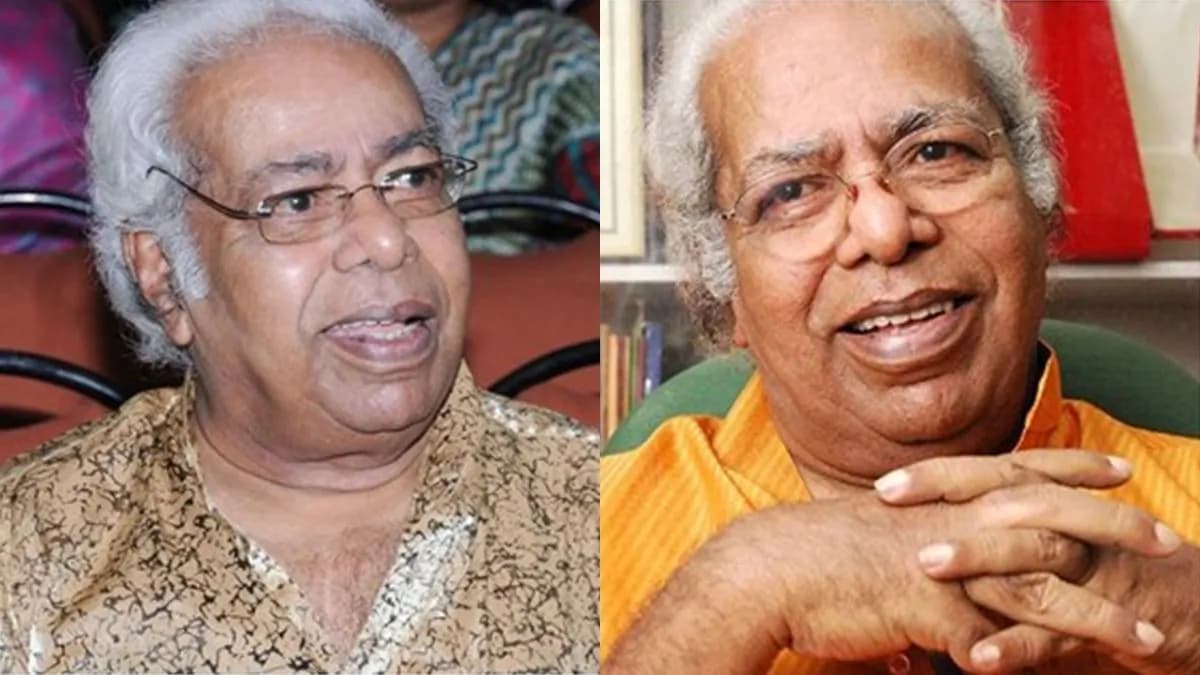
Veteran Malayalam actor Thilakan, who died in 2012, left behind a body of work that critics still dissect and a set of public remarks that refuse to fade. Among the most replayed of those remarks is a televised interview in which he discussed the collapse of his first marriage, his second marriage, and his strained ties with the film industry. The clip resurfaces online every few months, usually stripped of context and paired with dramatic music, which is precisely why a closer look at what he actually said is worth the time.
In the interview, Thilakan stated plainly that he ended his first marriage by his own decision. He put it, in Malayalam, to the effect that he told his first wife to leave and that he sent her away himself. He did not dress the admission up as a mutual parting or a matter of circumstance. He also said, referring to his second marriage, that there was no major company or industry backing behind that relationship - meaning he received no institutional or professional patronage through it. The phrasing matters in a state where film careers have long been tied to camps, families and factions, and where an actor's personal life is frequently read as a political statement.
Thilakan was not a man given to hedging. By the time he gave that interview, he had spent decades building a reputation as one of Malayalam cinema's finest character actors, known for roles in films such as "Kireedam," "Perunthachan," "Kauravar" and "Ustad Hotel." He was equally known for his willingness to say uncomfortable things on camera, particularly about the Association of Malayalam Movie Artists, or AMMA, and about the power structures he believed had sidelined him in the later part of his career.
That context is what makes the marriage remarks land differently. Thilakan was not merely confessing a private failure. He was making a point about self-determination - the same theme that ran through his public fights with industry bodies. He chose to leave his first marriage, and he chose his second, and he insisted that neither decision came with a sponsor. Whether one admires that framing or finds it cold, it is consistent with the man.
There is also the matter of how audiences receive such statements now. In 2026, Malayalam cinema is in the middle of a sustained public conversation about gender, marriage and the treatment of women, both on screen and inside production houses. An old clip of a celebrated actor saying he dismissed his first wife sits awkwardly against that conversation. The interview is therefore cited not only by fans nostalgic for Thilakan's candour but also by commentators using it as evidence of how casually marital breakdown was discussed by men of his generation.
Both readings have some basis. Thilakan spoke without apology, and he did not frame his first wife as a participant in the decision. He also spoke without the performative remorse that often accompanies celebrity interviews, which some viewers found honest and others found revealing.
What the clip does not contain is any specific detail about the women involved. Thilakan did not name his first wife, describe the reasons for the separation, or give dates. His second marriage, to Santha, lasted until his death and produced his children, including actors Shammi Thilakan and Shobi Thilakan. The interview reference to "no big company" appears to have been about the absence of film-world backing at the time of that marriage, not about business interests.
For younger viewers encountering the clip for the first time, the useful takeaway is that Thilakan's off-screen persona was not a performance. The same stubborn independence that produced his best performances - the wounded father in "Kireedam," the imperious patriarch in "Perunthachan" - produced statements that many people today find difficult to hear. He was not asking to be liked.
Malayalam Movie Buzz does not endorse or condemn the views expressed in the interview. The purpose here is simply to record what was said, by whom, and in what context, at a time when clips circulate far faster than the interviews they come from. Thilakan's films remain the primary reason to remember him. His interviews remain the reason he is still argued about.
Source: Filmibeat Malayalam