It opens, as so many real stories in this city do, with a phone call that changes nothing and everything at once. In Don Palathara's The Uncertainty Principle, released in theatres today, the call is about a shoot that may or may not happen, a job that may or may not pay, and a future that has been dangled in front of a young crew for so long that they have stopped reaching for it and simply learned to live beneath it. That is the film's quiet, wicked joke: in an industry built on certainty - call sheets, contracts, release dates - nobody here is certain of anything.
Palathara, the director who has spent his career dissecting the moral weather of ordinary Malayalis in films of unnerving patience, turns his gaze this time on the film world itself. But do not expect a insider's valentine or a bitter takedown. The Uncertainty Principle is a drama with a comedian's timing, a film about the fear of failure that somehow keeps making you laugh at the fear.
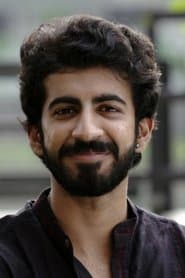
The ensemble is formidable and, crucially, believable. Roshan Mathew plays Sarath, a technician of some sort - the film is deliberately vague about job titles, because everyone here is vaguely employed - who drifts between sets like a man waiting for a bus that stopped running years ago. He is matched, scene for scene, by Divya Prabha's Shreya, whose sharpness is a survival mechanism. They circle each other with the wariness of people who have already been disappointed by one another and can't quite remember why they stayed.
Around them orbits a small solar system of strivers. Arsha Baiju's Nimisha is the youngest and the most stubbornly hopeful, a combination the film treats with tenderness rather than mockery. Jitin Puthanchery's Allen is the one who talks like a producer and lives like a freeloader. Vinay Forrt, always a pleasure, plays Aswin with a weary charm that suggests he has seen every version of this story and has decided to enjoy it anyway. Santhy Balachandran's Steffy and Mahesh Narayanan's Ravi add texture to a world where everyone is either waiting for a break or pretending they've already had one. Kenshin's Rahul is the newcomer who hasn't yet learned to hide his desperation, which makes him the most honest person on screen.
What Palathara does with this cast is resist the urge to turn them into archetypes. There is no villain here, no gatekeeper to blame. The antagonist is uncertainty itself, and it is everywhere: in the half-finished conversations, the rooms rented by the week, the relationships kept alive by inertia and affection in roughly equal measure. Kochi, photographed without postcard prettiness, becomes a character in its own right - a city of rented apartments and borrowed dreams, where the smell of the backwaters mixes with the smell of ambition gone slightly stale.
The comedy, when it comes, is of the uncomfortable kind. A meeting about a project that nobody can describe. A payment that arrives in instalments of promises. A love scene rehearsed for a film that will never be made, played with such sincerity that it becomes both hilarious and heartbreaking. Palathara lets his camera linger a beat too long on these moments, and that extra beat is where the film lives.
At 121 minutes, The Uncertainty Principle is neither rushed nor indulgent. It understands that the lives it depicts are not building toward a climax but toward a shrug, and it finds something heroic in that shrug. The title, borrowed from physics, is never explained on screen, which is exactly right. These characters don't need the theory. They are the experiment.
The film arrives without much fanfare and, at the time of writing, without a settled critical consensus. Its rating on TMDb sits at zero - not a verdict, merely a symptom of a film that has only just begun to find its audience. One suspects that will change. This is not a movie that announces its greatness. It accumulates it, scene by patient scene, until you realise you have been holding your breath for a character who never even got the job.
For anyone who has ever waited for a call that didn't come, The Uncertainty Principle is not a film about the film industry. It is a film about all of us, standing in the lobby, pretending we know why we're there.