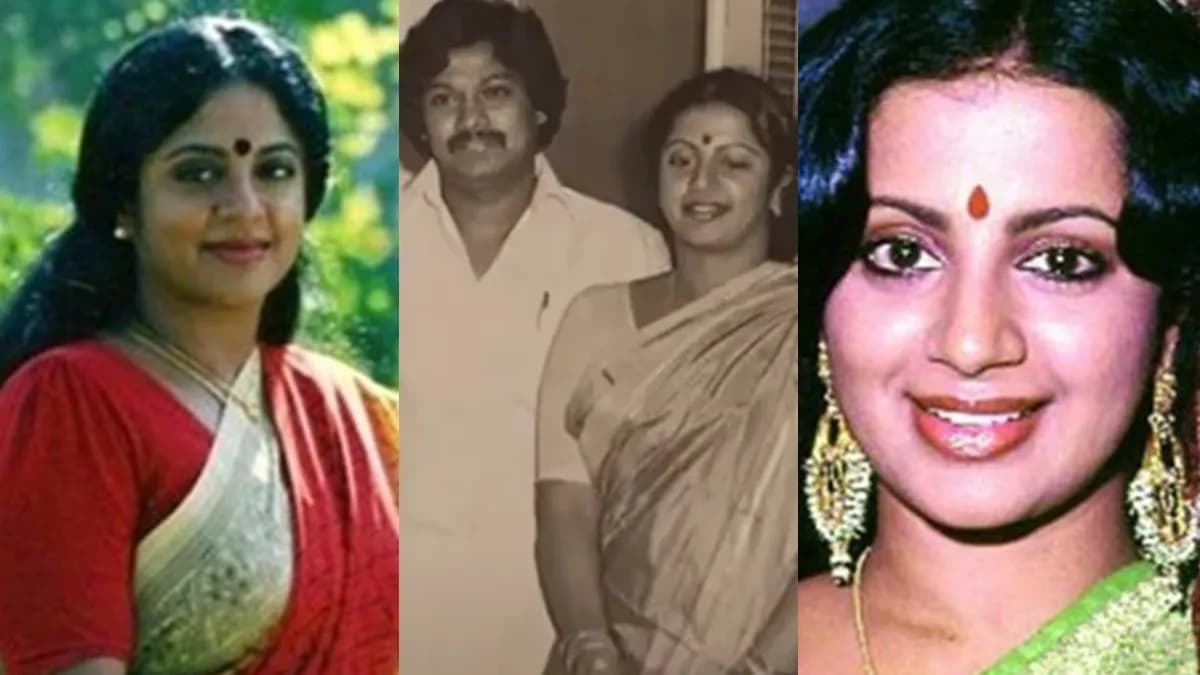
Veteran Malayalam actress Sreevidya, whose career spanned more than four decades and hundreds of films, endured a personal ordeal that few outside her closest circle knew about for years: three pregnancies that ended in abortion, each time, she said, at the insistence of her husband. The revelation, which surfaced through interviews she gave later in life, remains one of the most startling accounts of private pain attached to a public figure in Malayalam cinema, and it continues to circulate among fans revisiting her legacy.
Sreevidya, who died in 2004 at the age of 46, built her reputation on powerful character roles and leading performances across Malayalam, Tamil, Telugu and Kannada cinema. On screen she was often cast as the strong-willed woman, the suffering mother, the figure who absorbs hardship without breaking. Off screen, she described a marriage in which she had little say over decisions about her own body, including whether to carry a pregnancy to term.
According to her account, her husband pressured her into terminating three pregnancies. She spoke about this period with visible difficulty, framing it as something she had carried quietly through the busiest years of her career. The details she shared were limited, and no dates have been independently confirmed, but her description of repeated coercion was unambiguous. She stated that the decision was never hers to make.
The actress was married to actor and director Murali, and the couple's relationship was the subject of considerable speculation during and after her lifetime. Reports of marital strain circulated in the Malayalam press, though Sreevidya largely avoided discussing her private life publicly while she was working. Her later reflections on the abortions came as a departure from that silence.
What makes her testimony stand apart is the context in which it emerged. Sreevidya was not speaking as an activist or as part of a campaign. She was answering questions about her life, and the answers included material she could easily have left out. That she chose to say it at all gave the account a weight that second-hand gossip never carries.
A Career Built Alongside Private Turmoil
Sreevidya entered the industry as a teenager and quickly became one of its most dependable performers. Her range allowed her to move between glamorous leading roles and demanding character parts, and she worked steadily even as newer actors arrived. Directors returned to her because she could carry emotional weight without excess.
That professionalism was, by her own telling, maintained through years when her home life was unsettled. The contradiction between her on-screen authority and her lack of authority in her marriage is difficult to reconcile, and she seemed to acknowledge as much when discussing it. She described a version of herself that audiences never saw.
Malayalam cinema of that era offered limited space for actresses to speak about marital coercion, and the industry's power structure rarely encouraged it. Sreevidya's willingness to name what happened, even decades later, placed her outside that norm. Her statements have since been cited in broader conversations about how the film industry treated women's personal lives as public property while offering them little protection in private.
Why the Account Still Resonates
Discussion of Sreevidya's life has revived periodically, often tied to anniversaries or to retrospectives of her work. Each time, the abortion revelations return alongside tributes to her performances. Fans who grew up watching her describe a sense of sorrow at learning what she endured while producing the work they admired.
Her account also raises uncomfortable questions about complicity and silence. Colleagues who worked closely with her have generally avoided commenting on the marriage, and the industry's own record on supporting women in such situations remains uneven. Sreevidya's story does not fit neatly into a triumph narrative, and perhaps that is why it continues to be discussed.
She was, by most accounts, private about her suffering and reluctant to present herself as a victim. The fact that she spoke at all suggests she wanted the record to include it. What remains is her body of work and her own words about what it cost her to keep making it.
Source: Filmibeat Malayalam