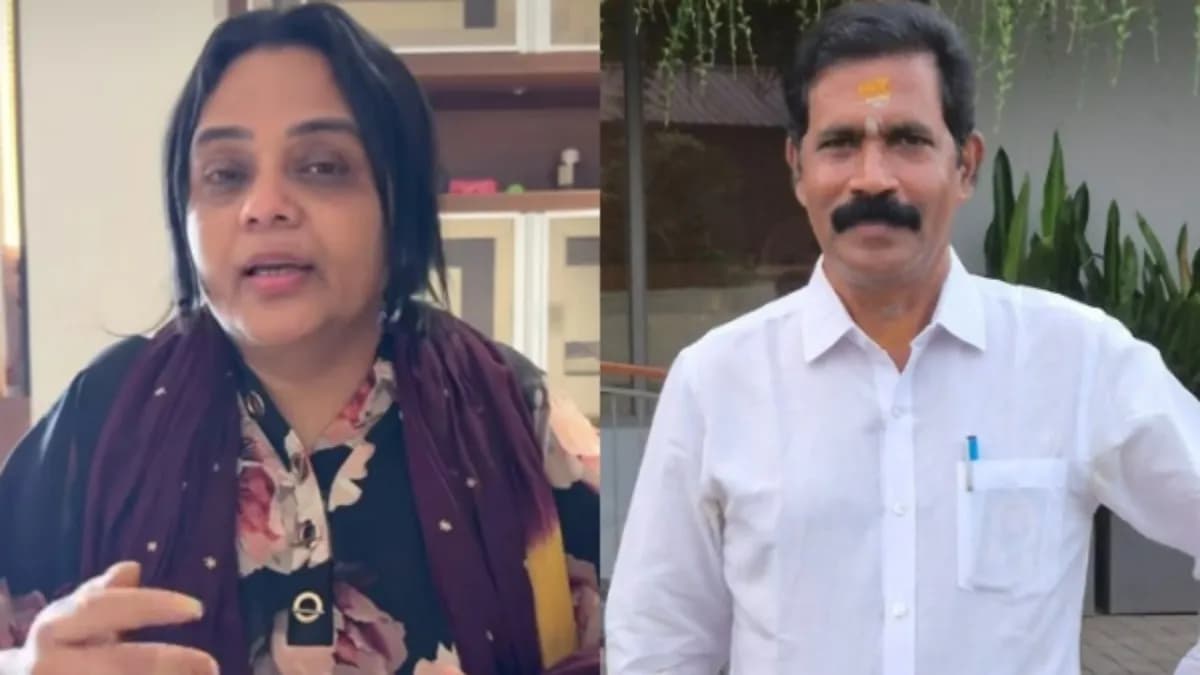
When every path closes, some people arrive with tears and folded hands and call it acting, but none of this will hold any value in society, Siddhu has remarked. The Malayalam actor's pointed observation has stirred fresh discussion about what the craft of acting is for and how the public actually judges a performance. His comments arrive without a specific film release or event attached, yet they carry the weight of a performer reflecting on the distance between what happens on set and what resonates once the screen goes dark.
The remark, roughly rendered from Malayalam, places two images side by side: a person who has run out of escape routes, and a person who arrives weeping with hands folded in supplication. Siddhu frames this as a kind of performance, and then dismisses its social worth altogether. The observation reads as a critique of emotional display that performs despair without offering anything a community can hold onto. In an industry that frequently builds entire third acts around suffering and surrender, his phrasing lands less like a complaint about technique and more like a question about purpose.
A Judgment About Craft, Not a Casual Remark
Within Malayalam cinema, acting is often discussed in terms of discipline and restraint, and actors of Siddhu's generation have grown up in a conversation that treats honesty before the camera as the core value. His words push that conversation one step further. If a performance moves an audience to tears but leaves no understanding behind, has anything actually been achieved? The actor seems to suggest that sheer display of pain is a limited tool, one that closes off rather than opens up. It is a familiar debate, but voiced with unusual bluntness.
The line also draws attention to how performers are judged in everyday life, outside reviews and awards. Audiences in Kerala carry strong opinions about which actors feel genuine and which feel rehearsed, and that verdict tends to stick. Siddhu's comment implies that a career built on overwhelming displays of sorrow risks being seen as technique alone, with little purchase on the public imagination once the credits roll.
What Comes After the Catchphrase
The phrasing gives his statement a memorable shape. One path closes, then another, until nothing remains, and then the tears and the folded hands appear as if they are the only option left. It is a description of a dramatic situation, and also an implicit question about whether that situation was explored or merely used. There is a difference between a character who has genuinely exhausted every option and a script that simply corners a character in order to produce a reaction. Siddhu's critique seems aimed at the latter.
Malayalam cinema has a long record of stories about loss and powerlessness, and many of them have earned lasting respect precisely because they refuse to stop at the weeping. The strongest of these films treat a character's defeat as the beginning of a wider reckoning, not as the emotional peak. Placed against that tradition, Siddhu's observation is less an attack on sad stories than a reminder of what separates a sad story from a meaningful one.
A Debate the Industry Returns To
Every few years, the same argument resurfaces in one form or another. Actors, directors, and writers ask aloud whether the industry rewards surface intensity over depth, whether a powerful scene is enough if the film behind it has nothing to say. Siddhu has now added his voice, and he has done so in a manner that invites contradiction as much as agreement. Some will hear a useful challenge. Others will hear a dismissal of performances that people genuinely value.
What distinguishes his remark is its emphasis on social worth rather than artistic merit. He is not arguing that such acting is technically poor. He is arguing that it will not endure in the life of a community. That is a higher bar, and a harder one to meet. It asks filmmakers to consider what an audience carries home, not merely what it feels in the moment, and it asks actors to think about why they are drawn to grief as material.
Where the Conversation Goes From Here
Siddhu has long been known for speaking plainly, and this remark fits that reputation. There is no announcement attached to his comment, and no particular project being promoted through it, which gives the observation a standalone quality. It reads as a considered thought from someone who has spent years in front of audiences and has formed a view about what those audiences ultimately reward.
For now, the comment stands on its own as a talking point, one that will travel through fan conversations and industry discussions alike. Malayalam cinema has never been shy about arguing with itself, and performers who say what they think tend to keep those arguments alive. Siddhu has done exactly that, and the question he raises is not one the industry can easily set aside.
Source: Filmibeat Malayalam