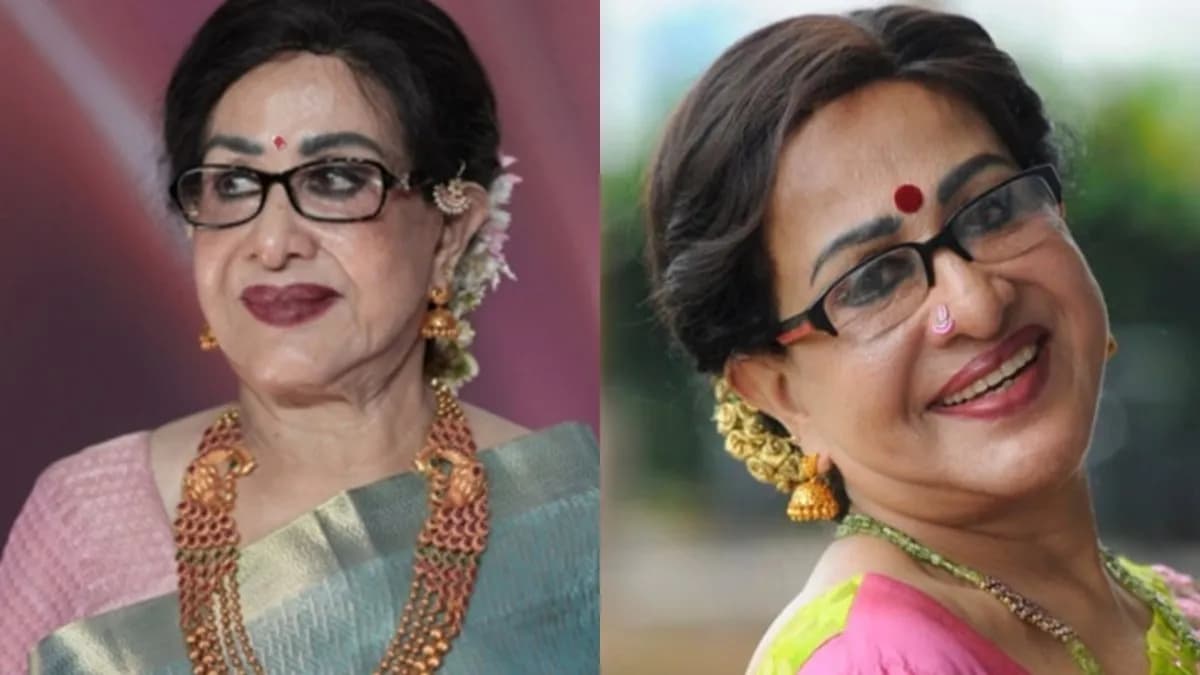
Veteran Malayalam actress Sheela has opened up about a painful chapter in her career, revealing that she was once told a film could only proceed if she first removed her makeup. In a candid reflection on the project and the hurt it left behind, the actress described carrying a deep sorrow inside her over the way she was treated, even as she acknowledged the film's significance in her professional journey.
The remarks, which have since drawn widespread attention, centre on a production Sheela associates with one of the more emotionally complicated experiences of her long career. According to her account, the condition placed before her was blunt: the film would be made only after her makeup was taken off. The demand, as she recalls it, was not framed as a technical suggestion but as a precondition, and the memory of it still carries an emotional sting.
For an actress of Sheela's standing, such an instruction cuts against the grain of how a performer prepares for a role. Makeup, in the grammar of cinema, is rarely mere ornamentation. It is part of the architecture of a character, a visual shorthand that tells the audience who this person is before a single line of dialogue is spoken. To be asked to strip that away before the cameras even rolled was, by her telling, a dismissal not just of a look but of her craft and her judgment.
Sheela's account also underscores a broader truth about the Malayalam film industry of her era, when creative decisions were often handed down rather than discussed. Actors, even those with proven range and audience goodwill, frequently found themselves navigating demands that had less to do with the story than with the preferences of those holding the purse strings. The episode she describes fits into that pattern: a creative choice presented as an ultimatum, with little room for conversation.
What emerges most forcefully from her recollection is the internal cost. Sheela does not describe anger so much as a quiet, lingering sadness, a wound that the passage of time has not fully closed. That admission matters because it complicates the familiar narrative of the stoic professional who absorbs every slight and moves on. Here is an artist saying, plainly, that the experience hurt, and that the hurt stayed.
At the same time, Sheela frames the film as one she remains attached to. The contradiction is real and human. A project can be a source of pride and of pain at once, particularly when the difficulty was not with the work itself but with the conditions imposed around it. Her willingness to hold both feelings together, rather than flattening the story into a simple grievance, gives her remarks their weight.
Her comments arrive at a moment when conversations about how performers are treated on set, and about who gets to make creative calls, have become more open across Indian cinema. Younger actors and technicians speak more readily about boundaries and consent, and about the difference between direction and dictation. Seen against that shift, Sheela's account reads less like a solitary grievance and more like a reminder of how much has changed, and how recently.
Source: Filmibeat Malayalam