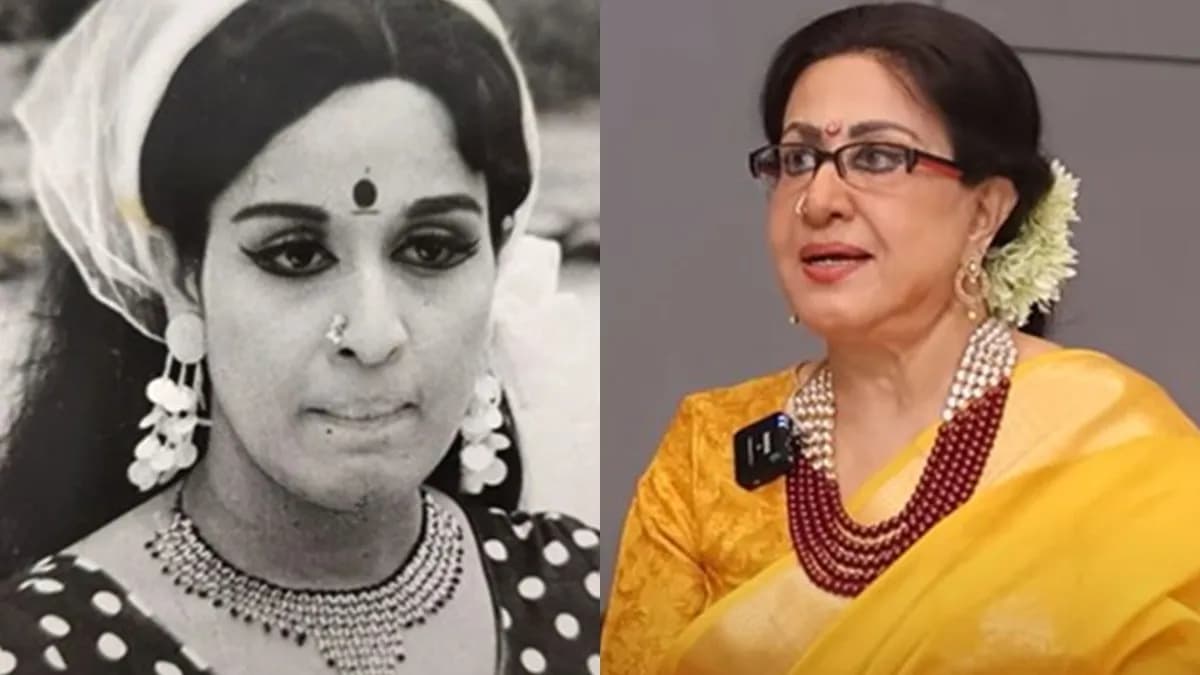
Veteran Malayalam actress Sheela has revealed that she returned to a film set just 28 days after giving birth to her child, a decision she describes as one of the most defining moments of her life. Speaking about the choices that shaped her long career, the actress recalled how motherhood and professional commitment collided early on, and how she resolved that conflict on her own terms.
Sheela said the shoot took place on the 28th day after her delivery, and it was on that day she made up her mind about the kind of life she would lead - one in which her family would remain at the centre of everything.
"I went to the shoot on the 28th day after my baby was born, and that's when I made my decision; I looked after my whole family," she said, according to her recollection of the period.
The statement captures a tension familiar to generations of women in Indian cinema, where the demands of production schedules have often clashed with the realities of pregnancy and early motherhood. Sheela's account places her among the actresses who continued working through that phase rather than stepping away, and she frames the choice not as a sacrifice extracted from her, but as a decision she consciously took.
A Career Built Across Decades
Sheela is among the most recognised performers in Malayalam cinema, with a filmography stretching back to her childhood and encompassing leading roles, character parts and appearances in later-life productions. Her longevity in the industry has made her a reference point for discussions about how women sustain careers in a field that has historically been unforgiving about age and domestic responsibilities.
Her reflection on the 28th-day shoot is significant because it comes from a period when maternity was rarely accommodated in scheduling. Productions were planned around the availability of sets, co-stars and financiers, and an actress who paused for an extended period risked losing momentum she had spent years building. The decision to report to work less than a month after childbirth, then, was not simply a personal anecdote but an indicator of the professional pressures of the era.
Family as the Anchor
What stands out in Sheela's telling is the emphasis on family rather than on career alone. She presents the two as intertwined rather than opposed: the same resolve that took her back to a shooting floor was the resolve that kept her household together.
"Family first, always," she indicated, describing her approach to balancing the two worlds. The phrasing suggests that her return to work was not a turning away from home, but part of an arrangement in which her family remained the priority she organised everything else around.
Such statements have particular resonance in Kerala, where extended family networks have long played a role in enabling women to work. Grandparents, siblings and relatives often share child-rearing duties, making it possible for actresses to accept projects without withdrawing from the industry for years. Sheela's reference to looking after her whole family implies that her commitments ran in both directions - to her children and to the wider household that supported her.
A Story That Travels Beyond One Career
The actress's comments arrive at a time when conversations about postpartum working conditions are more visible in the film industry than ever. Younger performers now speak openly about the absence of creches on sets, inflexible shoot schedules and the informal penalties that follow a maternity break. Against that backdrop, Sheela's account reads less like nostalgia and more like evidence that the problem is structural and longstanding.
Her choice also invites a broader question about how the industry measures dedication. For decades, a willingness to work through personal milestones was treated as proof of commitment. Sheela's framing shifts the emphasis: the decision, she says, was hers, and it was made with her family in full view rather than pushed to the margins.
It is a position that resists easy interpretation. Some will read it as an account of endurance, others as a reminder of how little room the system left women. Either way, the actress's memory of that 28th day remains vivid, and she presents it as the moment she settled the terms on which she would live and work.
Sheela has not tied the recollection to any single film or release, and no further details about the production have been disclosed. What she has offered is a fragment of personal history that speaks to a much larger story about women, work and the families that make both possible.
Source: Filmibeat Malayalam