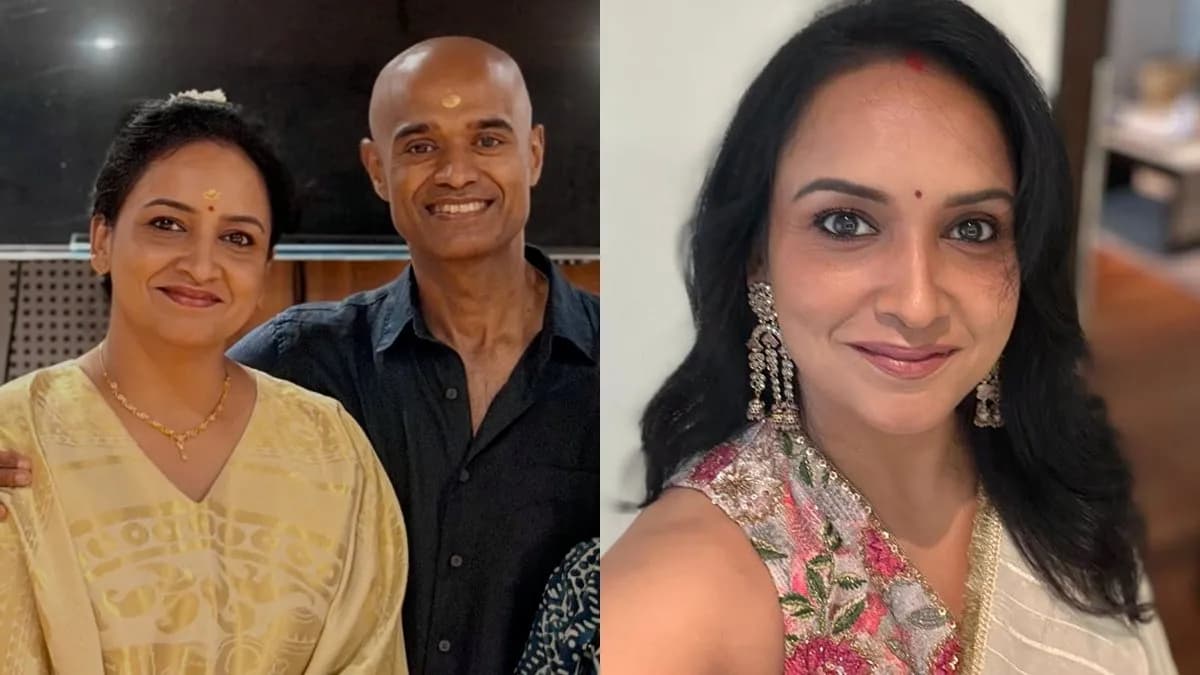
In a candid reflection that has caught the attention of Malayalam cinema followers, the subject of the recent discussion has opened up about the habit of addressing her husband as "brother" - revealing that the term is reserved strictly for public settings. The remarks, made during an interaction that touched on married life and public perception, suggest a deliberate boundary between her private and public personas. The core of the statement is simple: what audiences hear is not what happens behind closed doors, and the choice of address is a reflection of social convention rather than personal intimacy.
According to the remarks, only positive developments have followed her marriage. She described the period after her wedding as one defined by good news and forward motion, pushing back against the assumption that a public figure's personal life must inevitably generate complications. The phrase, translated from Malayalam, conveys that the post-marriage phase has been marked exclusively by favourable matters - a characterisation that stands in contrast to the speculation that often trails celebrity unions.
The decision to call her husband "brother" in public, she indicated, is a matter of context rather than affection. The term, common in many Indian households as a respectful form of address for an elder male relative or acquaintance, carries a different weight when used between spouses. Her point appears to be that the label is a social courtesy deployed outside the home, not a description of the relationship itself.
A Deliberate Line Between On-Screen and Off-Screen
For an industry that thrives on projecting stars' private lives into the public domain, the distinction being drawn here is notable. Malayalam cinema audiences have long followed the personal lives of their favourite actors with keen interest, and marriage announcements routinely become the stuff of headlines and fan-page edits. Within that ecosystem, a performer's choice of words in interviews can quickly be extracted, clipped and circulated without the surrounding context.
The clarification about the word "brother" reads as an attempt to pre-empt exactly that kind of decontextualised circulation. By specifying that the address is used only in public, the statement puts the emphasis on intention: the term is chosen for the setting, not for the relationship. It also implies a level of comfort with public scrutiny, offering an explanation rather than a complaint.
This is not the first time a Malayalam film personality has had to explain a seemingly innocuous word used in a family setting. Cultural terms of address in Kerala often carry layered meanings, and what sounds formal or distant to one listener can be entirely ordinary to another. The gap between regional usage and how those usages are read by a wider online audience frequently produces confusion, and occasionally, unnecessary controversy.
Marriage as a Run of Positive News
The second half of the statement is arguably the more pointed one. Describing the post-wedding period as consisting only of positive matters is a soft but clear rebuttal to the narrative that marriage brings turbulence to a working actor's career. It frames the union not as a disruption but as a stabilising force, and it does so without offering specifics - no timelines, no project names, no box-office claims.
That restraint is itself worth noting. In an era when personal milestones are often packaged into promotional cycles, the comments stay firmly in the realm of general observation. There is no announcement attached, no forthcoming release being teased, and no attempt to convert a domestic detail into a marketing moment. The tone is conversational, almost offhand, which is likely why it resonated.
For fans who track such interviews closely, the takeaway is twofold. First, that a public form of address between spouses can be purely performative in the social sense - a marker of decorum rather than distance. Second, that the person at the centre of the discussion considers the married phase of life to have been overwhelmingly favourable, a claim offered without embellishment.
Whether these remarks will settle the curiosity that prompted them remains to be seen. What is clear is that the line between a star's private vocabulary and its public interpretation is thin, and in Malayalam cinema, even a single word can travel far beyond the room in which it was spoken. The clarification, at minimum, gives that word its intended frame: one used outside the house, and nowhere else.
Source: Filmibeat Malayalam