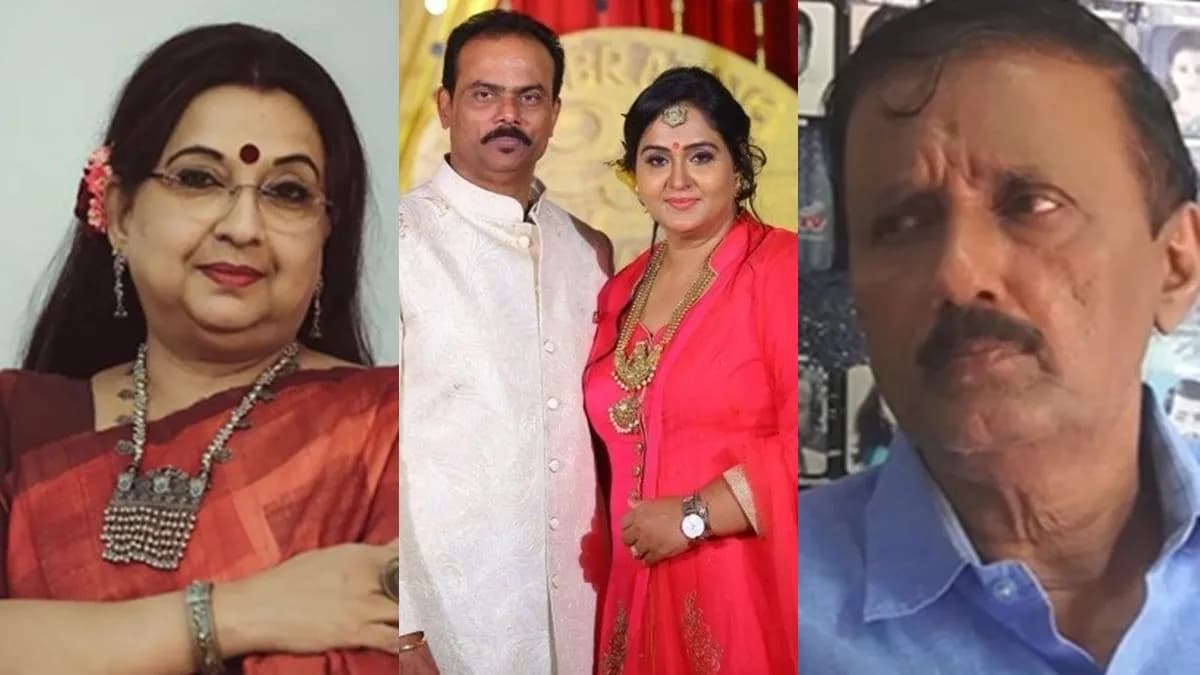
Veteran Malayalam character actor Shanthivila Dinesh is back in the conversation, and he has done it the way he usually does - by saying the quiet part out loud. The actor, long a fixture in supporting roles and a familiar presence in Malayalam cinema's rural dramas and family entertainers, has been speaking about his own life in unusually blunt terms. His framing of that story is unsparing: a wife named Radha who, in his telling, pointed a gun at him and then cast a line after him; children named Ambika who ended up living with her ex-husband; and a portrait of greed he attaches to Radha herself. Whether one reads the statement as confession, accusation, or simply the raw material of a life lived in public, it lands with the force of a man refusing to soften his own biography.
The title of the interview or video - rendered in English as "Radha's Husband at Gunpoint and with a Fishing Rod, Ambika's Children with the Ex-Husband; Radha's Greed! Shanthivila Dinesh" - reads less like a conventional headline than like a set of stage directions. The image is deliberately absurd: a gun in one hand, a fishing rod in the other, a man framed as both threatened and baited. Dinesh appears to be describing a marriage in which he felt cornered and then reeled back in, which is why the "greed" he attributes to Radha functions as the emotional center of the whole account. Greed, not violence, is the accusation he keeps returning to.
That distinction matters. In Malayalam popular culture, the wronged husband is a stock figure, but he is rarely given this much rhetorical room to define the terms. Dinesh is not playing a role here; he is narrating one. The gun and the fishing rod are the two poles of his story - threat and enticement - and he wants both on the record at once.
The Household Split, in His Own Telling
The detail about Ambika's children living with their former husband is the kind of line that would be unremarkable in a family court file and extraordinary in a film interview. Dinesh is describing a household that divided along lines the public rarely gets to see from a male star's perspective: the children went with the ex-husband, not with the mother, not with him. In Malayalam cinema, the default assumption is still that mothers keep the children after a separation. Dinesh's account inverts that assumption, and he does not appear to be asking for sympathy about it. He is stating it as fact.
Read together, the three elements he names - Radha's husband, Ambika's children, Radha's greed - form a single narrative about a man who believes he was the target of a campaign rather than a participant in a collapse. The gun is the opening move. The fishing rod is the follow-up. The greed is the motive. It is a complete argument, delivered in fragments.
Why a Character Actor's Personal Story Draws This Much Attention
Shanthivila Dinesh belongs to a specific tier of Malayalam cinema: the actor whose face every viewer recognizes and whose name fewer can place. That tier has been unusually visible in Kerala's public conversation in recent years, as supporting artists have spoken about pay, precarity, and the personal costs of a film career. When someone from that tier speaks about his private life with this much specificity, the reaction tends to be sharper than it would be for a leading man issuing a polished statement through a publicist. There is no publicist in the frame here. There is a man, a gun, a fishing rod, and a grievance.
It is also worth noting how the material circulates. Star-driven controversies in Malayalam cinema arrive with trailers and press conferences attached. Dinesh's account arrives instead as testimony - something closer to the interviews that play on regional television and social channels, where an actor talks for an hour and the fragments are what survive. That format rewards candor and punishes hedging, and Dinesh does not hedge.
What Remains Unresolved
Several things stay outside the frame. There is no indication of when these events are said to have occurred, no timeline, no corroboration from Radha or from Ambika, and no confirmation that any of this has been tested anywhere other than in Dinesh's own retelling. The actor's professional life, meanwhile, continues on its own track, separate from the personal narrative he has chosen to share.
What the audience is left with is an image more than a story: a man describing himself as having been held at gunpoint and then lured with a line, by someone he says was driven by greed, while the children of a woman named Ambika made their home with her former husband. Malayalam cinema has built a whole genre out of such knots - property, marriage, betrayal, the family as battlefield. The difference here is that no one wrote it. Dinesh is simply saying it, and for now, that is the whole of the record.
Source: Filmibeat Malayalam