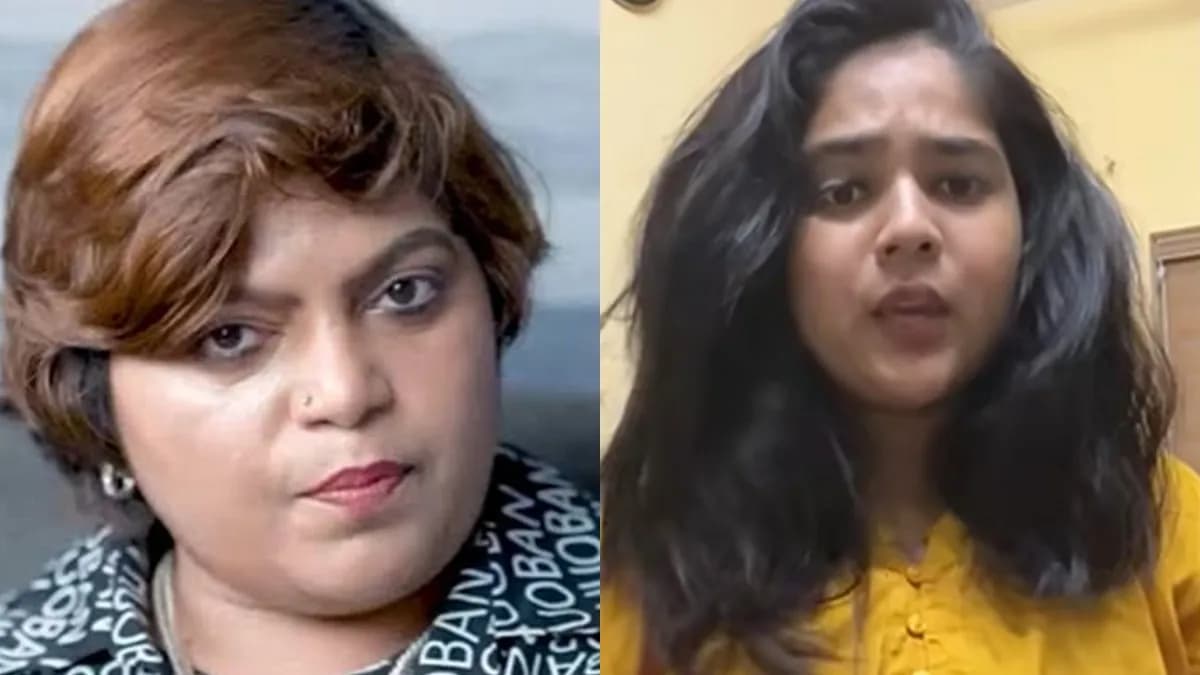
Actor and activist Sarika, known for her work in Malayalam cinema and her outspoken advocacy for transgender rights, has responded to recent comments made by actress Sithara, saying the remarks stem from a place of deep frustration. Sarika’s reaction comes after Sithara’s controversial statements about the transgender community, which have since sparked a heated debate across social media and within the film industry.
Sarika, a prominent transgender woman in the Malayalam film fraternity, claimed that Sithara’s outburst was not an isolated incident but part of a long-standing pattern of targeting the trans community. “She said what she said because she has lost her patience,” Sarika explained, adding that the community has been subjected to such attacks for generations. She emphasized that this is not about a single personal grievance but a systemic issue that trans individuals face both on and off screen.
The controversy began when Sithara, during a recent public interaction, made remarks that many perceived as dismissive and hurtful toward transgender people. While the exact wording of Sithara’s original statement remains a point of contention, the backlash was immediate. Several members of the LGBTQ+ community and their allies called out the actress for what they described as insensitive and ill-informed commentary, while others defended her right to express personal opinions.
Sarika, however, chose to contextualize the incident rather than simply condemn it. According to her, the transgender community in Malayalam cinema has often been reduced to token roles or comic relief, and when they raise valid concerns about representation and working conditions, they are met with hostility. “For years, we have been asking for dignity, not charity. When we point out the discrimination, we are told we are being difficult,” she said. Sarika further noted that Sithara’s remarks reflect a broader societal unwillingness to accept trans individuals as equals, even within a progressive field like filmmaking.
The actress also took aim at the industry’s double standards. She pointed out that while Malayalam cinema has celebrated stories of social justice and marginalization, off-screen practices often contradict those on-screen values. Trans actors frequently face barriers in casting, pay disparities, and a lack of safe working environments, she alleged. “They applaud our stories when told by others, but when we speak for ourselves, we are silenced,” Sarika added, underscoring the frustration that she believes ultimately triggered Sithara’s comments.
Sarika’s response has resonated with many in the community, who have long argued that public figures should use their platform to uplift, not undermine, vulnerable groups. Activists have echoed her call for greater sensitivity training within the entertainment industry. Some have also suggested that this controversy could serve as a wake-up call for Malayalam cinema, which has prided itself on being more socially conscious than other film industries in India.
However, not everyone agrees with Sarika’s interpretation. A section of social media users has sided with Sithara, claiming that the actress was merely expressing her frustration over a separate professional matter and that her words were taken out of context. They argue that equating a personal outburst with a systemic attack is an overreach. But Sarika dismissed this defense, insisting that intent matters less than impact. “Even if she did not mean to hurt, the language she used perpetuates the very stereotypes that keep us marginalized,” she said.
The debate has also drawn responses from other actors and directors in Malayalam cinema, though many have remained cautious, preferring to stay out of the fray. One prominent filmmaker, speaking on condition of anonymity, admitted that the industry has yet to fully address the concerns of its trans members. “We are good at making films about social issues, but we are not always good at practicing what we preach,” he remarked.
For Sarika, the incident is a reminder of the long road ahead. While she acknowledged that progress has been made - more trans actors are being cast in meaningful roles, and conversations about inclusivity are more frequent - she stressed that true change requires consistency. “We do not want sympathy. We want action,” she stated firmly. She also called on Sithara, whom she described as a talented performer, to engage in a dialogue rather than retreat further into defensiveness.
As the online storm continues, the Malayalam film industry finds itself at a crossroads. The question before it is not merely whether Sithara’s comments were wrong, but whether it will take concrete steps to ensure that such incidents do not recur. Sarika, for her part, remains cautiously hopeful. “Every controversy is an opportunity to educate,” she said. “I hope this one leads to understanding, not just outrage.”
The immediate fallout, however, has been polarizing. Hashtags both supporting and condemning Sithara have trended in Kerala, reflecting a society still grappling with issues of gender identity and equality. For the trans community, the episode is a painful reminder of their vulnerability. For the film industry, it is a test of its claimed values. And for observers, it highlights how far Malayalam cinema has come - and how much further it still needs to go.
Source: Filmibeat Malayalam