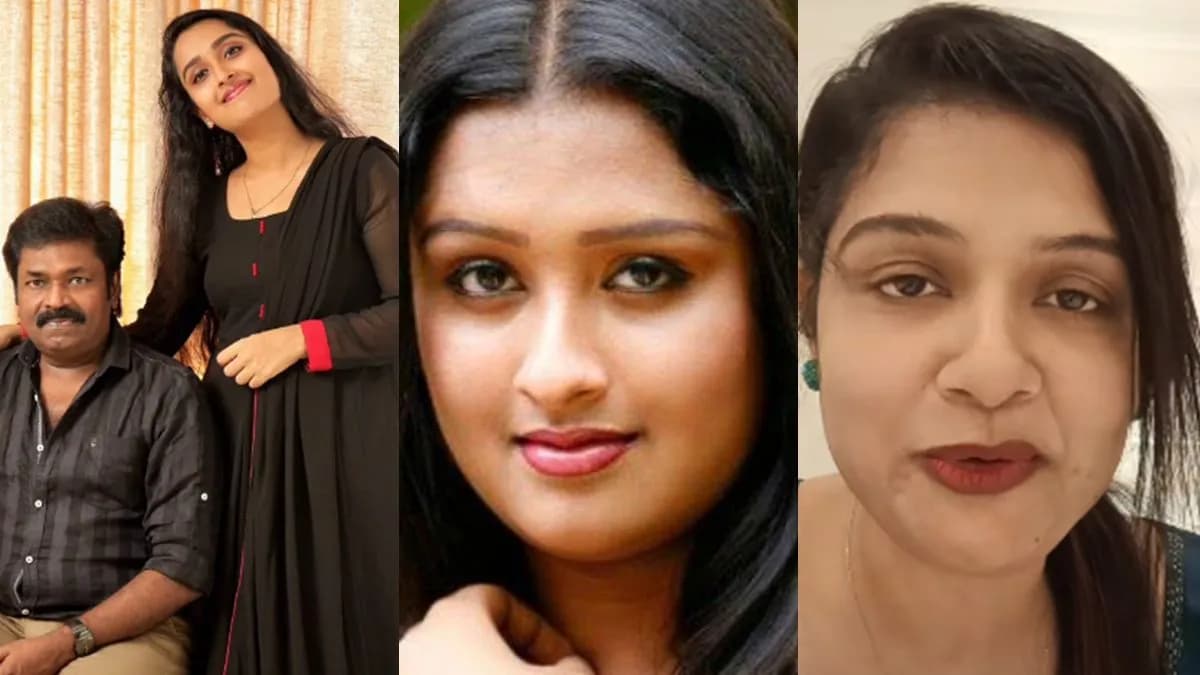
Veteran Malayalam actor Sajitha Madathil has opened up about a difficult chapter in her family life, revealing that her daughter Rasna once asked her to stop acting after just one more year, and that her marriage had become a serious point of friction before it ended. Speaking in a recent interview, Sajitha said her daughter still dislikes hearing the subject discussed publicly, even though the two have long since made peace with how things turned out.
Sajitha, known to audiences for her work in Malayalam cinema as well as her parallel career as a theatre artist and academic, was reflecting on the personal cost that came with a life in the arts. The decision to continue performing, she suggested, was never a simple one. It was weighed against the expectations placed on her as a wife, and later against the wishes of a child who wanted her mother at home.
According to Sajitha, the tension at home was not primarily about money or ambition. It was about time and presence. Her husband at the time struggled with the demands of her profession, and the marriage eventually could not hold. Rasna, who was young when the marriage broke down, responded by asking her mother to limit her acting career. Sajitha recalled that her daughter's request was for one more year on stage and on set, and then to step away.
What makes the recollection especially poignant is that Sajitha did not step away. She kept working. The choice, she has said in effect, was not made lightly, but it was made. Her daughter has since asked her not to speak about that period in interviews, a request Sajitha acknowledged with a mix of regret and understanding.
The interview touches on a broader truth about women in Malayalam cinema and theatre, particularly those who came up through the socially engaged theatre movements of the 1980s and 1990s. For many of them, a public career was not simply a job. It was a form of identity. Asking them to give it up was asking them to give up a part of themselves, even when the request came from someone they loved.
Sajitha's own trajectory reflects that tension. Her stage work earned her respect in serious theatre circles, and her screen appearances brought her recognition beyond those audiences. That dual life required long hours, travel, and an emotional availability that was often stretched thin. Family members who did not share that world sometimes experienced it as absence rather than purpose.
The actor's account also raises questions about how the industry and its audiences talk about women who choose work over domestic expectations. Such stories are often framed as sacrifice or tragedy. Sajitha's telling is more matter-of-fact. She does not present herself as a victim, nor does she present her daughter as an obstacle. She describes a conflict between two people who loved each other but wanted different things at a time when neither could fully explain why.
Rasna's discomfort with the topic is understandable. Children of public figures rarely get to shape the narrative about their own childhoods, and a mother's interview can feel like a reopening of old wounds. Sajitha seems aware of this. Her willingness to discuss it at all suggests a belief that such conversations are worth having, provided they are handled with care.
In the Malayalam film and theatre community, Sajitha is not alone in having navigated this kind of pressure. Several actresses of her generation have spoken about marriages that buckled under the weight of a working wife's schedule, or about children who resented the pull of a parent's career. What varies is how openly those stories are told, and how the women involved are judged for telling them.
Sajitha's remarks are likely to resonate with working mothers across Kerala, not only those in the arts. The specific details are particular to her life, but the underlying question is common: what does a woman owe her family, and what does she owe herself? The answer, in her case, was to keep working, to accept the consequences, and to let time do what it could to repair the rest.
She has not framed the decision as a triumph. Nor has she framed it as a mistake. Instead, she offers it as a fact of her life, one that her daughter would prefer stayed private. Whether that preference will hold as Sajitha continues to speak in public remains to be seen. For now, the actor's account stands as a reminder that behind a career on stage and screen, there are choices that were not made easily and relationships that took years to heal.
Source: Filmibeat Malayalam