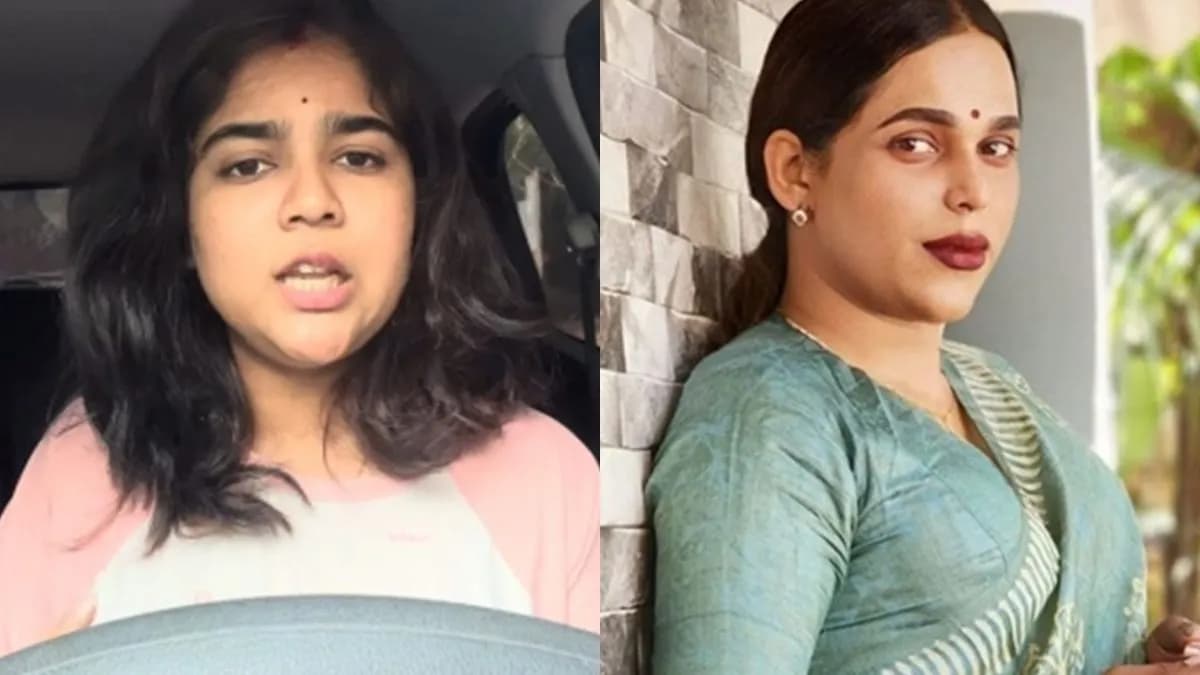
Actor Ranjith, known widely by his screen name Ranju Ranjimar, has spoken out about the deep emotional toll that comes with online abuse targeting children and families, describing such attacks as equivalent to destroying a person from the inside. The actor made the remarks in a statement that has since drawn wide attention across Malayalam film circles, where debates over social media harassment and the treatment of celebrities' private lives have grown increasingly heated.
Ranjimar's comments centered on a single, unambiguous plea: do not touch the children. In his words, the pain such actions create is comparable to breaking the individual himself. The statement carries the weight of a parent speaking not in metaphor but in plain terms, framing any intrusion upon minors as an injury inflicted directly on the adults who protect them.
The actor, a familiar presence in Malayalam cinema, did not tie his remarks to a specific incident in the portion of the statement that has circulated publicly. Instead, he articulated a general principle that has resonated with colleagues and fans alike, many of whom have watched public figures in the industry face sustained campaigns of abuse online, often extending to family members who never chose a life in the spotlight.
A Long-Simmering Issue in Malayalam Cinema
Malayalam cinema has seen a steady stream of conversations about the boundary between public interest and private life in recent years. Actors, directors, and technicians have all at various points described facing coordinated attacks on social media, with family members frequently drawn into the crossfire. Women in the industry, in particular, have repeatedly spoken about how online harassment follows them from professional criticism into deeply personal territory.
Ranjimar's intervention adds a parental dimension to that discussion. His formulation is blunt: an attack on a child is not a separate act from an attack on the parent. It is the same wound, delivered by a different route. That framing has been echoed by several industry figures who have argued that the relative anonymity of social media has made it easier for users to forget there are real families on the receiving end of their messages.
What the Actor's Statement Signals
The statement fits a pattern among Malayalam artists who have chosen to address harassment directly rather than through official channels or legal complaints alone. By speaking in emotional terms, Ranjimar places the emphasis on human cost rather than on procedural remedies. He does not, in the remarks that have been reported, threaten action or name any individual. The appeal is moral rather than legal, addressed to whoever may be listening.
This approach carries its own risks. Public statements of this kind can amplify the very attention the speaker hopes to deflect, and they rarely silence the most persistent offenders. Yet they also serve a documenting function, building a record of how the industry has pushed back against a culture that treats celebrity families as fair game.
The Broader Conversation
The remarks arrive amid continuing discussion within Kerala's film community about mental health, media ethics, and the responsibilities of online audiences. Several actors have previously described how sustained online criticism affected their families and, in some cases, their willingness to remain active on social platforms. The industry has also seen periodic calls for stronger mechanisms to report and act on threats directed at artists and their households.
For now, Ranjimar's words stand as a reminder of a simple point that frequently gets lost in the noise: children of public figures did not sign up for public life. His statement, brief as it appears to be, draws a line and asks that it be respected. Whether that line holds will depend less on the actor's words than on the audiences and platforms that have made such appeals necessary in the first place.
Source: Filmibeat Malayalam