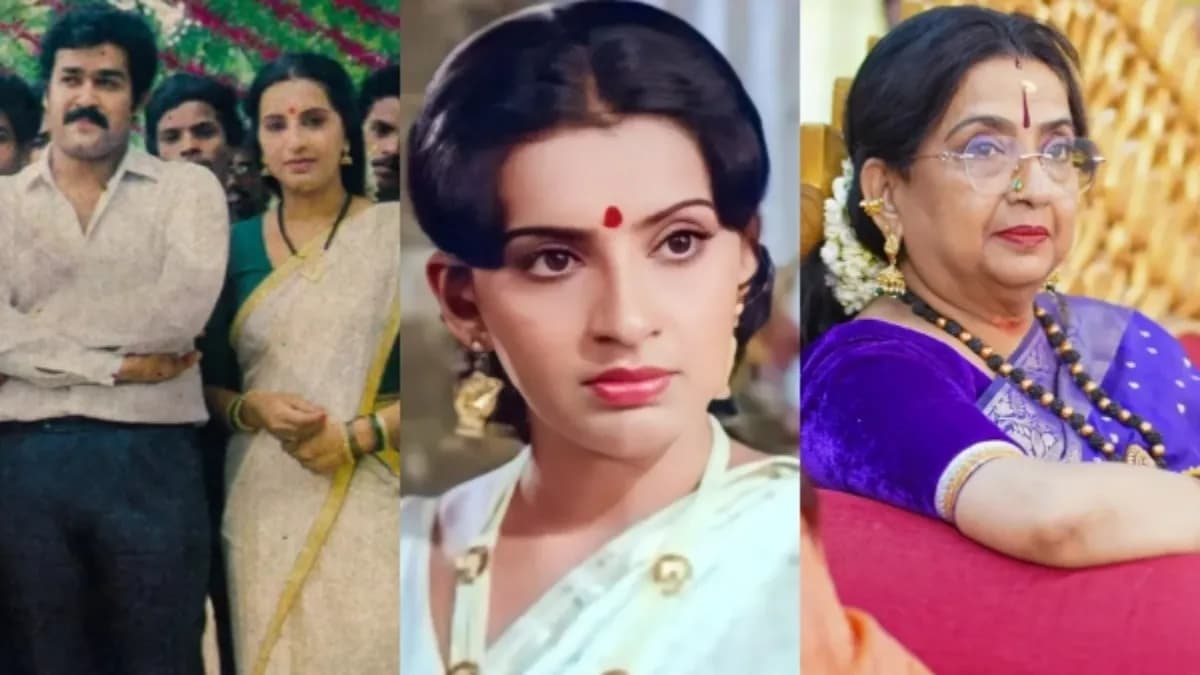
A long-simmering grievance in Malayalam cinema has resurfaced with fresh force this week, as industry observers and social media commentators renew their scrutiny of a familiar paradox: the leading lady of King's Son - the film widely known in Malayalam as Rajavinte Makan - is said to have commanded a higher fee than Mohanlal himself, the actor around whom the entire project was built. The claim has circulated for years in fan circles and retrospective interviews, but it has found a second life online, where a pointed question is now being asked with increasing sharpness: why did the money that rightfully belonged to Radha end up in the hands of others, and why does the industry continue to treat that arrangement as unremarkable?
The framing of the current debate is blunt. A growing chorus of voices describes the episode as nothing short of ingratitude - a word now attached to the controversy in the headline that has driven the conversation. According to this line of argument, the actress who received top billing in terms of remuneration later watched the financial benefits of her own prominence flow elsewhere, while the men who shaped the production consolidated both the profits and the legacy.
To understand why the story retains its sting, one has to recall the unusual economics of Rajavinte Makan. The film, which cemented Mohanlal's status as an action star in the mid-1980s, had a heroine whose market value at the time was at its absolute peak. Producers were willing to pay a premium for her participation, and that premium, according to the accounts that have been repeated for decades, exceeded what the male lead was paid. In any other industry, such a detail would be a footnote. In Malayalam cinema, it became a scandal - not because the actress asked for too much, but because the investment never translated into lasting equity for her.
That is where the "Radha's money" question enters. The reference is not to a character in the film but to the actress's own earnings and the manner in which they were reportedly managed, redirected, or absorbed by others involved in the production ecosystem. The precise mechanics remain disputed and, in the absence of public documentation, impossible to verify independently. What is not disputed is the sentiment: a significant section of the audience believes that a performer who was paid more than the biggest star in the film was subsequently denied the financial dignity that her position warranted.
The timing of this renewed outrage is telling. Malayalam cinema is in the middle of a broader reckoning over pay disparity, credit-sharing, and the treatment of women who carried films during eras when their contributions were rarely acknowledged in official histories. The Mohanlal connection gives the discussion an unavoidable anchor, but the actor is not the target of the criticism. Rather, the discussion has become a proxy for a larger question: when a woman out-earns a male superstar, what happens to that money, that credit, and that legacy once the cameras stop rolling?
Industry veterans who have commented on the matter over the years tend to frame it as a product of its time - a period when contracts were informal, when a actress's family or intermediaries often negotiated on her behalf, and when the notion of a woman retaining control of her own commercial leverage was structurally discouraged. That context explains, but does not excuse, the outcome that so many now find indefensible.
What makes the current wave of commentary different from earlier rounds is its tone. Previous discussions were nostalgic or anecdotal. This one is accusatory, and the accusation is not aimed at any single individual but at an ecosystem that, in the words of one widely shared post, "took everything from her and gave her a footnote." The word "ingratitude" has become the rallying cry precisely because it captures the asymmetry: a woman delivered a hit on her own drawing power, and the men who benefited from that hit later wrote the history in which she was merely a supporting player.
Whether this renewed scrutiny will produce any concrete reassessment - a corrected credit, a financial settlement, or simply a more honest public record - remains to be seen. What is clear is that the question refuses to die. Every few years, a new generation of Malayalam film followers discovers the Rajavinte Makan pay anomaly and reacts with the same disbelief. The difference now is that the disbelief is being voiced louder, and with a specific demand attached: stop treating the misappropriation of a woman's earnings as an unfortunate byproduct of a bygone era, and start calling it what it is.
For Mohanlal, whose career was launched into a different stratosphere by the film, the controversy is an uncomfortable shadow. He has never been accused of personal wrongdoing in the matter, and the criticism has largely spared him. But the story cannot be told without him, and that is precisely the problem. The film that made him a superstar is also the film that, by many accounts, swallowed the earnings of the woman who was paid more than he was. Until that contradiction is addressed head-on, the phrase "this is ingratitude" will keep finding new audiences - and the industry will keep having to explain why it took so long to listen.
Source: Filmibeat Malayalam