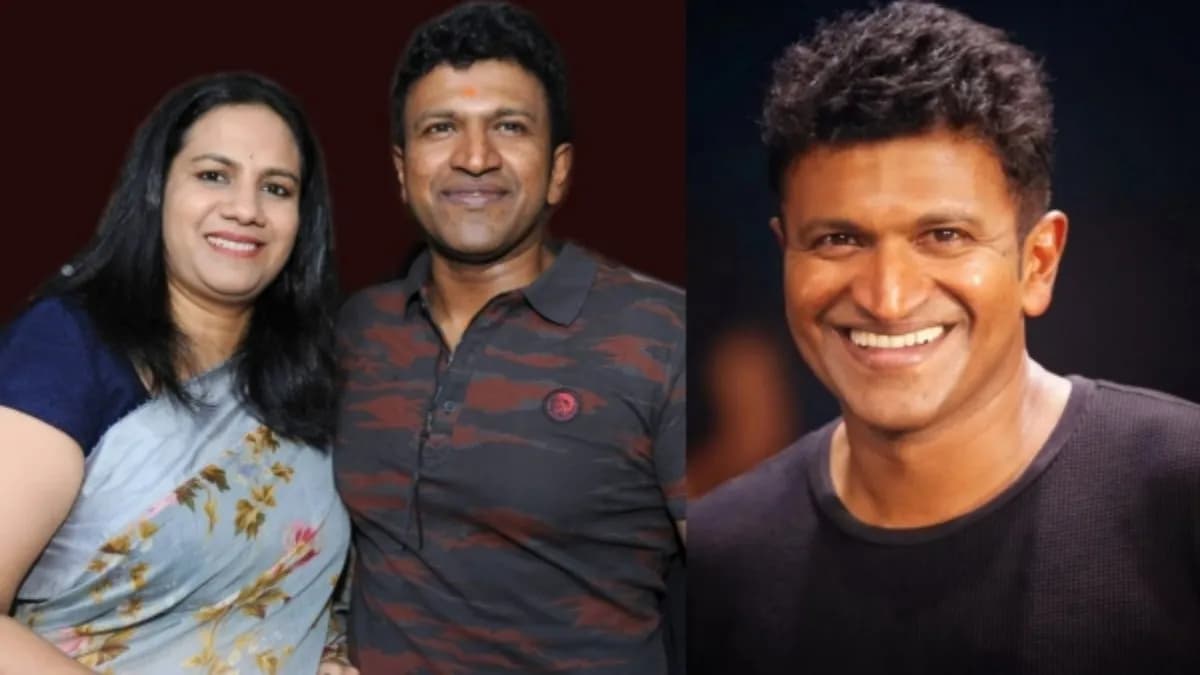
The final hours of Puneeth Rajkumar's life were marked by a quiet exchange with his wife, Ashwini, according to recollections that have circulated widely among the late Kannada star's family and close circle. On the morning of October 29, 2021, Puneeth had finished his routine workout at a gym in Bengaluru when he began to feel unwell. He returned home, and at some point before his condition deteriorated, he asked Ashwini if he could rest with his head on her lap - a small, ordinary request that those who knew him have since described as emblematic of the closeness the couple shared. He was still speaking, still conscious, when the decision was made to rush him to Vikram Hospital. He did not survive the journey in any meaningful sense; by the time he arrived, doctors would later confirm he had suffered a cardiac event from which he could not be revived. He was 46.
The fact that Puneeth was conversing and alert shortly before his collapse has remained one of the most difficult details for fans and family alike to reconcile. Here was a man who appeared to be in peak physical condition, who exercised regularly, who had no publicly known history of heart trouble, and who was gone within hours of experiencing his first serious symptoms. The sequence of events - the gym session, the return home, the request to lie down, the rapid deterioration, the frantic drive to the hospital - has been recounted in various forms over the years, but the core remains unchanged: there was no long illness, no warning period, no opportunity for goodbyes beyond that brief moment of rest.
For Kannada cinema, Puneeth's death was not merely the loss of a leading actor. He was the youngest son of the legendary Rajkumar and carried the family's cinematic legacy into a new century, first as a child artist and then as a full-fledged star whose films routinely opened to massive audiences. His off-screen persona - approachable, soft-spoken, deeply involved in philanthropic work - made him a figure of unusual affection across language boundaries. Actors and technicians from Malayalam, Tamil, Telugu and Hindi cinema publicly mourned him, and the tributes that poured in from Kerala were particularly warm, reflecting the genuine cross-industry respect he commanded.
Ashwini's presence in the narrative has been central to how the family has chosen to remember him. In the years since, she has largely avoided public commentary on those final hours, and the family has not issued detailed accounts of the medical timeline beyond what was confirmed at the time. What has emerged instead is a portrait of a marriage that those close to the couple describe as steady and unshowy - the kind where a request to rest your head on your partner's lap is not a dramatic gesture but simply what you do when you are unwell. That ordinariness is precisely what has made the detail endure. It is the last recorded human moment of a man who spent two decades in front of cameras, and it happened off-screen, at home, in the middle of a morning that had begun like any other.
The medical specifics of Puneeth's death have been the subject of occasional public speculation over the years, as is common when a relatively young, apparently fit public figure dies suddenly. Cardiologists have repeatedly noted that heart attacks in people under fifty often present without the classic warning signs, and that strenuous exercise can, in rare cases, unmask underlying conditions that had gone undetected. The family has not entertained broader theories, and the official account has remained consistent. For fans, the clinical explanation has never fully answered the emotional question of how someone so visibly vital could be gone so quickly.
What remains is the work. Puneeth's filmography continues to be revisited, his charitable initiatives continue under the family's stewardship, and the annual remembrance of his death anniversary draws tributes from across the Indian film industries. The lap, the conversation, the drive to the hospital - these have become part of the way his story is told, not because they explain anything, but because they preserve the human scale of a loss that otherwise feels impossibly large. He was speaking. He asked to rest. And then he was gone. For those who loved him, that is both the simplest and the hardest thing to hold.
Source: Filmibeat Malayalam