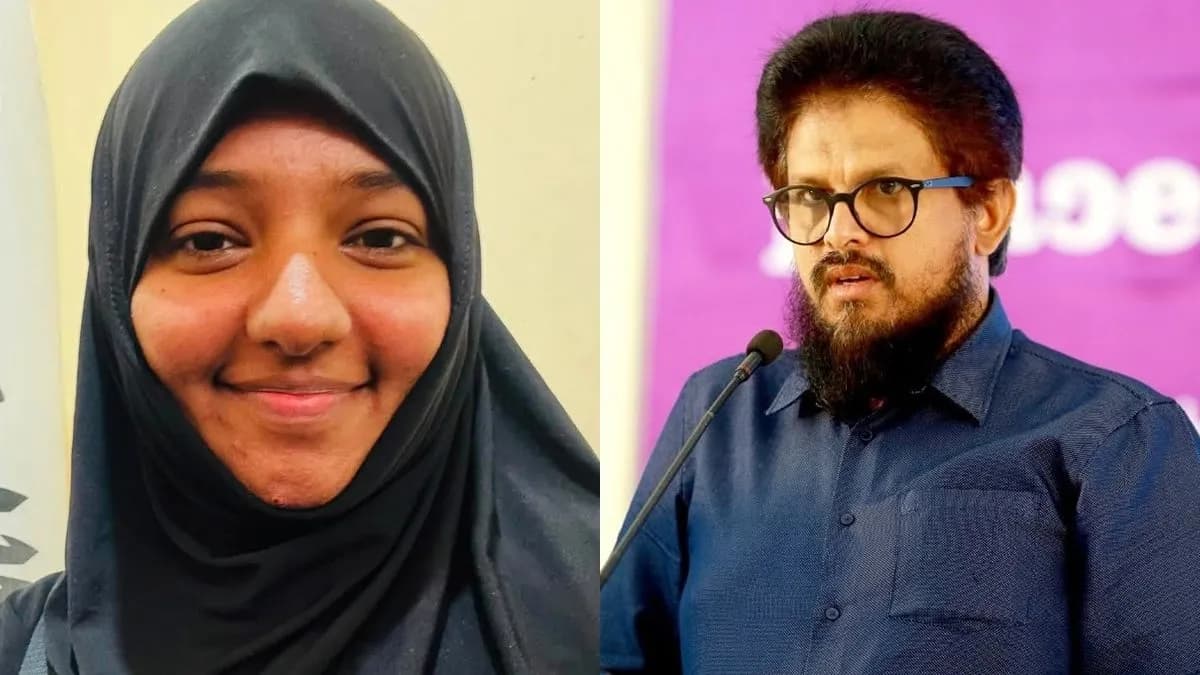
The Malayalam film fraternity has rarely shied away from socially charged commentary, but a recent statement by veteran screenwriter and director M.M. Akbar has struck a particularly raw nerve. Known for his sharp, often unsettling narratives, Akbar opened up about a deeply personal transformation he underwent while filming in Afghanistan - an experience that left him questioning the very fabric of gender and privilege in ways he had never anticipated. Speaking candidly, he admitted that the harrowing reality of women’s lives in that war-torn nation made him feel, for the first time, that he would not want to be born a woman.
Akbar’s remarks, which surfaced during a recent informal interaction, were not part of any promotional tour for an upcoming project. Instead, they emerged from a reflective conversation about how travel and exposure to extreme societal structures can dismantle one’s preconceived notions. He recounted specific, unnamed incidents from his time in Afghanistan where the daily oppression of women was not just visible but institutionalized - moments that he said left him “paralyzed with a guilt he couldn’t articulate.” The writer, whose Malayalam films have often explored themes of identity and moral ambiguity, confessed that returning to Kerala felt surreal, as the freedoms taken for granted at home stood in stark contrast to the brutal restrictions he had witnessed abroad.
A Reality Beyond Scripts
The director elaborated on how his own creative process had been shaken. He noted that as a storyteller, he had always believed he could empathize with any character, regardless of gender or circumstance. However, Afghanistan challenged that arrogance. “You write dialogues about pain, but you don't live it,” he said, translating his thoughts into English. He described a specific scene - watching a young girl carry water for miles while her brother attended school - as a moment that “broke something inside.” It was not just the inequality, he stressed, but the sheer normalization of it that haunted him. He felt a profound helplessness, realizing that his cinematic voice, so powerful in Kerala, was utterly useless in that context.
Akbar was also careful to clarify that his statement should not be misread as a commentary on Afghan culture as a whole or as an act of orientalist judgment. Rather, he framed it as a critique of a global patriarchal system that finds its most extreme expression in conflict zones. He pointed out that the same logic that confines women in war-torn regions exists, in milder but insidious forms, everywhere - including within the Malayalam film industry. His admission, then, was not just about a foreign land but a mirror held up to local practices, from unequal pay to the casual dismissal of women’s professional contributions on set.
The Industry Reacts
The reaction to Akbar’s confession has been swift, with several younger filmmakers and actors in Malayalam cinema praising his honesty. Some have drawn parallels to his own filmography, noting that his earlier works often featured female characters in positions of profound struggle, which now seem almost prescient. A prominent actress, who wished to remain unnamed, reportedly reached out to him privately, thanking him for acknowledging a reality that women in the industry have long fought to articulate. Conversely, a few voices on social media have accused him of performative empathy, questioning why this realization took a trip to a war zone instead of a conversation with the women in his own professional circle.
Yet, Akbar’s response to that criticism was remarkably measured. He accepted the charge, admitting that privilege often blinds us to the suffering right in front of us. He shared that he has since made a quiet commitment to read more scripts by women writers and to mentor at least one female assistant director on his next project. This is not a grand cinematic gesture, he insisted, but a small, practical step toward dismantling the very complicity he now recognizes within himself.
Beyond the Headline
For those following Malayalam cinema, Akbar’s statement is significant beyond its shock value. It signals a rare moment of vulnerability from a filmmaker often perceived as intellectually distant. His admission that he “felt like not being born a woman” is not a rejection of womanhood but a profound acknowledgment of the unbearable weight it carries in certain corners of the world. In translating his Afghan experience into a deeply personal confession, Akbar has done what he does best - forcing an uncomfortable conversation.
Whether this translates into tangible change in his future work or remains a fleeting, emotional outburst is yet to be seen. But for now, his words have added a new layer to the ongoing discourse on gender in Malayalam cinema. The industry, known for its rapid evolution in recent years, will be watching to see if the man who once wrote some of its most disturbing stories can now write a different kind of narrative - one that begins with listening, rather than speaking over. As Akbar himself concluded, in English, “The least I can do is not look away. And to never pretend that I understand what I have never had to endure.”
Source: Filmibeat Malayalam