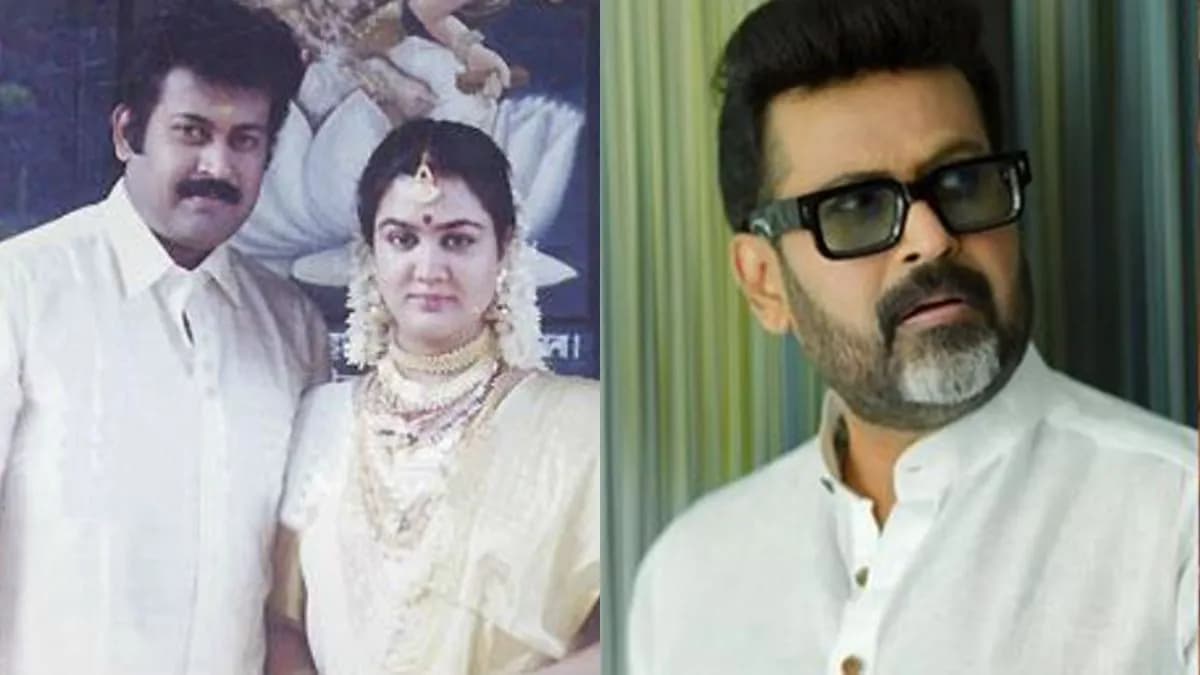
Veteran Malayalam actor Manoj K. Jayan has opened up about his long and often complicated professional relationship with Urvashi, describing a bond shaped by mutual respect, occasional friction, and a reluctance on his part to place blame at her feet when tensions arose between them. In remarks that have been circulating among Malayalam cinema followers, the actor reflected on how difficult periods in their working association left him troubled, and how he consciously avoided turning disagreements into accusations against his colleague.
The headline attached to the discussion translates roughly to "I did not like blaming her; when she was very upset..." - a line that frames the actor's recollections around restraint rather than resentment. Manoj K. Jayan indicated that watching Urvashi go through distress was itself painful for him, and that he preferred to absorb the strain of a difficult phase instead of directing fault toward her.
Urvashi is among the most respected performers in Malayalam cinema, with a career that has spanned decades and moved fluidly between comedy, character roles, and emotionally demanding leads. Her reputation rests on versatility as much as longevity, and she has remained a fixture in the industry well into a later phase of her career, working across generations of filmmakers and actors. That stature provides the backdrop to Manoj K. Jayan's comments: two seasoned artists whose paths crossed repeatedly on sets, and whose rapport evidently carried both warmth and turbulence.
A Friendship Tested by the Pressures of the Industry
Manoj K. Jayan's reflections suggest that whatever strain entered the relationship was not rooted in personal animosity but in the ordinary stresses of film production - the long schedules, creative differences, and emotional fatigue that can wear down even well-established colleagues. He framed his own response as a deliberate choice: rather than assign blame when things went wrong, he tried to understand the circumstances and to protect the relationship.
That instinct appears to have been tested. The actor acknowledged that there were moments when he felt considerable pain over how events unfolded, yet he maintained that he never wished to cast Urvashi as the source of the problem. In his telling, the difficulty lay in the situation itself, not in any failure on her part.
Such candour is relatively unusual in an industry where public commentary about co-stars tends to stay guarded. Malayalam cinema has a tightly knit professional community, and reputations built over decades carry real weight. An actor of Manoj K. Jayan's experience speaking this openly about an emotional chapter with a peer of Urvashi's standing therefore carries a certain significance, even without specifics about which production or period he had in mind.
Careers That Intersect Across Eras
Both figures belong to a generation that helped define the texture of mainstream Malayalam filmmaking from the 1980s onward. Manoj K. Jayan built a screen identity around intensity and physical presence, frequently cast in roles that demanded authority or menace, but he has also shown range in gentler, more reflective parts. Urvashi, for her part, became a benchmark for comic timing early on and later demonstrated a capacity for gravitas that kept her in demand as the industry's storytelling matured.
Their overlapping careers meant repeated collaborations and, inevitably, the kind of familiarity that allows for both easy rapport and real conflict. The actor's account does not dwell on any single incident; it is more a reflection on temperament - his own preference for patience and hers as a colleague he was unwilling to reduce to a problem.
What emerges is less a story about a feud than about the emotional cost of sustained creative work. The actor's admission that he felt deeply unsettled during a rough patch, and that he resisted the easy route of pointing fingers, reads as a statement about professional ethics as much as personal feeling.
Why the Remarks Resonate
Urvashi's position in Malayalam cinema makes any public discussion of her working relationships newsworthy, particularly when it comes from a contemporary who has shared sets with her over many years. Audiences in Kerala tend to follow not just films but the people who make them, and the interpersonal history between long-serving artists is part of that broader interest.
Notably, Manoj K. Jayan's comments do not purport to settle any dispute or deliver a verdict. They describe a stance: an unwillingness to blame, and a discomfort at seeing a colleague in distress. That framing keeps the focus on empathy rather than grievance, and it leaves the specifics of whatever strain existed largely unspoken.
For now, the remarks stand as a rare public window into the dynamics between two veterans of the industry - a reminder that behind the credits, working relationships are lived rather than performed, and that even long partnerships can pass through difficult seasons without hardening into enmity.
Source: Filmibeat Malayalam