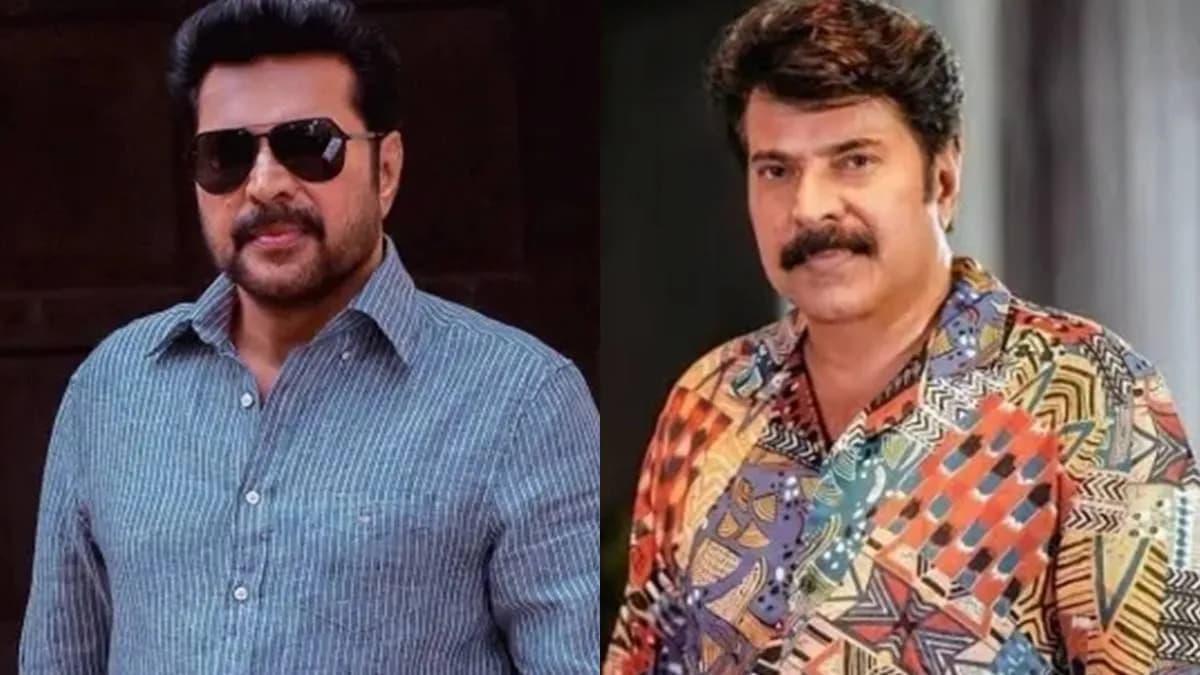
Veteran Malayalam actor Mammootty has long occupied a position in Indian cinema that goes well beyond the box office. Across more than four decades, he has built a public identity rooted less in image management than in a willingness to state his position and absorb the consequences. That trait was tested most visibly during the Nilavilakku controversy, when a section of religious hardliners turned their anger on him over remarks and associations they found objectionable. The episode has become a reference point in Malayalam film discourse whenever the subject of an actor's convictions arises.
The Nilavilakku Flashpoint
The controversy took its name from the traditional oil lamp, a symbol freighted with ritual significance in Kerala's temple culture. A remark that touched on how such symbols are invoked in public and political life drew a sharp reaction from groups that read it as an affront to religious sentiment. Mammootty became the focus of their campaign. Protesters who had previously treated the actor as a cultural emblem now positioned him as an adversary.
What distinguished the response was how he handled it. There was no hurried clarification, no attempt to reframe the comment as a misunderstanding, and no retreat into the safety of silence. He simply held his ground. In an environment where stars frequently soften or abandon controversial positions under pressure from organised groups, that refusal stood out. It also made him a lasting target: the criticism did not fade when the news cycle moved on, but resurfaced periodically as ammunition against him.
A Pattern Rather Than an Incident
Read in isolation, the Nilavilakku episode looks like a single clash. Placed alongside the rest of his career, it fits a recognisable pattern. Mammootty has taken public positions that carried real professional and personal cost, resisting demands that he apologise or retract simply because a loud section disapproved. He has consistently defended the idea that an artist's personal views are not a commodity to be withdrawn whenever they prove inconvenient.
That consistency is not the same as political uniformity, and it is a mistake to reduce it to one label. The point his defenders make is procedural: an individual should not be compelled to abandon an opinion by organised pressure. Whether or not one agrees with the specific views in question, the insistence on that principle has earned him respect across otherwise divided audiences in Kerala.
What the Episode Reveals About Malayalam Cinema
The controversy also exposed a structural tension in the industry. Malayalam cinema depends on the willingness of its biggest stars to engage with social questions, yet that engagement invites retaliation whenever it brushes against organised religion or electoral politics. Actors are expected to be visible, accessible and opinionated up to a point, and to fall silent the moment the cost becomes real.
Mammootty's refusal to follow that script set a difficult benchmark. Younger performers now navigate the same terrain with far more caution, often calculating their statements against the risk of a backlash. His example is cited both approvingly, as a model of integrity, and warily, as a warning about the price of speaking plainly. Either way, the Nilavilakku controversy has become shorthand for the moment an actor's stance was genuinely tested rather than merely advertised.
A Legacy of Staying Put
It is worth separating the mythology from the record. Mammootty has not been a full-time political voice, and he has not courted controversy for its own sake. What distinguishes him is a narrower but harder quality: once he has taken a position, he does not abandon it to placate a crowd. In a career built on reinvention and range, that constancy has become as much a part of his public identity as any performance.
Years after the Nilavilakku controversy, the specifics of the original remark matter less than the response it provoked and the response he gave. Religious hardliners succeeded in making him a target. They did not succeed in making him recant. For an industry still arguing over whether stars should speak at all, that remains the central fact of the episode, and the reason it keeps returning to the conversation whenever Mammootty's name comes up alongside the question of conviction.
Source: Filmibeat Malayalam