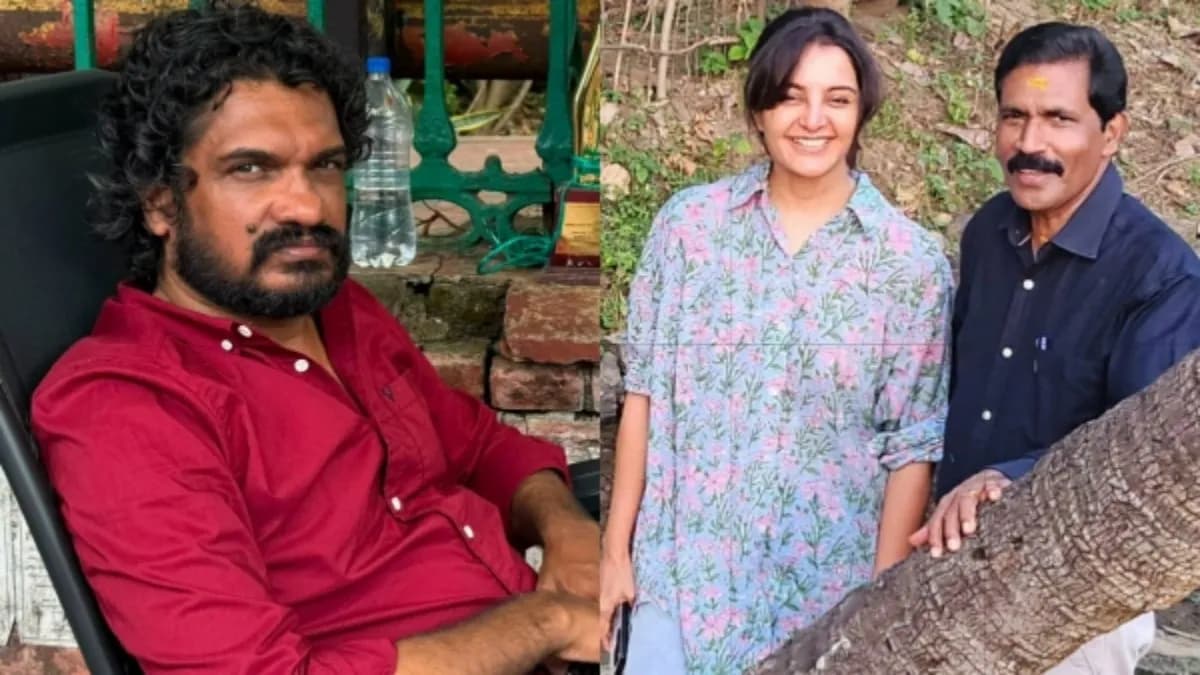
A single line of dialogue from a Malayalam film has been doing the rounds on social media this week, and it is not a punchline or a mass-hero roar. It is a quiet, wounded question about why strangers feel entitled to judge a woman who has already survived more than her share of trials. The line translates roughly as: "A woman who faced many trials with a smile - why should anyone else carry a worry that even her own family does not?"
The words have been widely shared without much accompanying context, which is often how the most resonant film dialogue travels. They appear to come from a scene in which a character pushes back against the casual, almost proprietary concern that outsiders direct at women whose lives have been difficult. The sentiment is simple: suffering does not make a woman public property, and sympathy that arrives uninvited is often just curiosity wearing a kinder mask.
What gives the line its bite is the specificity of its first half. The woman in question is not described as someone broken by hardship. She is described as someone who met each trial with a smile - a phrase that in Malayalam cinema carries its own weight, somewhere between admiration and quiet reproach. It acknowledges resilience while gently questioning why that resilience is so often expected of women in the first place. The second half then turns the knife: if her own family, the people with the most reason to worry, are not consumed by anxiety over her choices, what exactly is driving the concern of everyone else?
That rhetorical question has landed with audiences because it names something familiar. In Malayalam films of the past decade, the woman who has endured hardship has frequently been written as a figure of pity or a symbol of sacrifice. She exists to be wept over, to be rescued, or to be cited as an example of endurance. This line refuses all three roles. It grants her the smile, but it also grants her the privacy that ought to come with it. She is not asking for sympathy. She is, through whoever speaks on her behalf, asking to be left alone.
It is worth noting what the line does not do. It does not attack the family, and it does not claim the woman is beyond help. It simply redistributes the burden of worry to where it belongs - or rather, it points out that the burden may not belong anywhere at all. The family, we are told, is not weighed down by anxiety. That detail matters, because it undercuts the assumption that a woman's struggles must inevitably traumatize her household. Sometimes people cope. Sometimes they cope with a smile, and the smile is not a cry for help.
The dialogue has also prompted a broader conversation among Malayalam film audiences about how women's interiority is handled on screen. A character can be defined by what she has lost, or she can be defined by how she carries it. The better films tend to choose the second, and they trust the audience to sit with the ambiguity rather than demanding a tearful monologue to explain it. This line works precisely because it withholds the monologue. It poses a question and then lets it hang.
Whether the film that produced the line will be remembered for anything else is, at this point, an open question. Social media has a way of extracting a single moment and letting the rest of a movie fade. But the moment itself has a clarity that suggests it was written with intent, not stumbled into. It understands that the most piercing statements about a woman's life are often the ones that decline to pity her.
For now, the line stands on its own - a small, sharp piece of writing about privacy, endurance, and the difference between concern and intrusion. In an industry that frequently mistakes volume for feeling, it is a reminder that a question asked quietly can travel further than a shout.
Source: Filmibeat Malayalam