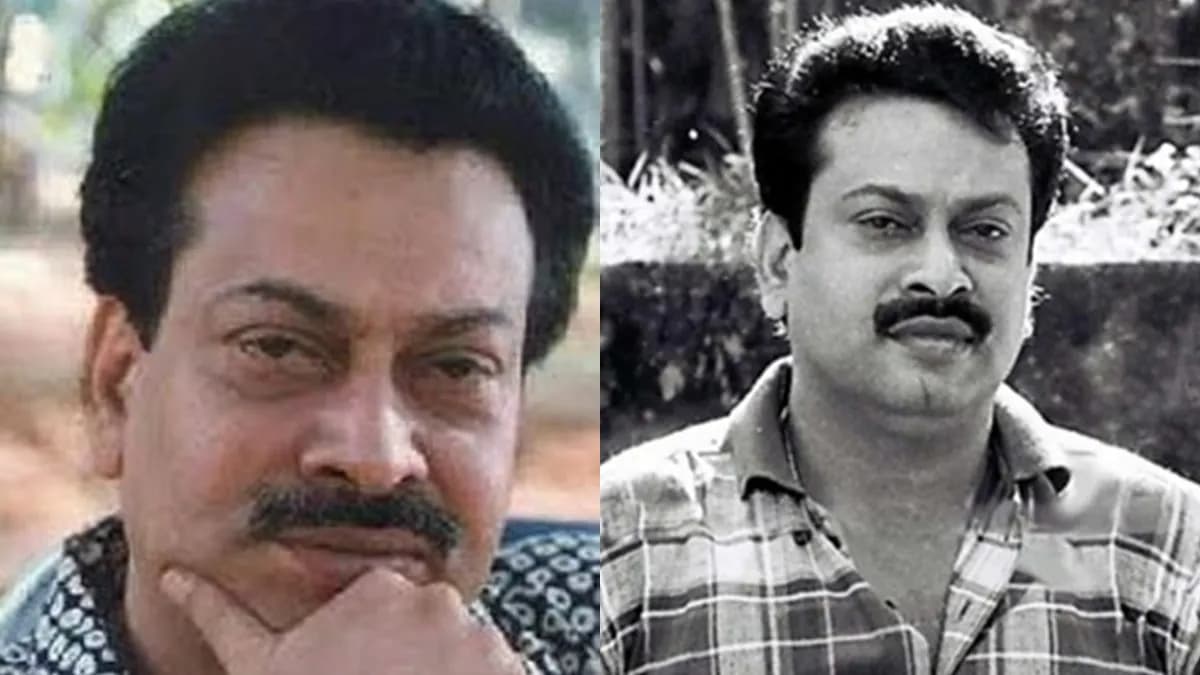
A humorous remark from a veteran Malayalam filmmaker about on-set beauty standards and working hours has resurfaced in film circles, offering a wry window into how the industry's biggest stars once shaped the rhythm of a shooting day. The observation, attributed to a director reflecting on a long career, revolves around two conditions reportedly laid down for a shoot: that no one more handsome than the lead actor be present on set, and that filming wrap by six in the evening.
The line has circulated widely among Malayalam cinema followers in recent days, drawing a mix of laughter and recognition from those familiar with the hierarchies that governed production during the star-driven eras of the past. It captures a moment when the leading man's image was treated as the single most valuable asset on a film, to be protected at all costs, and when a director's schedule bent around an actor's comfort rather than the other way round.
Read plainly, the two demands sound like vanity run wild. Read in context, they sketch the practical logic of an industry that built its economics around larger-than-life male stars.
The Logic Behind a Lighter Set
The request that no actor more conventionally good-looking than the hero appear in the film is easy to mock, but it points to a real concern in commercial Malayalam cinema: the hero's screen presence is the product being sold. Casting directors and producers have long understood that a supporting player who visually overshadows the lead can unsettle the audience's focus, even if the story suffers nothing. In the studio era and the decades that followed, this wariness translated into casting choices that were deliberate, sometimes ruthless, and rarely discussed in public.
The six o'clock rule belongs to the same world. Shooting days in Malayalam cinema have historically run long, often stretching past midnight to make up for lost time and tight budgets. An actor with the standing to demand an early wrap could effectively control the pace of an entire production, forcing the crew to compress scenes, shorten set-ups, and prioritize the star's close-ups before the clock ran out. Assistants, cinematographers, and light crews learned to work around that deadline the way other industries work around a factory whistle.
What makes the remark endure is the tension buried in it. The director is not simply complaining. The phrasing signals affection as much as exasperation, the tone of someone who spent years negotiating with a performer he also admired. In Malayalam cinema, such arrangements were rarely written into contracts. They were understood, passed along by word of mouth, and enforced by the sheer weight of a star's name at the box office.
Working Hours and the Question of Whose Comfort
There is a second reading, less flattering to the industry and more interesting to anyone watching it from outside. A six p.m. cutoff for one person on a set of dozens means everyone else absorbs the cost. Crew members who arrive before dawn, technicians who reset lighting between takes, and junior artists who wait hours for a single shot all feel the consequences of a schedule shaped around a single performer. The anecdote, told as comedy, also documents a labor hierarchy that Malayalam cinema has only recently begun to question openly.
That questioning has grown louder as younger filmmakers and actors push for more structured, humane working conditions, and as audiences reward ensembles over solo showcases. The old bargain, in which the star's convenience set the terms for everyone, no longer goes unchallenged.
For longtime observers of Malayalam cinema, though, the line lands differently. It is a piece of oral history from a period when the industry ran on personalities rather than systems, when a director's diplomacy mattered as much as his craft, and when a single phone call from a leading man could reshape a week of shooting.
The remark is unlikely to be verified as a literal quote from any one production, and it does not need to be. It functions the way such industry lore always has in Malayalam cinema: as shorthand for an era. The era of the unquestioned hero, of schedules built around a face, and of directors who learned to smile while surrendering their evenings.
Whether the story is remembered as charming or as a cautionary tale depends on where you stood on that set. For the star, it was a reasonable request. For the crew waiting past dusk to finish a shot, it was something else entirely.
Source: Filmibeat Malayalam