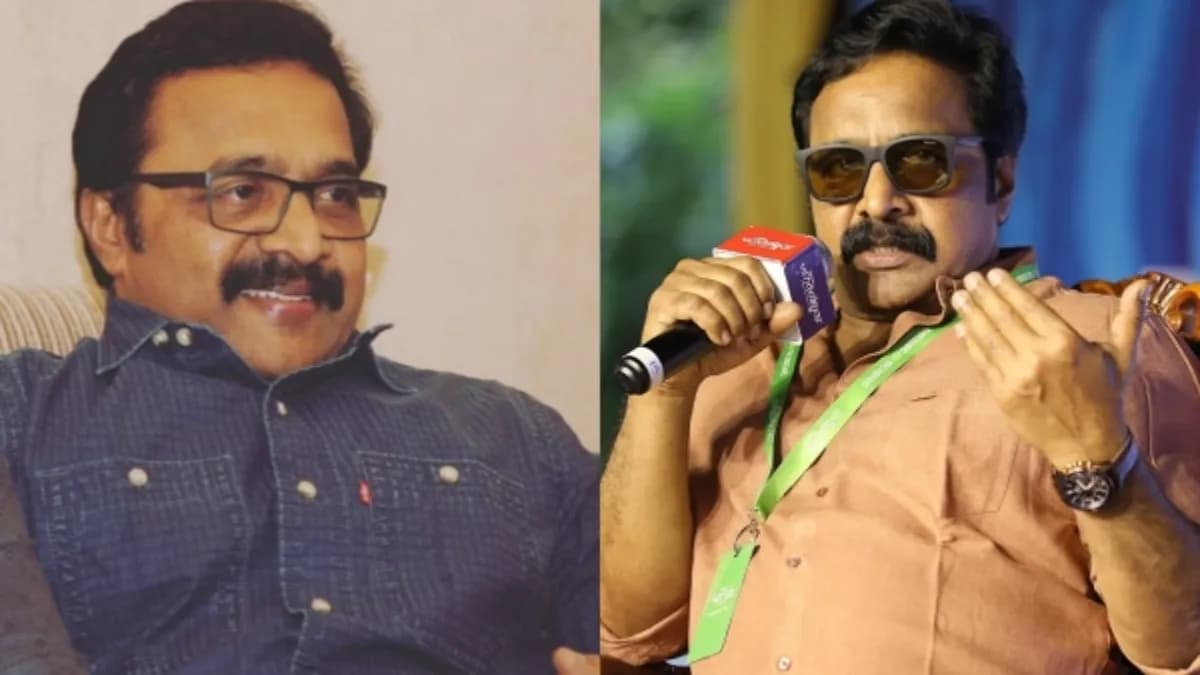
A pointed question about Malayalam cinema's paternal imagination has set off a fresh round of debate online: why does the industry's celebrated "father" archetype keep arriving from another language's storytelling tradition while the mother in its own narratives is so often reduced to a limited, long-suffering presence? The remark, framed as a jibe about when the Malayalam protagonist finally got a father of his own, has been circulating widely among film commentators, who are pairing it with a separate worry - that on-screen divorces appear to be piling up at a rate that says as much about changing family life as about lazy screenwriting.
The line of criticism is not aimed at any single film. It targets a pattern that critics say has hardened over decades. In the popular Malayalam template, the mother is a fixture of the household - devout, anxious, endlessly forgiving - while the father is either absent, a stern patriarch borrowed from a more grandiose cinematic idiom, or a sentimental monument erected in the third act. The wry observation about the mother being "just a Nair" - a community reference that in this context stands in for a narrow, shorthand character type - captures what critics see as the poverty of that shorthand.
A Question of Where the Father Came From
The provocations lands because Malayalam cinema has long prided itself on realism. Its family dramas built their reputation on intimate, cramped interiors, on money troubles, on the small humiliations of middle-class life. Yet the father figure in many of those films behaves as if he has wandered in from a more theatrical tradition, all declamation and wounded honour. Commentators argue this is a hangover from stage adaptations and from the influence of larger-than-life stars whose persona demanded a mythic patriarch rather than a recognisable one.
The result, they say, is an imbalance. Mothers carry the emotional labour of the plot but rarely get interiority. Fathers get the speeches but not the texture. When a filmmaker does write a genuinely specific father - petty, tired, apologetic, unreliable - the performance is often praised as a departure rather than the norm.
Divorce on Screen and Off
The second half of the complaint concerns divorce, which has become an increasingly common narrative turn in recent Malayalam films. Marriages collapse over a single conversation, a mismatch of ambition, an affair revealed in the second act. The trope is now common enough that audiences have started reading it as a barometer of something beyond fiction.
Whether cinema is reflecting social change or amplifying it is the open question. Kerala's family structures have shifted with migration, with more women working outside the home, with property disputes that turn relatives into litigants. Filmmakers have drawn on those tensions, and the divorce plot offers an easy engine for conflict. But critics warn that convenience is the problem: when a marriage ends on screen mainly to generate a crisis for the male lead, the woman's perspective is again the casualty.
Beyond the Family Melodrama
There is a counter-argument worth keeping in view. Recent Malayalam output has also produced films that treat marriage and separation with unusual honesty - chronicling the paperwork, the custody fights, the awkward co-parenting. Some of the most discussed performances of the past few seasons have come from actresses playing women who leave, not women who wait.
What the current debate exposes is less a crisis in individual films than a gap in the writing room. The complaint about the missing father and the overburdened mother is really a complaint about defaults - the character types a script reaches for when it has not done the work of imagining a particular family. And the divorce spike, if it is one, raises the same demand: that the upheaval be written from more than one side.
For now, the conversation is happening mostly in comment sections and film circles rather than in any organised form. But it has landed at a moment when Malayalam cinema is being watched more closely than ever outside the state, and when the gap between its reputation for realism and its reliance on inherited types is harder to ignore. The question, blunt as it is, may be less about fathers than about who gets to be a fully drawn person on screen.
What to Watch
Expect the argument to resurface with each new family drama that premieres. The test will be simple: does the mother have a life beyond her son's conscience, and does the father exist as something other than a symbol? Until more scripts answer yes, the jibe will keep finding an audience.
Source: Filmibeat Malayalam