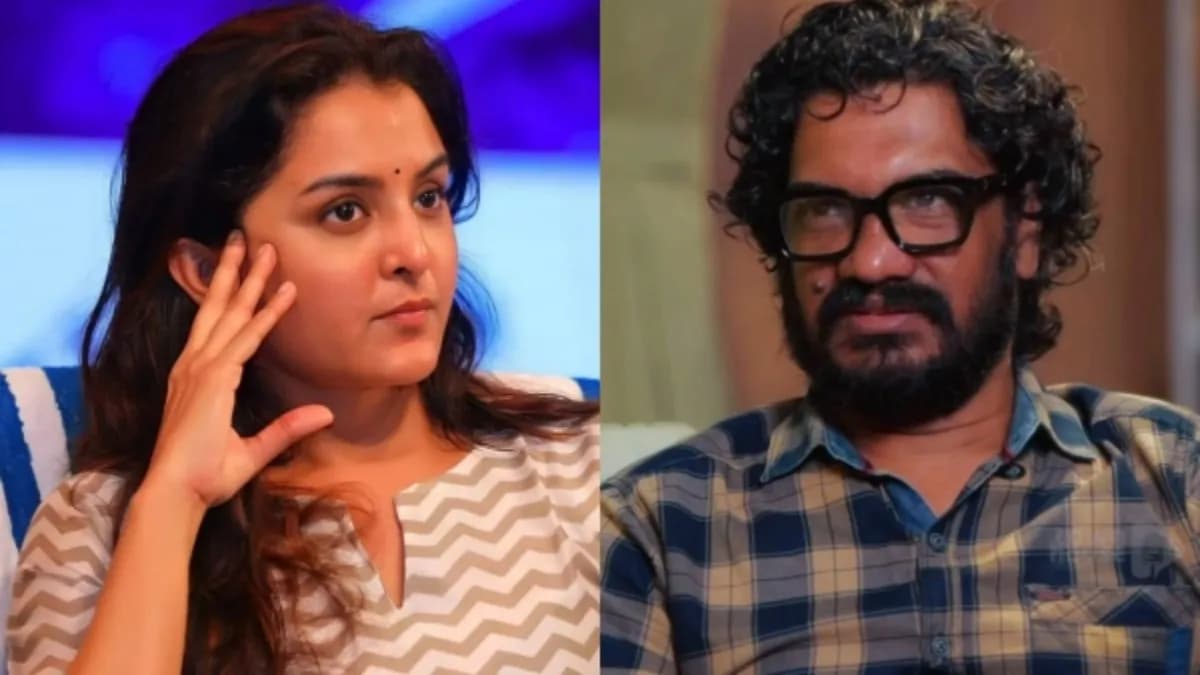
A sharp new social media note circulating in Malayalam film circles has turned attention back to a familiar charge: that the industry's loudest commentators are quicker to attack women than to examine themselves. The note, which has been widely shared among actors, technicians and fans, argues that the habit of tearing people down has remained constant across generations, and that when a woman is perceived to have wronged someone, the response escalates from criticism into outright character assassination. No specific film, production house or individual is named, and no verified figures or dates accompany the text, but its timing has ensured it lands in the middle of an ongoing conversation about how the Malayalam film world treats the women who work in it.
The message is blunt about the mechanism it describes. According to the note, the pattern is not random abuse but a consistent method: first the target is mocked, then the mockery hardens into moral judgment, and finally the person's entire reputation is treated as fair game. The claim is that this treatment is applied with particular ferocity to women, whose professional failures or personal choices are converted into evidence of bad character in a way that rarely happens to men. Translated from the original, the note's central charge is that abusing others remains the main occupation, in the past as much as now, and that if a woman ever crosses someone, she will be insulted until there is nothing left of her public image.
That framing has resonated because it echoes grievances that have surfaced repeatedly in Malayalam cinema over the past several years. Conversations around workplace harassment, the treatment of women at award ceremonies, the abuse directed at actresses on social media, and the informal power structures that decide who gets work have all produced the same underlying complaint: the price of being a woman in the industry is higher, and the punishment for stepping out of line is public and permanent. The note does not present itself as a formal complaint or an accusation against any named party. It reads instead as an observation, which may be exactly why it has travelled so far.
A Familiar Pattern in a New Format
What gives the note its weight is not new information but the form it takes. Social media posts by people inside the industry have become one of the few reliable ways for concerns to reach the public without going through official channels. Statements issued through associations tend to be carefully worded and slow to arrive; a short, direct note can circulate within hours. In this case, the absence of names has allowed readers to project their own experiences onto it, and the response has split along predictable lines. Some have read it as a long-overdue statement of an obvious truth, while others have questioned whether a general note without specifics accomplishes anything beyond prompting another round of argument.
That debate itself illustrates the problem the note describes. A text about verbal abuse has generated more discussion about the text than about the behaviour it criticises, and some of the commentary around it has been dismissive in exactly the manner it condemns. Critics of the note argue that vague accusations can damage reputations without evidence, which is a fair point in principle, though the note names no one, so there is no reputation being damaged. Supporters counter that demanding names is a way of ensuring nothing is ever said at all, since speaking publicly in Malayalam cinema carries real professional risk, especially for those without established backing.
Why the Industry Keeps Returning to This Conversation
Malayalam cinema has been unusually willing in recent years to examine its own conduct, and equally prone to letting those examinations fade before anything concrete changes. Committees have been formed, statements have been issued, and individual careers have been affected by public opinion in both directions. Yet the complaints return, and they return in the same shape: that the loudest moral judgments are reserved for women, and that the people delivering those judgments are rarely held to the same standard. The note now in circulation does not propose a remedy. It simply states the pattern and leaves it there, which is part of its force.
For now, the note remains what it began as, a piece of commentary without attribution and without a stated target. Its significance lies less in what it reveals than in how readily it was believed. In an industry where reputations are built and destroyed in public, that willingness says more about the current mood than any single post could. Whether it leads to anything beyond another cycle of argument is, as ever, the open question.
Source: Filmibeat Malayalam