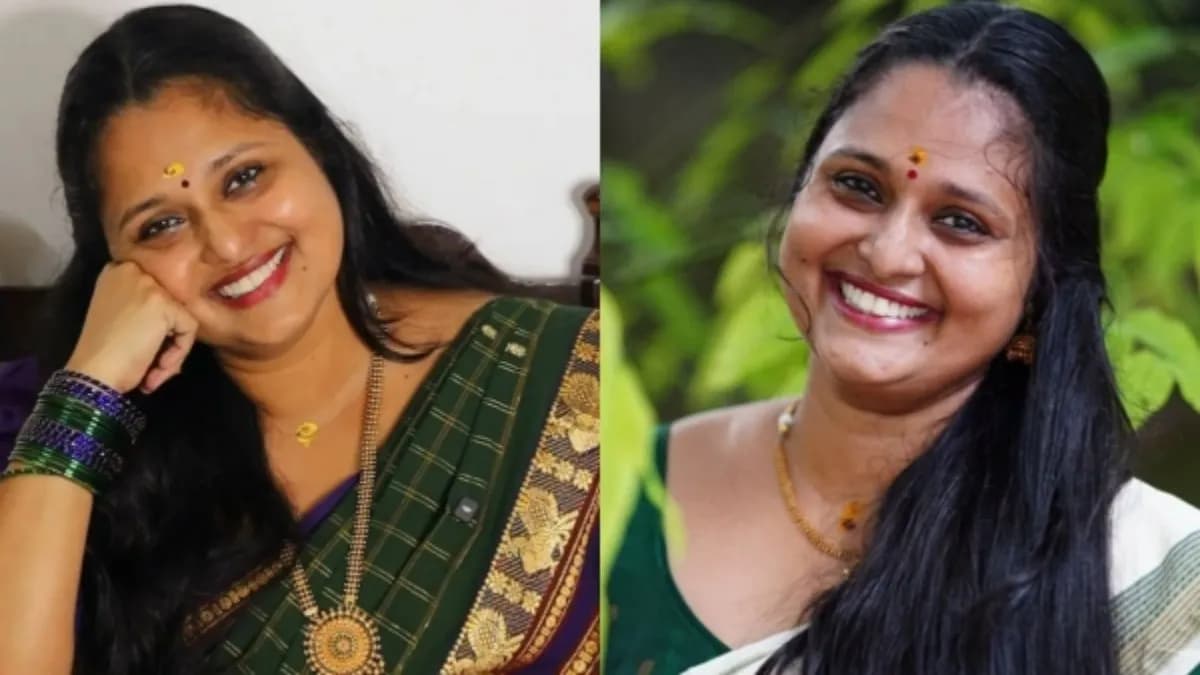
A prominent Malayalam film figure has spoken publicly about the emotional collapse that followed her marriage and the long, unglamorous work of rebuilding herself, in a personal note that has drawn wide attention across the industry's social media circles. The title of her reflection translates roughly as "The trauma a marriage gave me, coming back from depression, a mother raising two daughters alone," and it frames an account that moves from a breaking point to something closer to steady ground.
The note marks one of the more candid first-person accounts to emerge from a South Indian film community that has, in recent years, seen a slow shift in how women in the industry discuss marriage, mental health, and the price of staying silent. What the writer describes is not a single dramatic rupture but an accumulation: a relationship that eroded her sense of self, a period of depression that followed, and a decision to rebuild on her own terms with two children in her care.
A Public Figure, A Private Collapse
The choice to publish such an account carries its own weight in an industry where reputation is currency. Women working in Malayalam cinema have historically faced a narrow set of acceptable public narratives, particularly around marriage and motherhood, and speaking plainly about a failed relationship or a diagnosed depression has often invited scrutiny rather than sympathy. That this note exists at all, and that it has circulated without the usual defensive framing, suggests the ground has shifted somewhat.
Depression remains heavily stigmatized in Kerala despite relatively high literacy and health awareness, and it is frequently treated as a private failing rather than a medical condition. For a working woman in the public eye to name it directly, and to connect it to the circumstances of her marriage rather than to some vague personal weakness, is a meaningful departure from the usual template.
Single Motherhood and the Daily Arithmetic
The note's closing image, of a mother raising two daughters alone, is also its most grounded. Single parenthood in India carries practical and social costs that rarely make it into celebratory profiles: school runs, medical appointments, financial planning, and the constant negotiation of a culture that still treats a household without a male figure as incomplete. Add to that the irregular hours and public exposure of film work, and the logistics become formidable.
There is a particular dimension to raising daughters in this context. Mothers who have emerged from difficult marriages often describe an intensified sense of responsibility around what their children learn about relationships, self-worth, and the difference between endurance and acceptance. The note does not spell this out, but the framing gestures toward it.
Why This Kind of Note Travels
Personal disclosures from film personalities perform a dual function. They offer the writer a measure of control over her own story, pre-empting speculation. They also provide something less obvious: a template. Readers in similar circumstances, who may have no public platform and no access to supportive networks, encounter a recognizable shape to their own experience.
The Malayalam industry has produced a growing number of such accounts in recent years, from actresses discussing pay disparity to technicians describing workplace harassment. Whether this represents genuine structural change or simply more visible individual bravery is an open question. Legal and institutional protections for women in the industry remain uneven, and a supportive public response to one note does not guarantee anything for the next person who speaks.
What the note does establish is a record. It states, without embellishment, that a marriage caused trauma, that depression followed, that recovery happened, and that two daughters are being raised by one parent. Those are the facts as the writer presents them, and the industry's response so far has been largely one of recognition rather than judgment.
For an audience accustomed to seeing women in Malayalam cinema primarily through the roles they play, the note offers a reminder that the person behind the performance has a life with its own plot, and that the plot does not always resolve neatly. Recovery, as this account makes clear, tends to be less an event than a practice, sustained daily and largely out of view.
Source: Filmibeat Malayalam