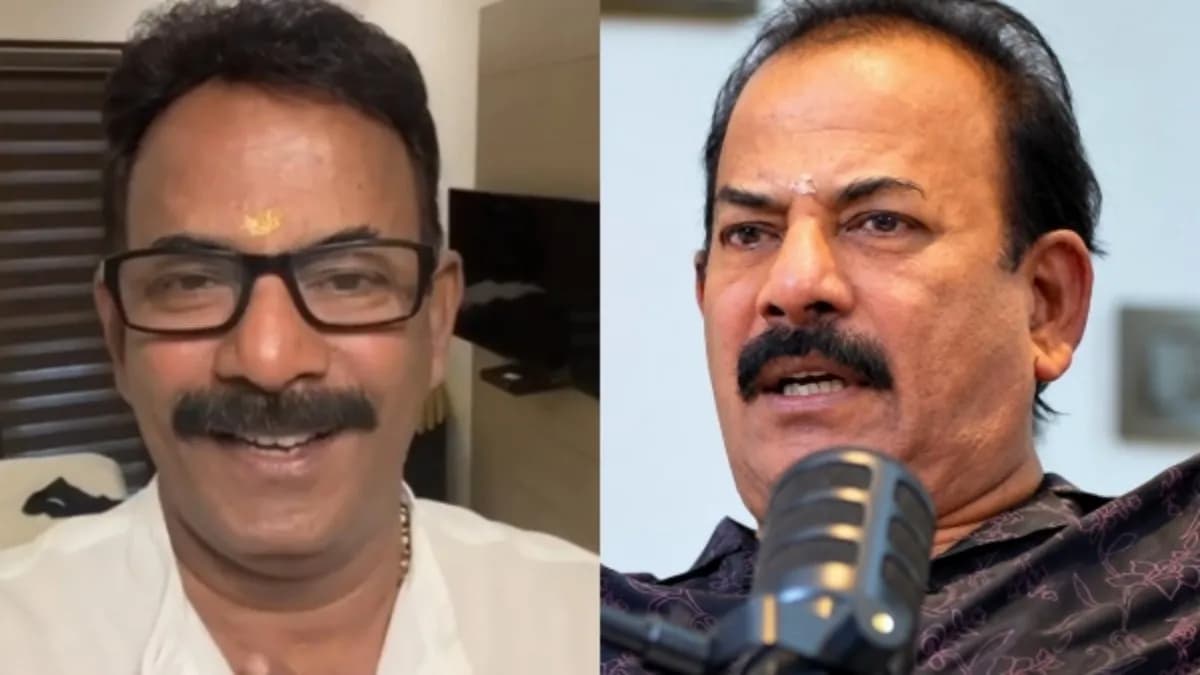
The phrase "Malabar Nair" functions less as a marker of ancestry and more as a yardstick for personal conduct, according to a line of argument now circulating in Malayalam cinema circles. The assertion - that self-respect belongs to no single community - has become a talking point in discussions about how Malayali identity is framed both on screen and in public life. Roughly translated, the statement asks whether "Malabar Nair" is some kind of certificate of a person's character, and insists that dignity is not the monopoly of any one caste.
The remarks arrive at a moment when Malayalam filmmakers are revisiting questions of lineage, pride and social hierarchy with unusual frankness. Recent productions have moved away from treating caste as mere background detail, instead placing it at the centre of character conflict. That shift has given fresh relevance to older debates about honorifics and the way certain labels carry an unearned weight.
The Weight of a Compound Label
"Malabar Nair" is a compound term that ties geography to community. Malabar denotes the northern stretch of Kerala, a region with its own distinct social history, while Nair refers to a historically significant group within the state's caste landscape. Put together, the phrase has long carried connotations of status, land and a particular code of behavior. The question now being raised is whether that association should continue to function as an automatic endorsement of an individual's integrity.
Critics of the phrase argue that character is earned through action, not inherited through naming. They contend that when a regional and caste descriptor is treated as shorthand for uprightness, it quietly diminishes everyone outside it. The counter-argument holds that such terms are cultural markers rather than moral claims, and that reading them as certificates of virtue misinterprets their purpose.
Self-Respect as a Shared Inheritance
The second half of the argument is the more pointed one. Self-respect, it maintains, is not a caste monopoly. That formulation cuts against any attempt to claim dignity as the property of a single group. In the Malayalam cultural conversation, this idea has resonance well beyond cinema. It touches on the language used in everyday speech, the assumptions embedded in marriage negotiations, and the hierarchies reproduced in workplace and neighbourhood life.
Filmmakers who engage with these themes tend to walk a fine line. Overt moralizing can flatten characters into mouthpieces. The more durable approach has been to let caste and status play out through small decisions - who gets served first, who is presumed to be lying, who is believed without evidence. When those textures are captured honestly, the argument about dignity makes itself.
Why the Debate Matters Beyond the Screen
Malayalam cinema has a long record of interrogating social structures, from land relations to religious authority to gender roles. Caste, however, has often been handled with a lighter touch, present in the texture of a story but rarely named outright. The current willingness to say the quiet part aloud reflects a broader shift in the state's public discourse, where younger audiences and creators are less inclined to accept inherited hierarchies as natural.
That shift is not without friction. Audiences remain divided over whether such themes belong in mainstream entertainment or in more explicitly political work. Some viewers appreciate the directness; others prefer their cinema unburdened by argument. The tension itself is instructive - it suggests the subject still has the capacity to unsettle.
What the phrase ultimately invites is a simple test. Strip the label away and ask what remains. If the answer is a person whose conduct commands respect, the descriptor was never doing the work. If the respect depended on the label all along, then it was borrowed rather than owned. That logic extends past any single community to the wider question of how Malayalis understand status and worth.
For now, the statement stands as a provocation rather than a settled position. It asks audiences and creators alike to separate a person's character from the tags attached to them - and to recognize that the capacity for self-respect is distributed evenly, whatever the name on the door.
Source: Filmibeat Malayalam