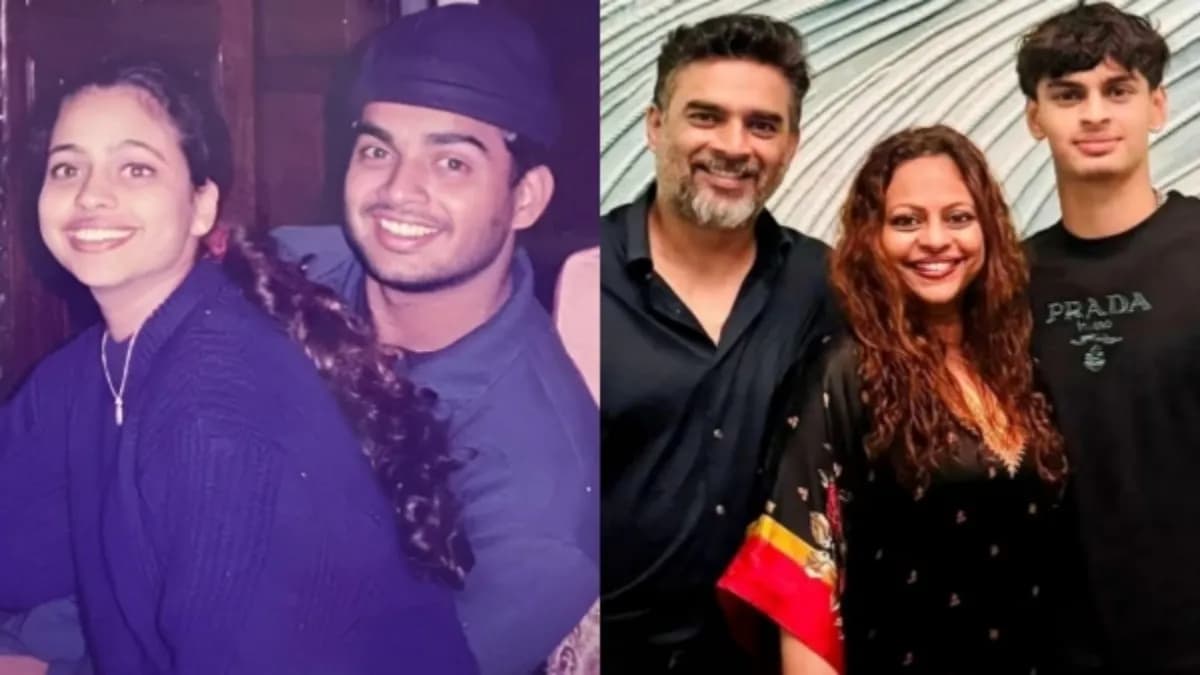
Veteran actor Madhavan has opened up about one of the more unusual creative dilemmas of his career, revealing that he once turned down the chance to play a married man on screen because he could not bring himself to ignore his own wife in the process. The actor, long known for the sincerity he brings to both his performances and his public statements, recalled the episode in a recent interview, describing it as a risk he consciously chose to take rather than compromise on something that mattered to him personally.
Speaking about the phase of his life when such roles were being offered to him, Madhavan explained that the difficulty was not with the character or the craft, but with the emotional reality of pretending, in front of an audience, that he had no wife at all. He said he could not act as though he were unmarried while disregarding the person who was actually part of his life, and that this refusal eventually pushed him toward a decision that carried real professional consequences.
"I could not pretend to be unmarried by ignoring her," Madhavan said, according to the remarks that have circulated widely among Malayalam film audiences. "I took that risk back then."
The statement captures a tension that many leading men in Indian cinema have faced, particularly during eras when the romantic hero was expected to appear emotionally available to every co-star and every viewer. For an actor whose appeal rested heavily on that very accessibility, choosing to draw a line around his personal life was not a small gesture. It meant accepting that certain scripts, certain pairings and certain expectations might no longer come his way.
A choice that shaped his screen persona
What makes Madhavan's recollection notable is the way it reframes a career decision as a personal one. He did not present the move as a moral lecture or as a judgment on anyone else's choices. Instead, he described it as a limit he discovered in himself, one he was willing to pay a price for. That framing has resonated with listeners, many of whom have pointed out that the actor's later roles, whether as a devoted husband, a conflicted lover or a man navigating complicated family ties, carried a weight that felt earned rather than performed.
Audiences who followed his work through the years have often remarked on the steadiness he brought to romantic and domestic parts. If his account is accurate, that steadiness was not only a matter of talent. It was also the result of refusing to dissociate from his own life while standing in front of a camera. The distinction between acting and pretending is one that performers talk about often, but Madhavan's version of it is unusually concrete: the imagined wife on the page could exist only if the real one on his side of the frame was left out of the picture, and he was not willing to make that trade.
Why the remark is drawing attention now
The comments have found fresh life because they touch on a question that continues to circulate in the industry, namely how much of a performer's private life is expected to remain invisible for the sake of a role. For male stars in particular, the convention has historically been forgiving in some ways and demanding in others. A leading man could be married in real life and still be marketed as a romantic ideal, as long as he never explicitly acknowledged the contradiction. Madhavan's admission makes the contradiction visible and admits that it cost him something.
It also arrives at a moment when audiences are more curious than ever about the decisions behind the performances they watch. Actors of his generation are increasingly willing to revisit turning points in their careers, and the result is a fuller picture of how the industry actually worked for them, including the parts that were not glamorous. A refusal to take a role is rarely reported as a milestone, yet in this case it appears to have been exactly that, a fork in the road that shaped what came afterward.
The broader takeaway
Madhavan did not elaborate on which specific projects he passed up or how long the phase lasted, and the account as it stands rests on his own telling rather than on any documented record. What is clear is that he regards the decision as a deliberate risk rather than an accident, and that he speaks about it without regret. For an actor whose longevity has depended on maintaining a connection with viewers across generations, that candor is part of the appeal. It suggests that the man on screen and the man off it were never fully separable, and that he preferred it that way.
The remark will likely continue to be quoted, not because it settles any debate, but because it names one plainly: the price of keeping a private commitment intact in a profession that often asks for the opposite. Madhavan's answer, offered years later, is that he was willing to pay it.
Source: Filmibeat Malayalam