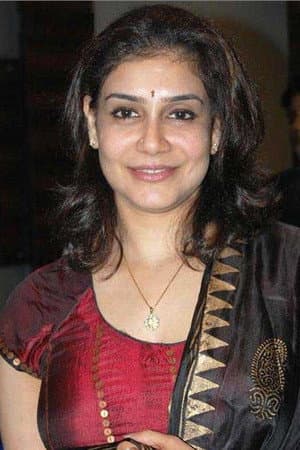
Actor Lissy has spoken about the effect that sharing a set with the veteran performer Sheelamma has on her own preparation, saying in a recent interview that she makes a point of getting ready more thoroughly when she knows the senior artiste will be present. The remark has travelled quickly among Malayalam cinema followers, not because it announces a project or settles a casting question, but because it offers a rare, unguarded glimpse of how one generation of performers regards another.
Lissy's statement, reported under the headline that translates roughly to "If I know Sheelamma is there, I will prepare more, because…", places the emphasis squarely on professional respect rather than nostalgia. She frames the older actor's presence as a reason to raise her own standard, which is a notably specific kind of compliment. It is one thing to praise a colleague's body of work in the abstract. It is another to admit that a colleague's mere attendance changes how you walk into a room.
A Working Actor's Sense of Standards
For audiences who grew up on Malayalam cinema of the 1980s and 1990s, both names carry weight. Sheelamma belongs to a lineage of character actors whose faces are inseparable from the domestic dramas and family narratives that defined the period. Lissy, who began as a leading lady and later moved into character roles, has spent decades on the same sets. The two have therefore shared a professional world long enough for a comment like this to read as something more than politeness.
What makes the remark interesting is its practicality. Lissy does not describe being intimidated, and she does not describe being mentored in any formal sense. She describes adjusting her own preparation. That is the language of a working actor who understands that craft is partly competitive and partly communal, and that the people around you set a bar whether or not anyone announces it.
Why the Comment Landed
Malayalam film culture has a long tradition of treating senior artistes as institutions, but public conversation about them tends to arrive in two forms: tributes on anniversaries and obituaries. Ordinary, ongoing professional regard, expressed in the middle of a career rather than at the end of one, is rarer. Lissy's comment sits in that gap. It treats Sheelamma as a present-day colleague whose presence has consequences, which is arguably a more meaningful form of respect than a retrospective garland.
The line also touches a subject the industry discusses only intermittently: how preparation actually functions on a Malayalam set. Big-budget promotional cycles tend to foreground spectacle, but a large share of the work in the industry happens in ensemble scenes where timing, memory and discipline matter more than anything else. Actors who have spent decades in that environment tend to speak about it plainly, and Lissy did.
There is a further dimension worth noting. Women who have sustained long careers in Malayalam cinema frequently describe their professional relationships with other women as a form of continuity, a way of tracking what the industry expects and how those expectations shift. Lissy's remark, whether or not she intended it this way, belongs to that conversation. She is measuring herself against a colleague, and the colleague happens to be a woman who has been working since before many current stars were born.
What the Comment Does Not Say
It is worth being precise about what has and has not been reported. Lissy's statement concerns Sheelamma as a fellow performer. It does not announce a collaboration, confirm a casting decision, or attach either actor to any specific project. No release, no production house and no timeline has been mentioned in connection with the remark, and readers should not infer one. The news here is the sentiment, not a slate.
That distinction matters in an ecosystem where a single interview answer can be recycled into a dozen speculative stories. Lissy spoke about how she prepares. She did not speak about what she is preparing for.
The Bigger Picture
Still, the comment is a useful reminder of something that gets lost in the churn of release calendars and opening-weekend conversations. Malayalam cinema's reputation for strong writing and performance rests on a deep bench of actors who have worked steadily for decades, often without the visibility that accompanies lead roles. When someone like Lissy publicly acknowledges that bench, she is describing how the industry actually sustains its quality.
Whether the remark leads to anything further on screen is, for now, unknown and probably not the point. The point is simpler. A seasoned actor has said, on the record, that the presence of a senior colleague makes her want to work harder. In an industry that often measures respect in retrospectives, that is a notably current way of expressing it.
Source: Filmibeat Malayalam