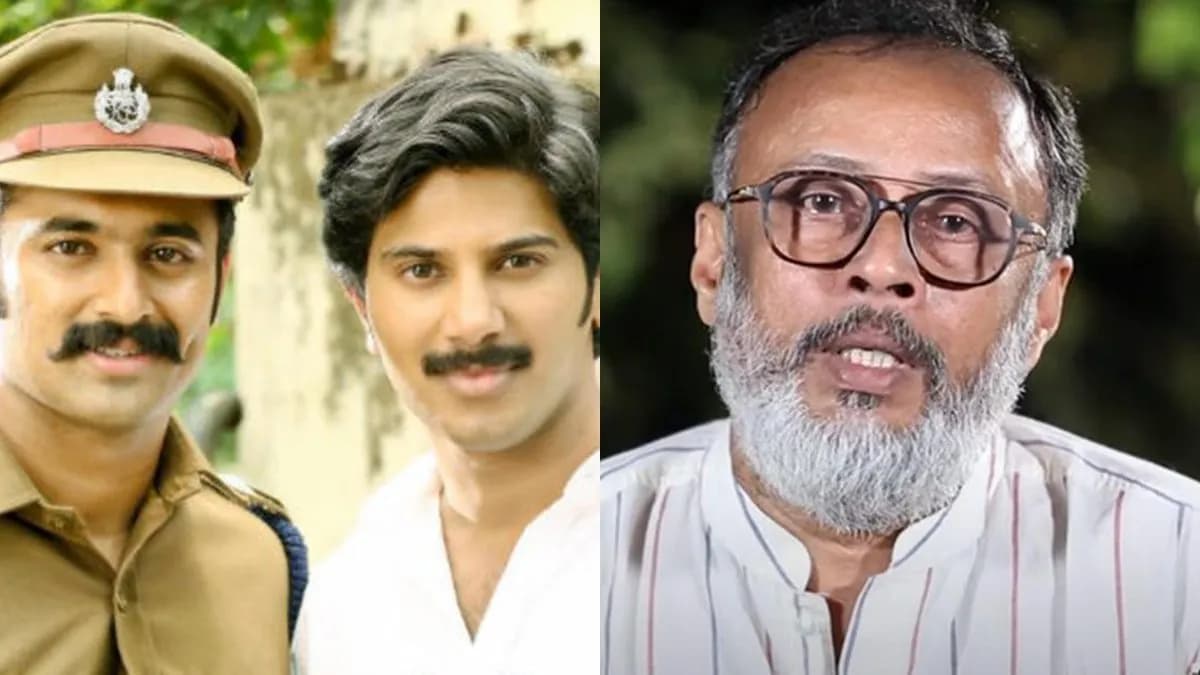
Veteran Malayalam filmmaker Lal Jose has offered a candid reflection on the industry's economics, suggesting that the era defined by the blockbuster Vikramadithyan allowed him to sustain a comfortable career for an extended period, while also shedding light on the factors driving the ever-increasing remuneration demands of Malayalam cinema's biggest stars.
In remarks that have since circulated widely among film circles, Lal Jose explained that the success of Vikramadithyan gave him a financial cushion that lasted for years, allowing him the freedom to choose projects without the immediate pressure of commercial survival. The director, known for balancing crowd-pleasing entertainers with character-driven dramas, pointed to that film as a turning point in his professional life - one that underscored how a single well-received project can reshape a filmmaker's trajectory in an unpredictable industry.
His comments arrive at a moment when conversations about actor pay packets dominate Malayalam cinema's public discourse. With top-tier stars commanding fees that have climbed sharply in recent years, producers and directors have increasingly voiced concern about the sustainability of such structures, particularly for mid-budget films that lack the safety net of a massive opening weekend. Lal Jose's perspective adds a nuanced dimension to that debate: rather than simply criticising escalating costs, he framed the issue as part of a broader ecosystem in which star value, audience expectations and market economics are tightly interwoven.
The Economics Behind Star Salaries
According to Lal Jose, the high remuneration commanded by Malayalam cinema's leading actors is not a simple matter of vanity or greed. It is, he suggested, a direct consequence of the financial architecture that has grown around them. When a star's name alone can guarantee a certain level of pre-release business - through satellite rights, digital streaming deals and theatrical distribution advances - their asking price reflects the risk they are effectively underwriting for the entire chain of investors.
The director noted that this dynamic has deepened as Malayalam films have expanded their reach beyond traditional markets. With streaming platforms competing for premium content and overseas theatrical circuits becoming increasingly lucrative, the commercial ceiling for a successful star vehicle has risen considerably. In that environment, a lead actor's fee functions less as a cost and more as a reflection of the revenue his presence is expected to generate - a logic that, while understandable from a business standpoint, can leave smaller productions struggling to compete for the same talent.
Lal Jose also touched on the personal dimension of the problem. He observed that for many filmmakers, the gap between what a project can afford and what a major star expects has widened to the point where collaborations that once seemed natural have become logistically difficult. This, he implied, is one reason why mid-range directors increasingly turn to newer faces or ensemble casts - not out of preference, but out of financial necessity.
A Career Built on Reinvention
The reference to Vikramadithyan is telling. Released in 2014, the film brought together Dulquer Salmaan, Unni Mukundan and Namitha Pramod in a story that blended humour, romance and a touch of social commentary. It performed strongly at the box office and remains a fondly remembered entry in Lal Jose's filmography - one that demonstrated his ability to adapt to changing audience tastes while retaining his signature storytelling style.
For Lal Jose, the film's success was more than a commercial triumph. It provided the kind of stability that allows an artist to take creative risks without constantly looking over his shoulder. In an industry where fortunes can shift within a single release, that kind of buffer is rare and deeply valued. His willingness to speak about it openly reflects a broader honesty about the precarious nature of filmmaking as a profession - even for someone with decades of experience and a string of hits to his name.
The director's remarks also serve as an implicit commentary on the generational shift underway in Malayalam cinema. A new wave of actors, writers and directors has reshaped what audiences expect from a mainstream film, and the economics have had to keep pace. Stars who can draw audiences to theatres on the strength of their name alone occupy a privileged position in that landscape, and their compensation reflects the leverage that position affords them.
Yet Lal Jose's tone was not one of resentment. Instead, he appeared to be describing a system that has evolved organically, driven by market forces rather than any single decision or policy. The challenge, as he framed it, lies in finding ways to keep the ecosystem healthy - ensuring that ambitious smaller films can still attract talent, that producers are not left overexposed, and that the industry's creative diversity is not sacrificed at the altar of star-driven economics.
For now, his comments stand as a reminder that behind every glossy poster and red-carpet premiere lies a complex calculus of risk, reward and survival. And for Lal Jose himself, the enduring lesson of Vikramadithyan is simple: in cinema, a single success can buy not just comfort, but the freedom to keep telling stories on one's own terms.
Source: Filmibeat Malayalam