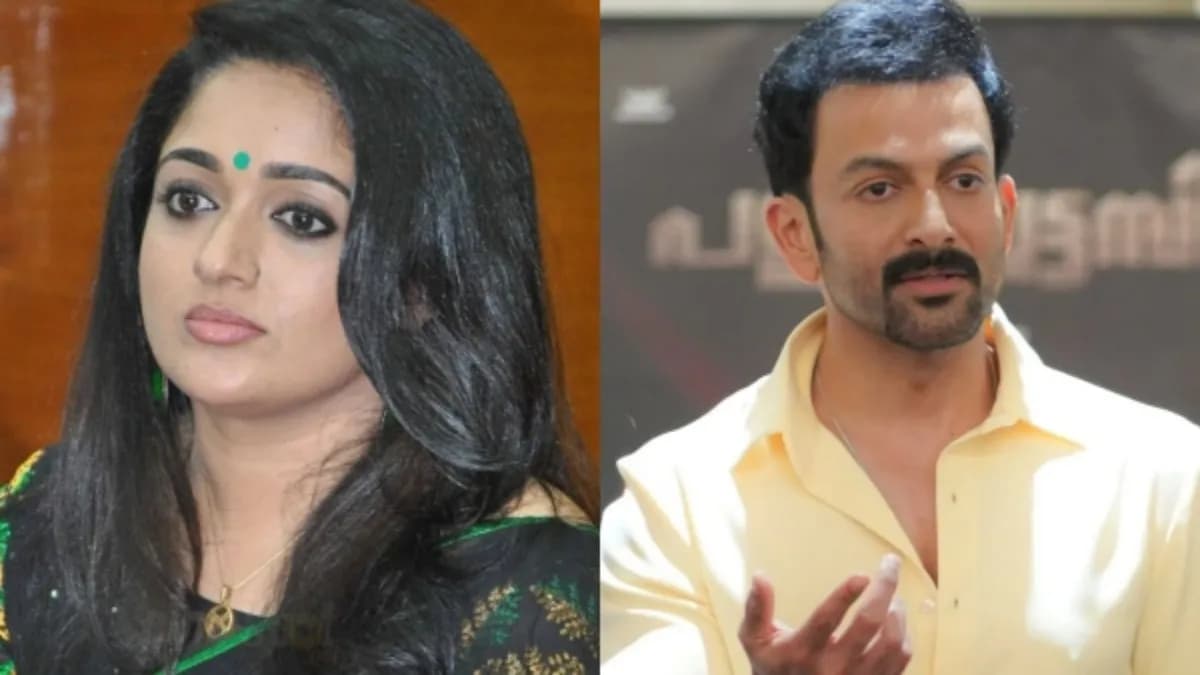
The debate over what separates a trained performer from a naturally gifted one has found a fresh flashpoint in Malayalam cinema, and the spark came from none other than Prithviraj Sukumaran. A remark attributed to the actor and director - that Kavya does not know how to act - has been turned on its head by observers who argue the statement, if he indeed made it, says far more about the remarkable range she commands than about any supposed deficiency. The observation has been circulating widely among film followers, who read it not as criticism but as an accidental tribute to an instinctive screen presence that refuses to be boxed into conventional technique.
The logic behind that reading is simple enough. Prithviraj, a performer known for his own meticulous craft and for the discipline he brings to both acting and direction, was pointing to something he did not see as classical methodology. Yet the very absence of visible technique is precisely what has defined some of the most affecting work in Malayalam cinema. When an actor does not appear to be constructing a performance beat by beat, what remains on screen is something closer to lived experience - and that quality, admirers of Kavya insist, is the foundation of a range that has stretched across genres, tones and generations of filmmakers.
It is worth remembering that Prithviraj's own career has been built on an unusual blend of instinct and preparation. He has spoken often about the value of rehearsal, of understanding a character's interior architecture, of treating cinema as a craft to be studied. Coming from that perspective, a comment about someone not knowing how to act carries a particular weight. It suggests a performer who bypasses the textbook entirely, someone whose choices on set emerge from impulse rather than analysis. For a section of the audience, that is the highest compliment available - a way of saying the camera simply believes her.
The response to the headline also reflects a broader shift in how Malayalam film audiences discuss acting. For years, the dominant vocabulary was technical: modulation, timing, method, preparation. In recent seasons, however, the conversation has increasingly turned toward presence - the intangible ability to hold a frame without seeming to try. Critics and viewers alike have begun to prize performers who blur the line between the person and the role, and few names come up in that discussion more readily than Kavya's. Her body of work, spanning productions of very different scales and sensibilities, has repeatedly placed her in registers that a strictly trained approach might have rendered more self-conscious.
There is another dimension to this, one that touches on how the industry talks about its own. Statements made casually in interviews or on promotional platforms have a habit of travelling far beyond their original context. A remark about method can be recast as a verdict, and a verdict can be recast as a controversy. In this instance, the framing has largely worked in the opposite direction. Rather than diminishing her standing, the line attributed to Prithviraj has been absorbed into the ongoing appreciation of an actor whose appeal rests on something that resists easy definition. If anything, it has sharpened the argument that formal training and genuine ability are not the same thing, and that the absence of the former says nothing about the presence of the latter.
What remains unaddressed is whether Prithviraj intended the remark as praise, provocation, or something in between. He has not offered a clarification that would settle the question, and it is unlikely one is coming. In an industry where public comments about peers are parsed endlessly, ambiguity tends to have a longer life than explanation. The more productive reading, and the one gaining ground among viewers, is that the statement identifies a quality that cannot be taught in a workshop: the ability to disappear into a role so completely that the mechanics behind it become invisible.
For now, the headline stands as a talking point rather than a controversy. It has given Malayalam cinema's devoted following another reason to revisit Kavya's filmography with fresh eyes, looking for the moments where technique gives way to something more elusive. Whether Prithviraj meant it as an observation, a challenge, or a compliment is a question only he can answer. What is beyond dispute is that a single sentence about not knowing how to act has ended up testifying to an extraordinarily wide range - a neat irony in a film culture that has always been fond of them.
Source: Filmibeat Malayalam