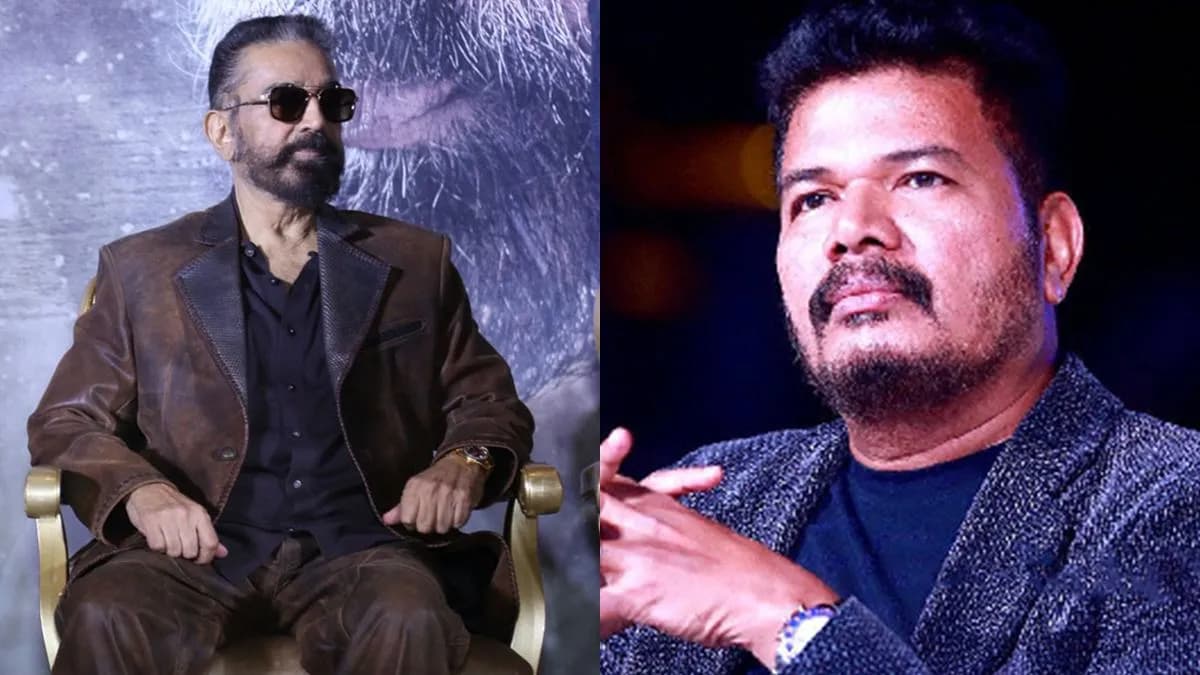
The Malayalam film industry is currently navigating one of its most turbulent financial periods, with producers staring at staggering losses that have reportedly crossed the 600 crore mark. Yet, amid this atmosphere of fiscal despair, a new point of contention has emerged, centering on demands for remuneration from two of Tamil cinema’s most prominent figures - Kamal Haasan and director Shankar. The revelation, which has sent ripples through the southern film fraternity, was brought to light by producer Antony, known in industry circles as Antahanan, during a recent interaction.
According to Antony, the financial distress is not a singular incident but a systemic issue that has gripped the production sector. He acknowledged the immense pressure on financiers and producers who have invested heavily in recent projects, only to see returns plummet in a volatile market. However, what has added insult to injury, he claims, is the insistence on full payments from top-tier talent regardless of a project's commercial outcome. Specifically, he referenced Haasan and Shankar, stating that despite the broader context of massive industry-wide losses, their professional fees are being demanded in full, with no room for negotiation or deferment.
The statement has ignited a debate about the economics of star-driven cinema in South India. For decades, the model has relied on the magnetic pull of leading actors and directors to justify high production costs and premium ticket pricing. When that model works, it yields unprecedented profits. When it fails, as it has for several recent big-budget releases, the burden typically falls squarely on the shoulders of the producers. Antony’s comments suggest that while producers are expected to absorb the market’s volatility, the top tier of creative talent remains insulated from such financial realities, operating on a payment structure that is rigid and unforgiving.
Antony did not mince words when describing the irony of the situation. He pointed out that while producers are being forced to restructure loans, sell assets, and delay new projects to manage their cash flow, the demands from certain quarters remain uncompromising. He specifically noted that despite the overwhelming narrative of a 600 crore industry-wide loss, the stance from the Kamal Haasan and Shankar camp has been clear: their money must be paid. This, he implied, reflects a disconnect between the creative elites who command massive salaries and the financiers who risk their capital on the unpredictable nature of cinema.
The reference to Kamal Haasan and Shankar together is particularly noteworthy given their professional history. The duo has collaborated on landmark projects that redefined Tamil cinema, most notably the 1996 blockbuster Indian and, more recently, the ambitious two-part spectacle Indian 2. The latter project, which finally saw release after years of production hurdles, was one of the most expensive ventures in the region. While the film had a strong opening, it faced significant critical backlash and a sharp decline in collections, leading to substantial losses for its distributors and producers. Antony’s remarks seem to allude to the aftermath of such projects, where the financial fallout is managed by the producers while the primary creative personnel move on to their next assignments without financial penalty.
This is not an isolated sentiment within the industry. Several producers, speaking on condition of anonymity, have echoed similar frustrations in recent months. The post-pandemic recovery in the film sector was initially robust, but the audience's appetite has shifted dramatically. Content-driven films with moderate budgets are thriving, whereas high-octane, star-vehicle spectacles are struggling to find their footing unless they are backed by impeccable storytelling and positive word-of-mouth. The result is a bifurcated market where risk is higher than ever for big-ticket items.
Antony’s public airing of this grievance serves multiple purposes. On one level, it is a cry for solidarity among producers, urging them to present a united front when negotiating with talent. On another, it is a subtle warning to directors and actors that their insistence on guaranteed sums may soon render them unemployable if the production ecosystem collapses entirely. By naming two of the most powerful names in the industry, Antony has effectively drawn a line in the sand, challenging the conventional wisdom that a star's market value is absolute, regardless of the project's performance.
The reaction from fans of Kamal Haasan has been predictably defensive, pointing out that the actor often works on profit-sharing models for select projects and has personally shouldered financial burdens for his own productions in the past. Similarly, supporters of Shankar argue that directors of his caliber invest years of their lives into a single film, foregoing other lucrative opportunities, and are thus entitled to their contractual fees. These counterarguments highlight the complexity of the issue, where goodwill and past sacrifices often conflict with current financial exigencies.
As the industry grapples with this high-stakes standoff, the broader question remains unanswered: who should bear the risk of a box-office failure? In Hollywood, top talent often takes significant pay cuts upfront in exchange for back-end participation in profits, aligning their interests with the studio. The South Indian film industry, with its massive fan followings and aggressive theatrical release strategies, has rarely adopted such models on a large scale. Antony’s remarks suggest that the current crisis may force a reevaluation of this structure, pushing for more collaborative and risk-sharing agreements in future contracts.
For now, the unsaid tension hangs over the air as producers prepare for their next slate of releases. Whether Kamal Haasan or Shankar will issue a public response to Antony's statements remains uncertain. Given their stature, they may choose to let their work speak for themselves, thereby avoiding a media war that could further polarize the industry. However, the seed of discord has been planted, and the conversation regarding fair compensation and risk mitigation is now firmly on the table.
In the coming weeks, as more producers weigh in and as trade analysts dissect the quarterly financial reports, the industry will be watching closely to see if this verbal salvo translates into structural change. For the moment, Antony’s candid interview has pulled back the curtain on the often-opaque world of film financing, revealing the fragile relationship between capital and creativity in an era of unprecedented uncertainty. The only certainty is that unless a middle ground is found, the 600 crore loss could be just the beginning of a more profound financial reckoning.
Source: Filmibeat Malayalam