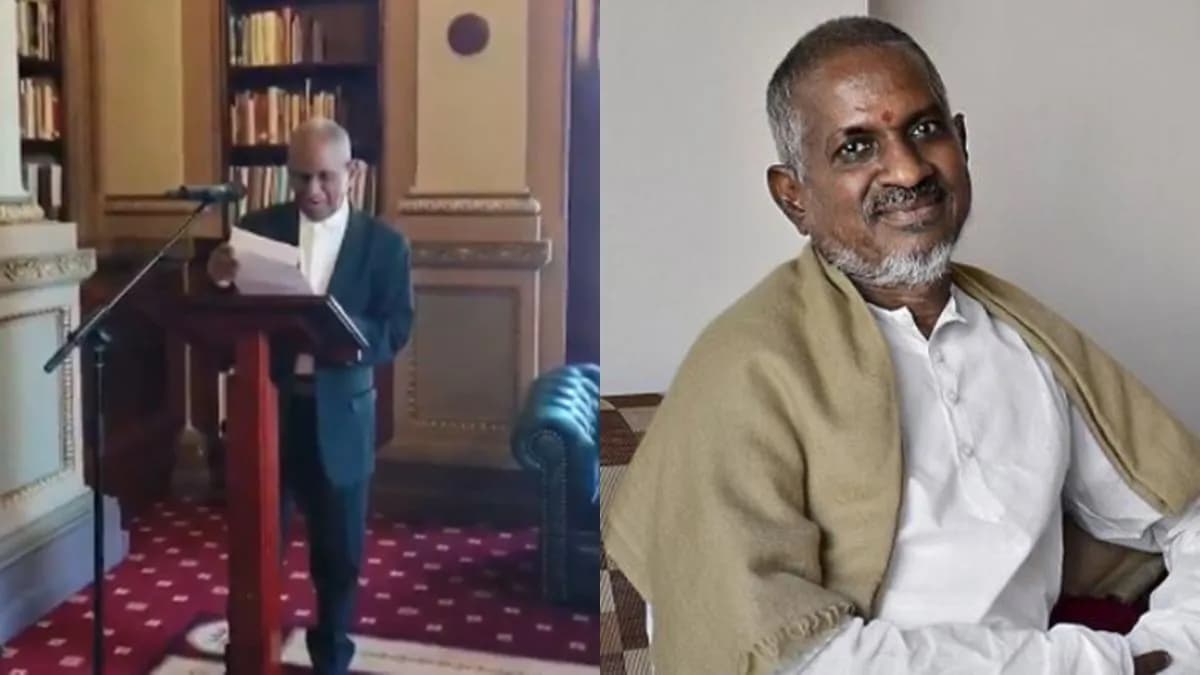
The Australian government has formally honoured Ilaiyaraaja, recognising five decades of the composer's work in cinema and placing him among the small group of Indian artists to receive official acknowledgment from the country. The recognition, announced in connection with his 50 years in film music, marks a rare instance of an Australian state honour being extended to a South Indian film figure, and it has drawn warm reactions from the composer's admirers across Kerala and the wider diaspora.
For Malayalam listeners, the news carries particular weight. Ilaiyaraaja's bond with Malayalam cinema is not a footnote in his career but a long, rich chapter of it. From the late 1970s onward, his scores shaped some of the most enduring films in the language, and generations of Malayali audiences grew up with his melodies as the emotional backdrop to their own memories. An honour conferred on him from halfway across the world therefore feels, to many here, like an honour conferred on a part of their own cultural inheritance.
A Career Measured in Decades, Not Films
The numbers attached to Ilaiyaraaja's name have always been difficult to grasp in a single sitting. He has composed for well over a thousand films across multiple Indian languages, and the count of individual songs runs into the thousands. He is widely credited with transforming the role of the film composer in Indian cinema - moving music from a decorative element to a narrative force, using folk idioms, classical ragas and Western orchestration in combinations that had not been attempted on Indian soundtracks before him.
His entry into Malayalam cinema came through directors who were themselves reshaping the language's cinema in the late 1970s and 1980s. The films he worked on in that period frequently paired him with lyricists and singers who became household names, and the songs often outlived the movies they were written for. Playback singers who recorded under his direction speak of a method that was exacting, sometimes intimidating, and almost always rewarding.
What the Australian Honour Signals
Official recognition of this kind from a foreign government is uncommon for Indian film artists, and rarer still for those whose primary output has been in languages other than Hindi. Australian cultural and diplomatic channels have in recent years deepened their engagement with India's diaspora communities, including those from Kerala, and the decision to honour Ilaiyaraaja reflects both his artistic standing and the size of the audience he commands among Indian communities in Australia.
The award also underlines something that Indian film observers have argued for years: that the reach of a composer like Ilaiyaraaja extends well beyond the box office. His music travels through weddings, radio programmes, reality-show renditions and streaming playlists, long after the films themselves have faded from circulation. Recognition from outside India tends to arrive through exactly this route - not through a single hit, but through decades of accumulated presence in people's lives.
Five Decades, and Still Composing
Ilaiyaraaja's fiftieth year in cinema has been marked across India with concerts, tribute albums and retrospective screenings. He continues to compose and to perform, and his concert appearances routinely draw audiences that span three generations. In Kerala, his live shows have been among the largest musical gatherings the state has seen, with audiences often knowing the lyrics better than the performers on stage expect.
For a composer whose training began in rural Tamil Nadu and moved through classical discipline, folk tradition and film-studio apprenticeship, the arc of five decades is a study in consistency rather than reinvention. He has changed with the technology of recording, but the grammar of his music - the melodic line, the rhythmic layering, the insistence on a strong tune - has remained remarkably stable.
A Shared Pride
The Australian honour is, formally, a recognition of one man's fiftieth year in cinema. In practice, it belongs to a much larger community of listeners. Malayalam cinema owes some of its most cherished songs to Ilaiyaraaja, and Malayali audiences have never treated him as an outsider to their musical world. The composer himself has spoken over the years about how naturally the Malayalam work came to him, and about the particular satisfaction of setting Malayalam lyrics.
That an Australian government has now seen fit to acknowledge the scale of this body of work is a moment of shared pride - not only for the composer and his family, but for the filmmakers, lyricists, singers and listeners who were part of the journey. Fifty years is a long time to hold an audience. Ilaiyaraaja has held several, in several languages, and shows little sign of letting go.
Source: Filmibeat Malayalam