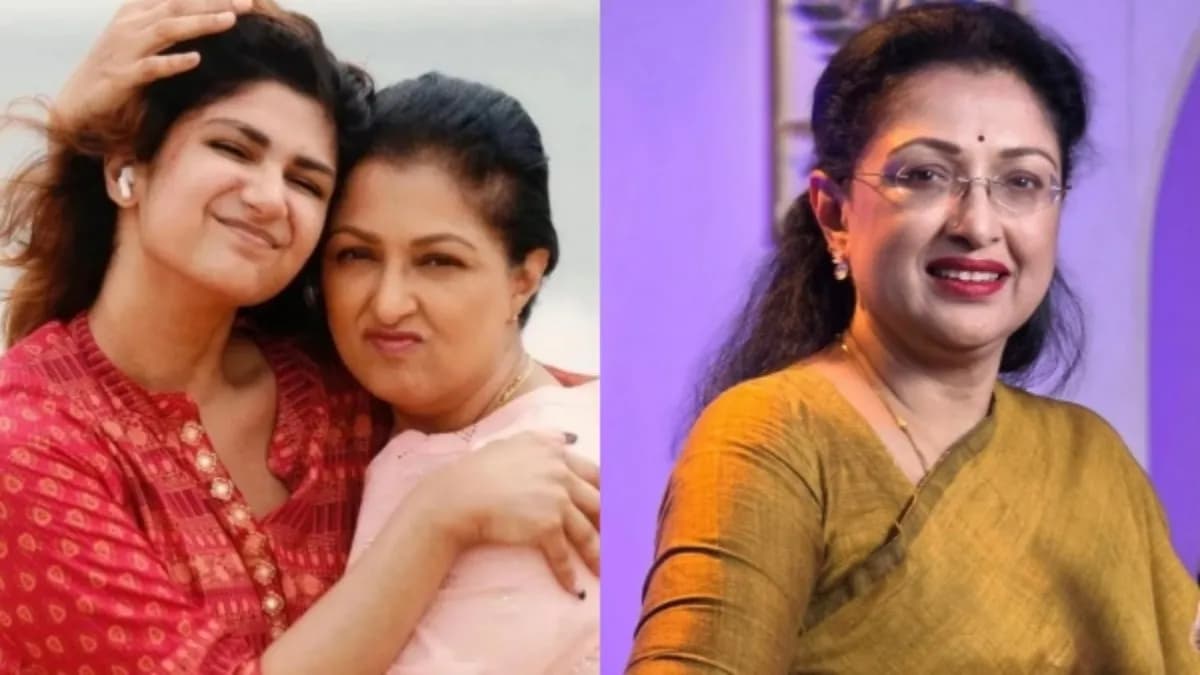
The title of the article references a chapter from the life of Malayalam actress Gauthami, who learned she had a serious illness at a point when her daughter was only four years old. Rather than collapsing under the weight of that diagnosis, the actress held herself together, and what occupied her mind most was not her own survival but a single anxious question: what would become of her small child. That detail, drawn from her own account of the period, has given the story its emotional pull across Malayalam film circles in recent days.
Gauthami has been a familiar presence in Malayalam cinema, and her willingness to speak about that difficult stretch has turned a private ordeal into something closer to a public conversation about illness, motherhood and the cost of keeping a career alive while the body is failing. The framing of the title is deliberate: it places the emphasis less on the disease than on the reflex that followed it. The child came first. Everything else, including fear, had to wait.
A Diagnosis That Reframed Everything
What stands out in Gauthami's recollection is the timing. A four-year-old child is old enough to notice that something is wrong at home but far too young to understand it. That gap, between a parent's private terror and a child's incomplete comprehension, is where the actress says her thoughts were lodged. She has described the period not as one of self-pity but of calculation, of quietly working out what her daughter's life would look like if the worst happened.
Malayalam cinema has a long tradition of performers who treat illness as something to be concealed until it can no longer be hidden. Gauthami's decision to speak plainly runs against that instinct. It also explains why the story has resonated beyond the usual fan circles, reaching audiences who follow the industry only loosely.
The Weight of a Public Career
For actors in the Malayalam industry, the working rhythm is punishing. Schedules shift without warning, shoots run long, and a period of absence can quietly become permanent. Gauthami's account touches on that practical fear as well, the knowledge that stepping away to deal with an illness carries its own professional cost. She has not framed her story as a battle narrative with a tidy resolution. It reads more like a record of endurance, of getting through one day and then the next.
Colleagues who have worked with her over the years have long described her as disciplined and unshowy on set. Those who know her say the same steadiness carried over into how she handled the diagnosis, with a refusal to let it define her publicly before she had decided how to speak about it.
Why the Story Is Being Told Now
The renewed attention comes at a moment when conversations about the health of Malayalam film workers, and about the support systems available to them, have become more open. Actresses in particular have spoken in recent years about the pressure to appear untroubled, and about how rarely the industry's own infrastructure accounts for a parent's responsibilities. Gauthami's account fits into that broader discussion without ever sounding like a campaign.
There is also something simpler at work. Audiences respond to stories in which a person admits to being afraid and then describes what they did anyway. The title of the piece captures that movement precisely: the illness was confirmed, she did not break, and her first thought was for a four-year-old who could not yet grasp what was happening.
Gauthami has not presented her experience as a lesson for anyone else. She has described it as hers, which is likely why it has landed as it has. In an industry that rewards composure in front of the camera, her account of what she held together behind it, for the sake of a child, is proving harder to forget than any role she has played.
Source: Filmibeat Malayalam