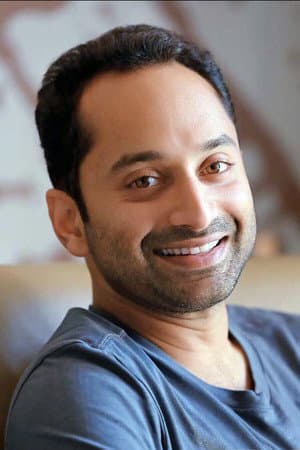
Fahadh Faasil has never been a performer who settles into comfort, and by his own account that restlessness nearly cost him everything before it made him. In a reflective interview that has been circulating among Malayalam cinema followers, the actor traced the arc of a career that began with a bruising debut, wandered onto what he now calls the wrong path, and turned only after a desire took root in him while he was in America.
The headline making the rounds - "I was on the wrong path, and with that my career stood apart; that desire that took shape in America" - compresses a much longer story about a young man who entered the industry with enormous expectations attached to his name and then spent years figuring out whether he actually wanted to be there.
A Debut That Refused to Be Kind
Fahadh arrived in Malayalam cinema carrying the weight of a famous surname, and his first outing as a lead was met with a response so severe that it is still invoked as a cautionary tale. Rather than retreat, he did something less common: he stepped away from the front rank, took smaller and stranger roles, and rebuilt his craft in public. That period of self-imposed reset is central to how he now describes his own trajectory.
What he calls the wrong path was not scandal so much as drift - a phase of taking work for the wrong reasons, without a clear sense of what he was building. In his telling, the correction came from an internal shift rather than advice from well-wishers.
A Turning Point Abroad
The pivotal passage concerns his time in America. According to the actor, a desire crystallised there that had not been available to him at home, surrounded by the familiar machinery of an industry he had grown up inside. He has spoken in the past about how distance can expose what a person has been avoiding.
The account fits a pattern that runs through his public statements: he tends to describe acting decisions as responses to internal pressure rather than career strategy. Where many stars map out genres and release calendars, Fahadh has repeatedly chosen projects on the strength of a director or a script that unsettled him.
Why the Reminiscence Lands Now
That such a reflection is drawing attention points to something larger about how Malayalam cinema discusses its own artists. The industry has grown more comfortable with the idea that a career is not a straight line, and that early failure can be formative rather than disqualifying. Fahadh's willingness to narrate his own missteps openly has made his story a reference point for younger actors navigating similar doubts.
It also helps that the second half of his story is unusually varied. He has alternated between commercially driven star vehicles and deliberately abrasive character work, and he has steadily extended his reach beyond Malayalam cinema into projects in other Indian languages. None of that expansion has made him sound more settled when he talks about it.
The tone he favours is one of unfinished business. Even when discussing success, he tends to frame it as an accident of persistence rather than arrival - a fit with his repeated insistence that he still does not fully trust his own instincts.
The Truth in the Restlessness
Read closely, the actor's account is less a redemption tale than an argument about attention. What changed, in his framing, was not his talent but his focus: he moved from wanting to be seen to wanting to understand the work. The wrong path, in that light, was a failure of seriousness, and America was simply where the seriousness caught up with him.
For audiences who follow Malayalam cinema closely, the value of the anecdote lies in what it refuses to do. It does not name a saviour film, credit a mentor, or offer a tidy before-and-after. It says the correction was slow, self-administered, and incomplete.
Fahadh remains one of the most closely watched performers in the industry, and the appetite for his self-assessment suggests viewers are as interested in the man's reasoning as in his filmography. It is a rare position for a star: to be trusted not because he was always right, but because he has been honest about being wrong.
Source: Filmibeat Malayalam