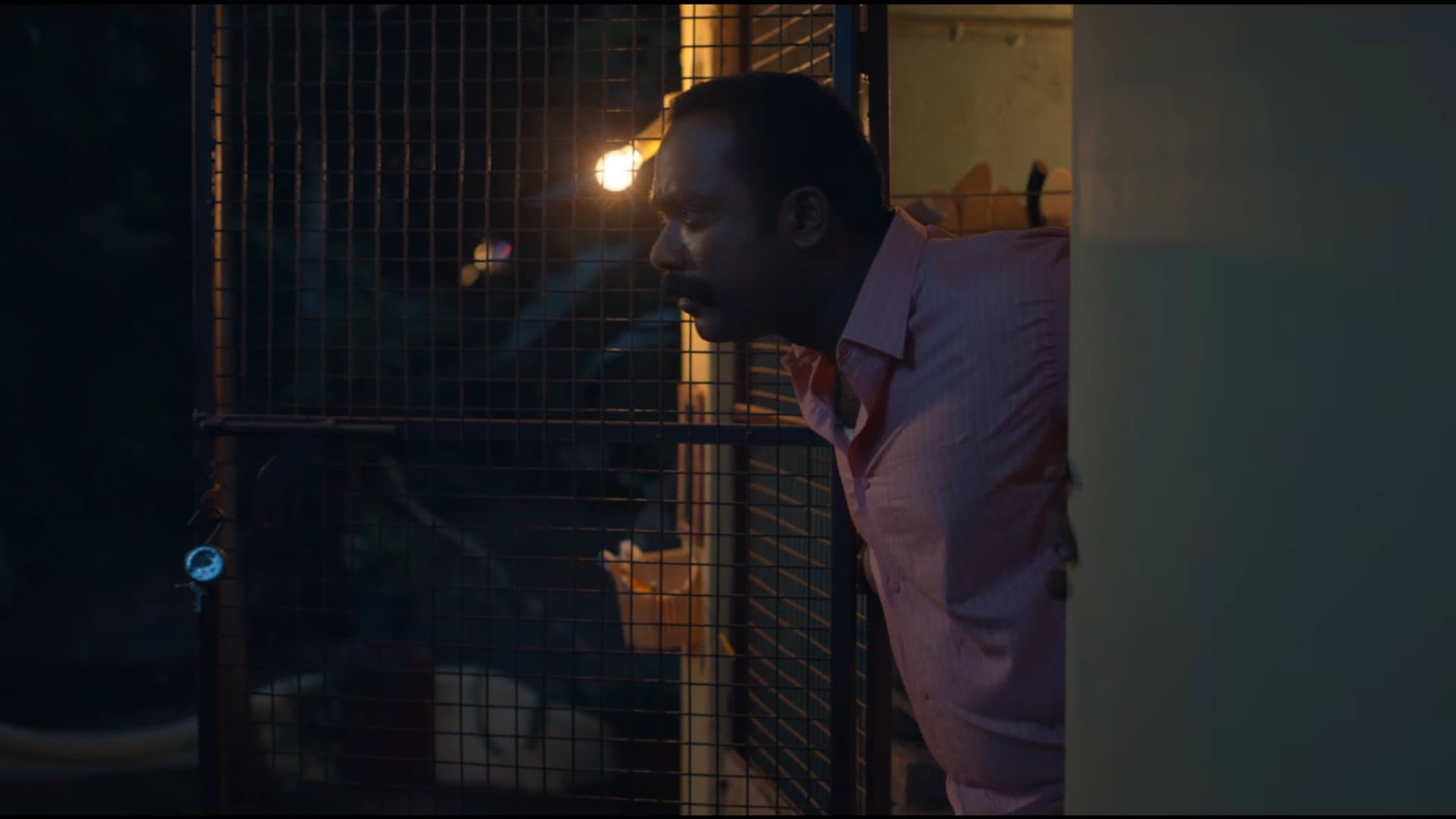
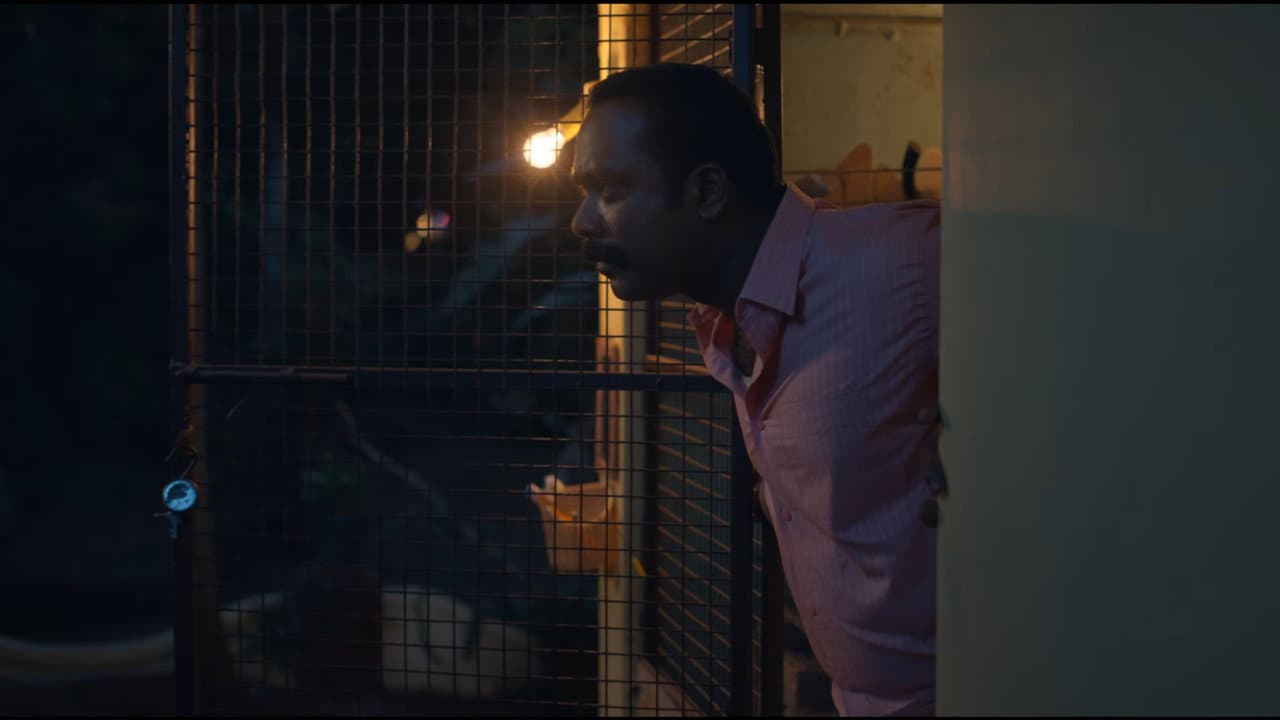
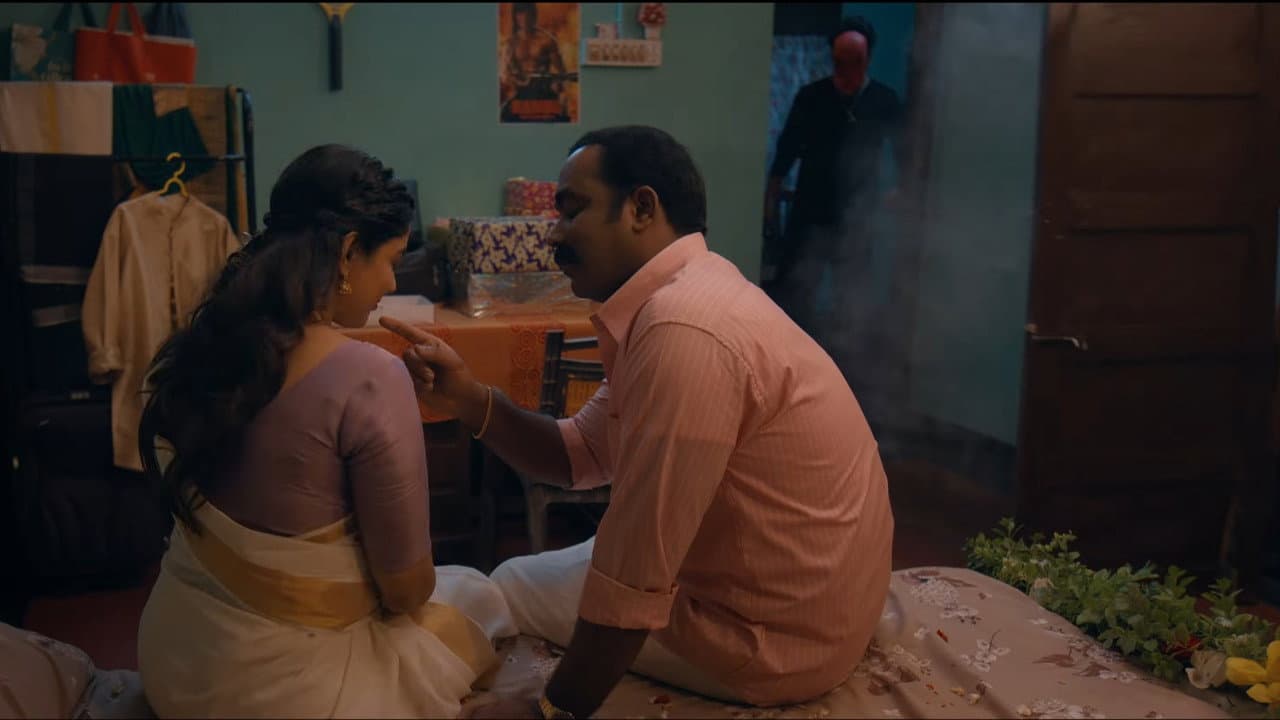
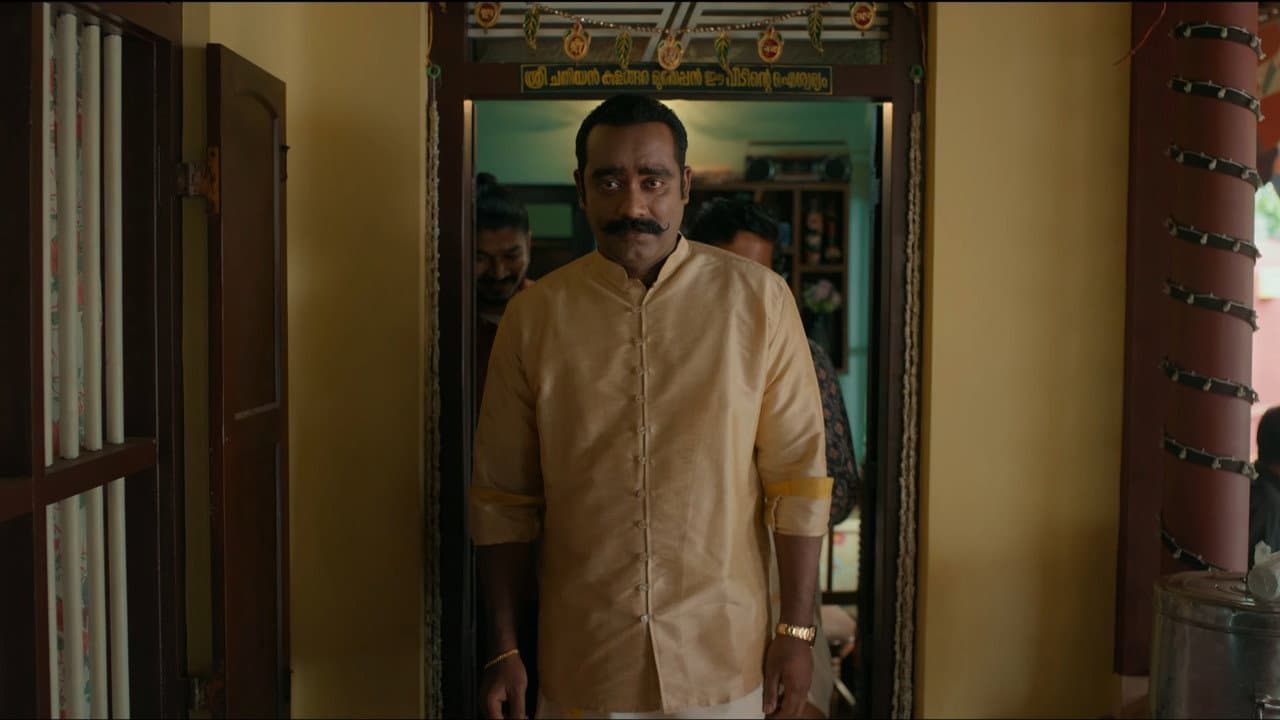
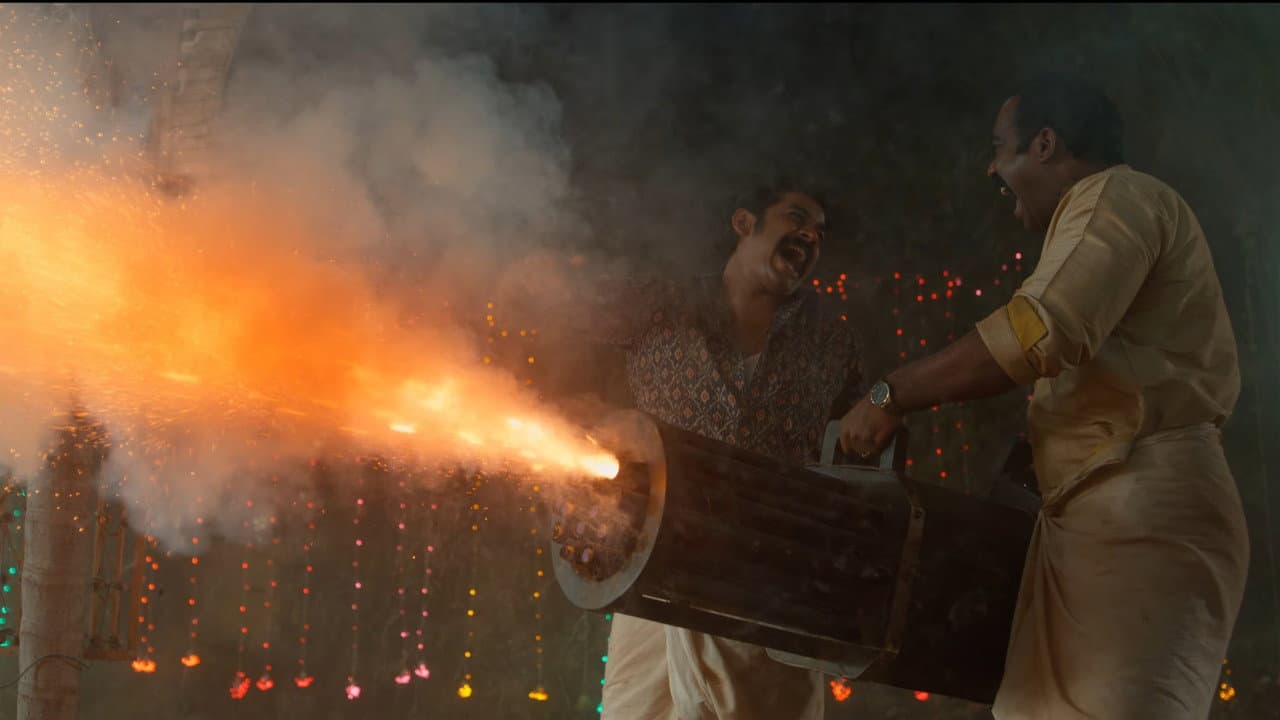
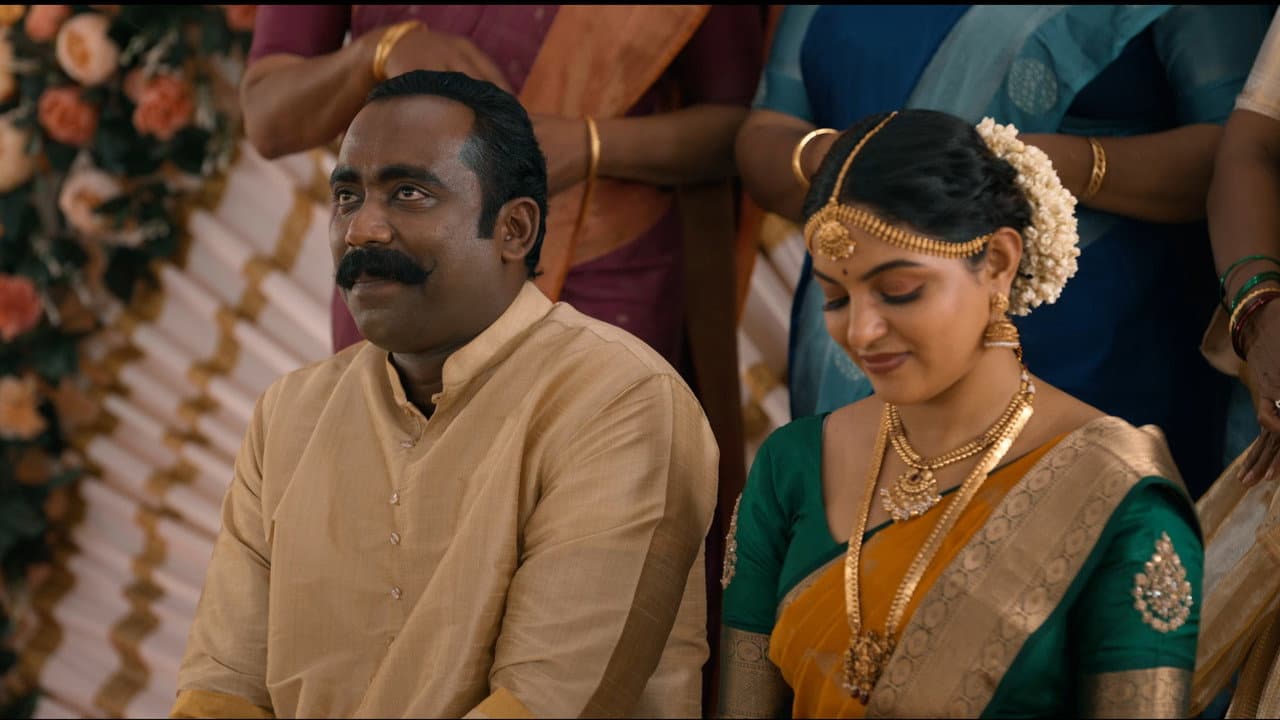
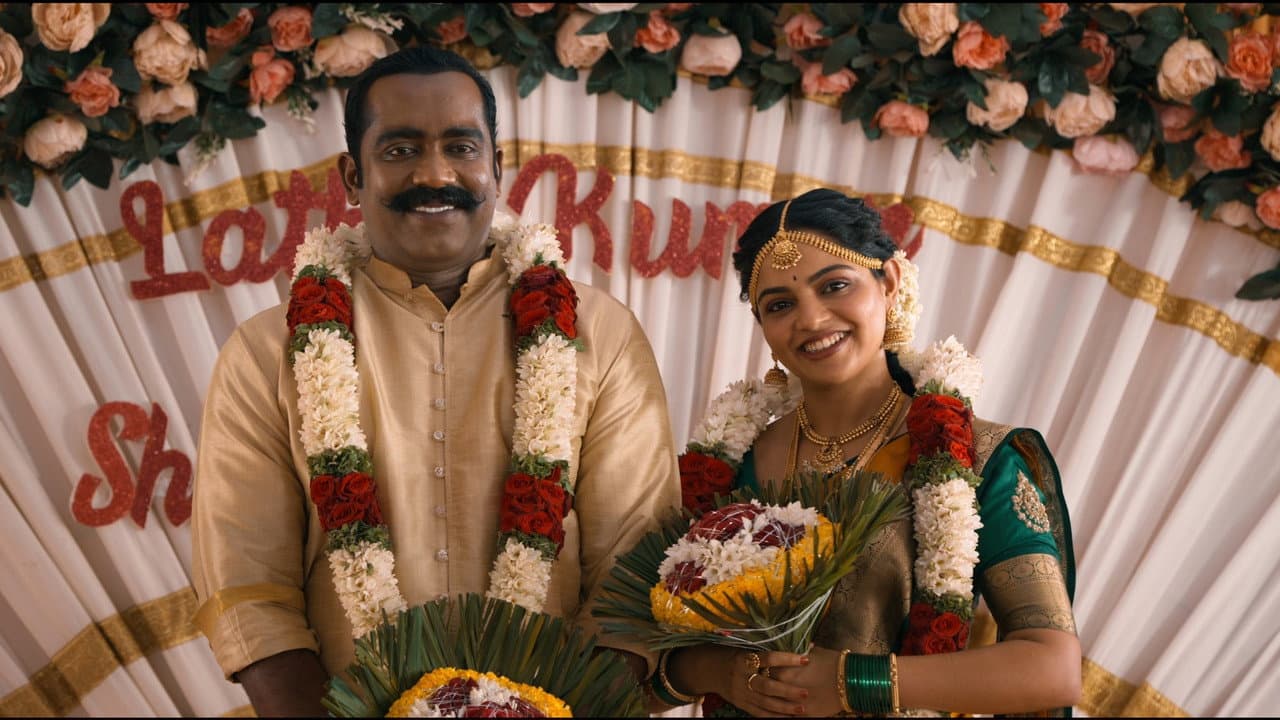
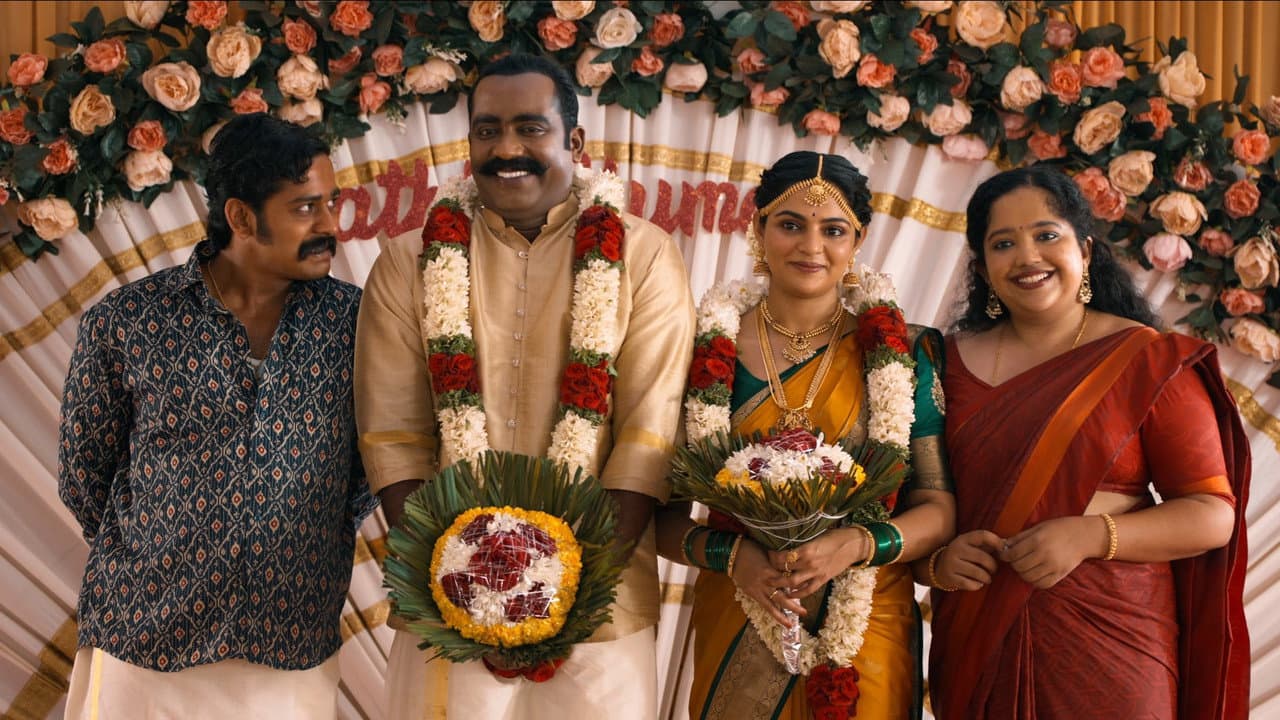
What strikes you first about Dhoomakethu is its rhythm. Maddison is not interested in the clean, clockwork precision of a Hollywood loop film. His camera lingers, wanders, and occasionally loses itself in the crowd, mirroring Kuttan's disorientation. This is both the film's greatest strength and its most glaring weakness. At 165 minutes, the repetition that should feel like a tightening spiral often feels like a slog. There are stretches where the audience, like Kuttan, may want to scream at the screen to move forward.
Yet the performances hold the chaos together. The actor playing Kuttan anchors the film with a performance that shifts from cheerful groom to haunted everyman without a single false note. Shine Tom Chacko, as always, brings an unpredictable energy that destabilises every scene he enters, while Manju Pillai and Nikhila Vimal provide grounded, warm counterpoints to the escalating madness. Sidharth Bharathan and Sajin Gopu round out a cast that understands the assignment: play it straight, even when the reality around you is folding like paper.
The comedy works best when it emerges from character rather than contrivance. A running gag about a missing wedding ring gains potency each time it resurfaces because we know what Kuttan does not: that the ring is a clue. The thriller elements, meanwhile, are more uneven. Maddison excels at the small, eerie details, a child's drawing that changes between loops, a song that plays at the wrong pitch, but he struggles to sustain tension across the film's bloated middle section. By the time the third act arrives, the revelations feel earned but not entirely satisfying, as if the screenplay itself got lost in one of its own loops.
Technically, the film is accomplished. The sound design deserves special mention, layering ambient wedding noise with an unsettling hum that grows louder as Kuttan's grip on reality weakens. The editing, however, could have been ruthless. A tighter cut might have turned a good film into a great one.