Theresia (Pauly Valsan) has made a vocation out of other people's final hours. She sits by bedsides, prays with the dying, and helps them leave in peace. Her latest assignment is Payyammal Varkichan (Dileesh Pothan), a wealthy farmer whose body is failing but whose will is not. She urges him to repent, to forgive, to let go of the inherited anger curdling inside him. Varkichan has no intention of dying that way - and no intention of showing weakness in front of his son George and George's wife, who have returned home after ten years and are now, in the film's sharpest cruelty, simply waiting. The question Thaddeus poses isn't whether Varkichan will die, but whether the long-cultivated grudge that has poisoned everyone in this family can finally be ended before it is handed down again.


Chevittorma Review: A Dying Man's Unforgiving Farewell
Director
Leo Thaddeus
Language
ML
Release
2026-10-08
Runtime
95 min
Quick Verdict
Not the tearjerker its logline suggests. Chevittorma is a leaner, colder film about how families pass bitterness down through generations like an heirloom everyone pretends not to see. Anchored by a magnificent Pauly Valsan and a ferociously stubborn Dileesh Pothan, it earns its patience, even when that patience threatens to outlast the audience.
Story
Review
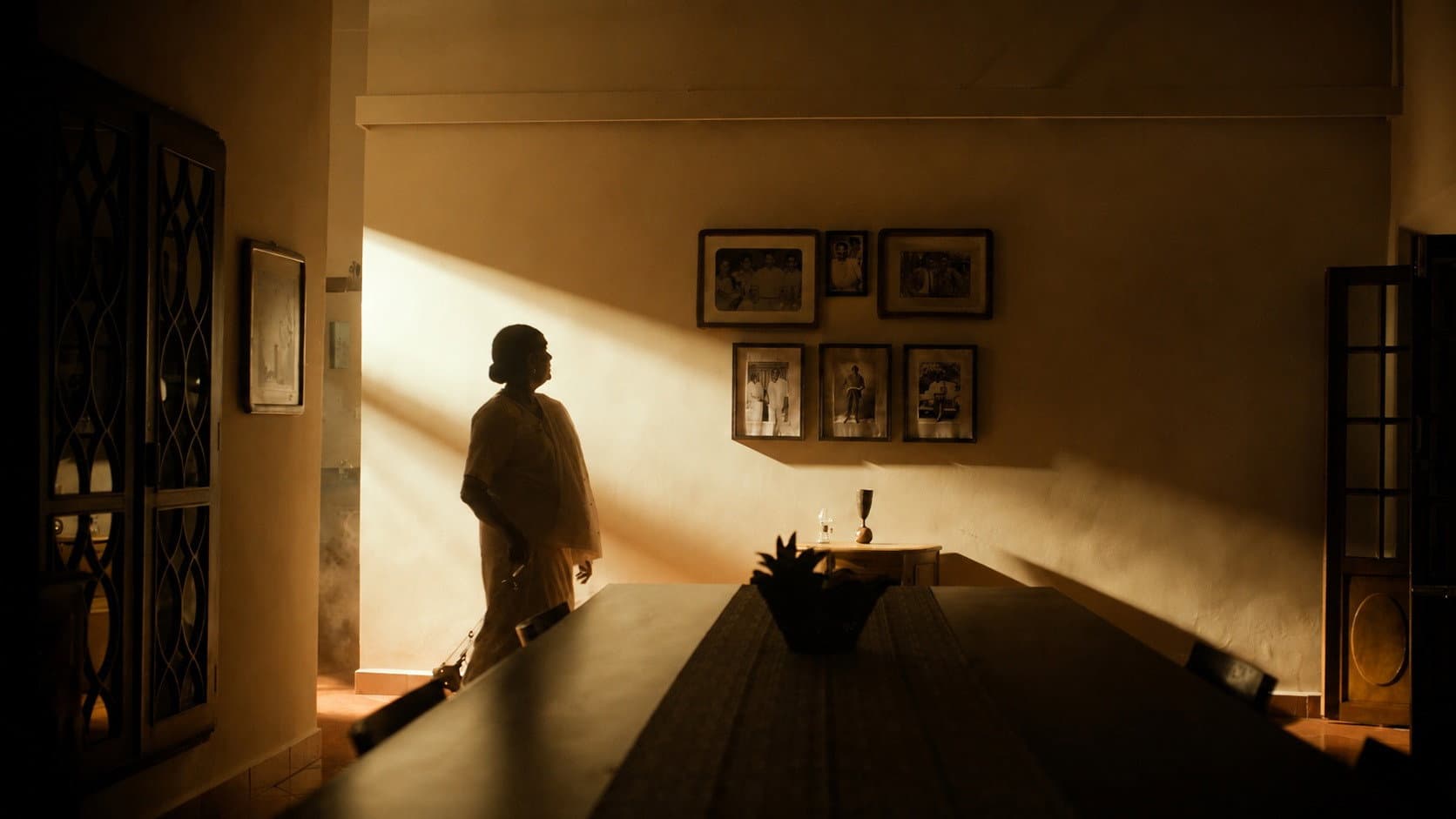
The setup is deliberately airless: one house, one failing man, a handful of rooms that seem to shrink as the runtime advances. Thaddeus directs with restraint, letting silences carry the weight his dialogue refuses to. He also trusts his actors to fill the negative space, and that trust pays off enormously.
Pauly Valsan is the film's beating heart. As Theresia, she never once plays saintliness; she plays obligation, exhaustion, and a flicker of doubt that keeps her from becoming a symbol. There's a scene near the midpoint where she simply stops praying and listens instead - no words, no music, just a woman realising her words may not reach a man who has decided to die angry. It is the finest stretch of acting the film has to offer.
Dileesh Pothan, who usually brings warmth and comic exasperation to his roles, inverts that entirely. His Varkichan is petty, charismatic, and monstrous in small, domestic ways - a man who weaponises his own death the way he once weaponised his authority. The performance risks alienating viewers, and it should; this is a character who confuses pride with dignity and broods over a grudge the film wisely never over-explains. George Kora and Parvathy Arun, as George and his wife, make physical how the past expresses itself in the present: stiff backs, careful distances, eyes that look at the dying man and calculate.
Where Chevittorma stumbles is in its middle third. The script circles the same confrontation several times, and a subplot involving Srikant Murali's character feels undernourished, like a thread that got lost before the final edit. At 95 minutes, the film never drags exactly, but it does stagnate - the chamber's walls close in, and sometimes that's a virtue, sometimes just a limitation. Sreekant Murali's presence suggests a larger social context the plot only gestures at, and Jeo Baby's brief turn, drawn from the same naturalistic school as his own directing work, keeps the texture alive without fully integrating.
Still, the film's final act justifies much of its stillness. Thaddeus declines the conventional deathbed conversion, and what he substitutes is more honest - and more painful - than defeat or redemption. The ending lands somewhere harder, a reminder that some inheritances survive even when the person carrying them is lowered into the ground.
Technically, Chevittorma is modest but precise. The sound design lets us hear the house settle and creak; the lighting keeps faces on the edge of visibility as though they're already half-ghosted. The music, wisely, says almost nothing. This is a film built for listeners, not spectators.
Pros & Cons
Pros
- Pauly Valsan's restrained, luminous performance as Theresia
- Dileesh Pothan's willingness to play a genuinely unlikeable lead
- Sharp, patient writing about inherited bitterness
- 95-minute runtime treated as discipline, not a constraint
- Restrained sound and lighting design that suits the material
Cons
- The middle third repeats its central confrontation
- Srikant Murali's subplot feels truncated
- A few supporting turns register as sketches rather than characters
- The deliberately static staging won't work for every viewer
Rating Breakdown
Final Verdict
Chevittorma is the rare Malayalam drama that refuses to flatter its audience with a good death. It's a patient, talky, quietly devastating film carried by two performances - Valsan's and Pothan's - that are worth the price of admission on their own. It falters in the middle, and it won't win converts among viewers who want catharsis served hot. But for those willing to sit with its cold rooms and colder silences, Thaddeus has made something that lingers, like a grudge, long after the credits. See it in a theatre if you can; the quiet demands the room.
Cast

Dileesh Pothan
Payyammal Varkichan

Pauly Valsan
Theresia

George Kora

Parvathy Arun
Srikant Murali

Jeo Baby
Gallery


