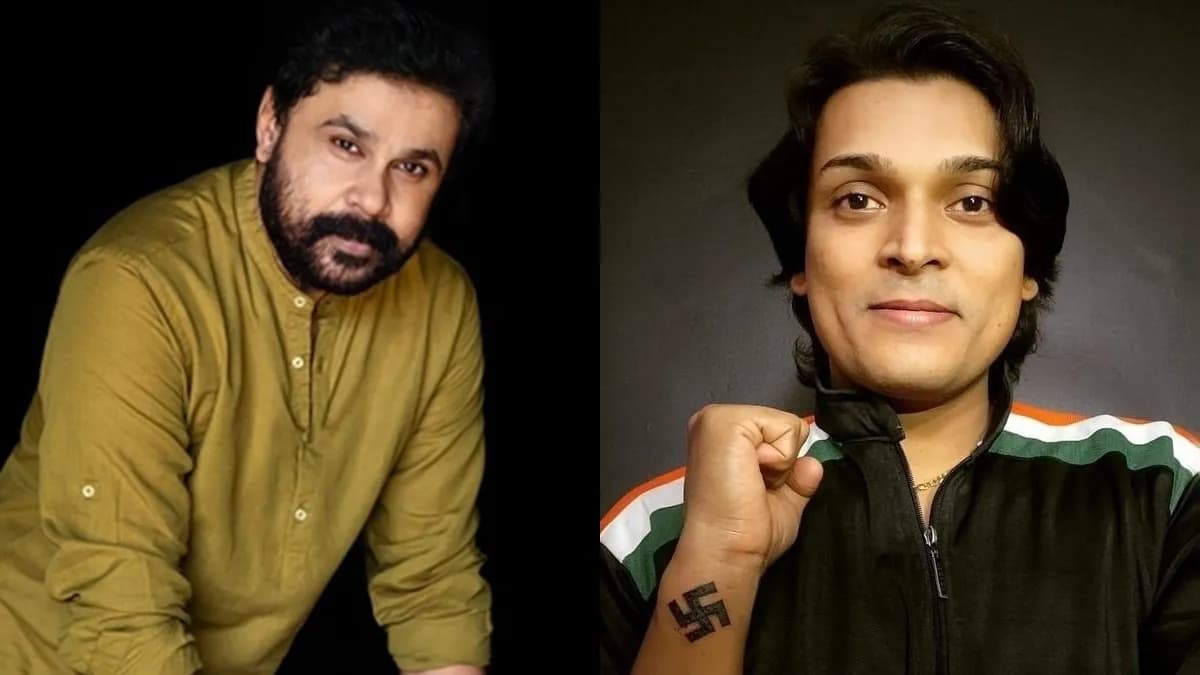
Actor Baiju Kottarakkara has spoken publicly about a gathering he says took place at Dileep's residence, claiming that a party was held there on a day that has since become central to the wider discussion surrounding the assault case involving the Malayalam film industry. In remarks that have revived attention on old threads of the controversy, Baiju said that Rahul Easwar, who has been a vocal presence in the debate, accepted money and later defended those transactions when questioned about them.
The statement adds another layer to a story that has circulated in Kerala's film circles for years, long after the initial investigation into the 2017 actress assault case. According to Baiju, the event at Dileep's house was not a quiet affair but a full-fledged party, and he placed Rahul Easwar at the center of the financial dealings that followed. Baiju's version suggests that payments changed hands and that when the matter came up for discussion, Easwar offered justifications rather than denials.
What makes the claim notable is its timing and its target. Rahul Easwar is not a film industry figure in the conventional sense; he has built a public profile as a social commentator and activist who frequently weighs in on high-profile cases, including this one. His involvement has been viewed by some as an attempt to influence public perception, and by others as an independent voice questioning the established narrative. Baiju's allegation pushes him from commentator to participant in the events being debated.
Dileep, one of Malayalam cinema's most bankable stars for close to three decades, remains the most prominent name connected to the case. He was arrested in 2017 in connection with the conspiracy angle of the assault on a fellow actor and spent time in custody before being released on bail. The legal process has stretched across years, with multiple charges, appeals and procedural twists. Through it all, Dileep has denied wrongdoing, and his supporters have argued that he is being targeted.
For the industry, the case has been a fault line. It divided colleagues, sparked debates about power and gender in Malayalam cinema, and led to the formation of collective movements by women in the field demanding safer working conditions. Every fresh allegation, however old its origins, tends to reopen those arguments rather than close them.
Baiju Kottarakkara's claim about money being accepted and then rationalized in discussions is significant because it speaks to a theme that has recurred throughout the saga: the movement of funds and the question of who was paying whom, and for what purpose. Investigators have in the past examined financial trails as part of the broader conspiracy probe, though the specifics of what was established in court differ from what circulates in public conversation. Baiju did not present documentary evidence in his remarks, and neither Rahul Easwar nor Dileep has issued a detailed response to this particular allegation.
It is also worth noting the setting Baiju describes. His claim centers on a party at Dileep's home. Such gatherings are common among film personalities and often unremarkable, which is precisely why an allegation tied to one carries weight: it transforms an ordinary social occasion into an evidentiary focal point. If Baiju's account is accurate, the gathering becomes part of the timeline that investigators and the public have argued over. If it is not, it becomes another unverified assertion in a case that has produced many.
Rahul Easwar has previously courted controversy with his statements on the case and on related social issues, and he has shown a willingness to engage publicly rather than retreat. That pattern makes it likely he will respond, though the substance of any response is not yet known. The back-and-forth between figures like him and those closer to the film industry has, over time, turned the case into a running public argument that extends well beyond the courtroom.
For audiences and observers in Kerala, the fatigue is real. The case has been dissected on television panels, in newspaper columns and across social media for nearly a decade, and each new claim tends to be met with skepticism from one side and affirmation from the other. Baiju's comments will likely follow the same trajectory: amplified by those who believe the broader allegations, dismissed by those who see a campaign against Dileep.
What remains clear is that the underlying legal matter has not reached a final, universally accepted conclusion in the public mind, even as court proceedings have advanced. Allegations such as Baiju's do not resolve that ambiguity; they deepen it. They also serve as a reminder that the story's cast of characters keeps expanding, drawing in people whose connection to the original incident is indirect at best.
Malayalam cinema, meanwhile, continues to produce films and stars at a remarkable pace, and Dileep remains part of that output. The industry's ability to move forward while this case lingers says something about its resilience and also about its unresolved tensions. Whether Baiju Kottarakkara's claim leads to any formal step, or simply becomes another entry in the long record of accusations and counter-accusations, will depend on whether those named choose to engage and whether anyone with authority decides the matter merits a closer look.
Source: Filmibeat Malayalam