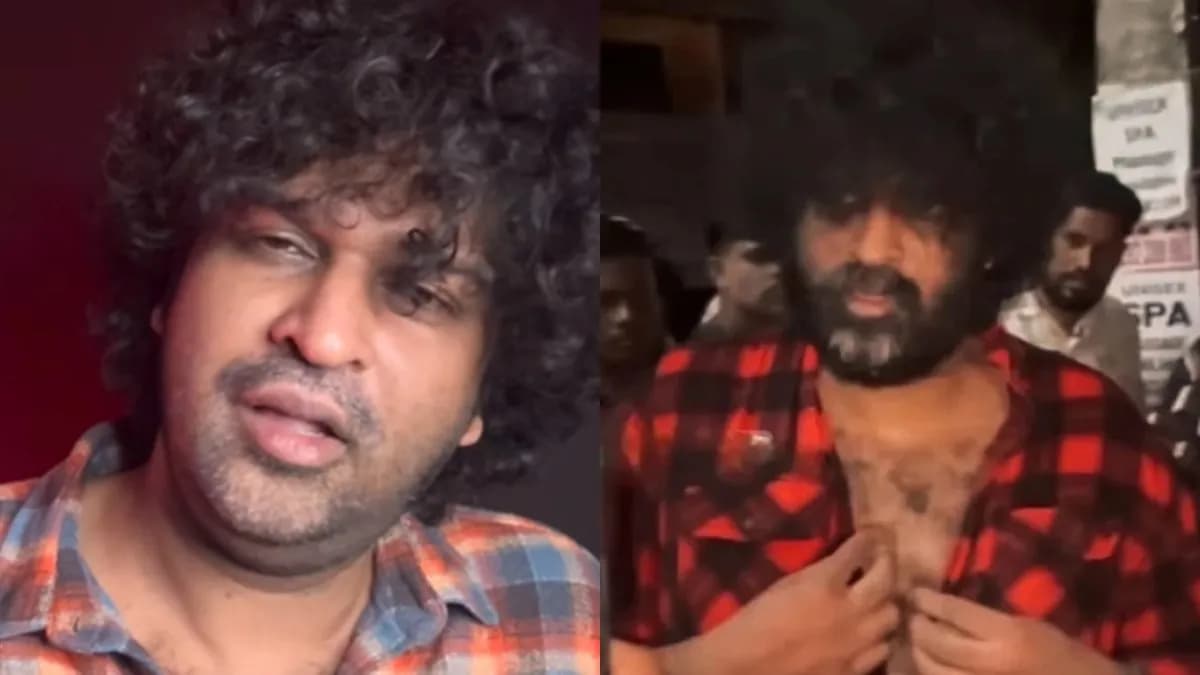
Malayalam actor Ashwanth has acknowledged that getting behind the wheel after drinking is something he should never have done, while insisting that his own reasons exist for the decision. In a candid public statement, he said he cannot undo what has already happened but has now settled his course of action, and he squarely owned the mistake rather than deflecting it.
The remarks arrive amid heightened scrutiny of road safety in Kerala, where drunk-driving cases and late-night collisions continue to draw public anger. For a working film actor, the admission carries additional weight: Malayalam cinema's audience tends to treat its performers as public figures whose conduct off screen matters as much as their work on it. Ashwanth did not hedge on that point. He described the act as indefensible - "should not have been done," in his phrasing - before turning to the future.
His statement has two clear parts. The first is contrition: an unqualified acknowledgment that driving under the influence was wrong, without the qualifiers that often accompany celebrity apologies. The second is a claim of personal justification, which he left unexplained. That gap has fueled the most discussion online, with some reading it as an attempt to soften the admission and others waiting to hear the reasoning in full.
Ashwanth's phrasing - that he has "his own reason" for having driven after drinking - is unusual for an industry where such matters are typically handled through carefully worded clarifications or left to legal process. He did not offer that reason in the statement, and no further explanation has been made public. The silence on that point is itself notable, and it leaves the episode unresolved for anyone looking for the full picture.
What is not in dispute is the legal and moral baseline. Driving after consuming alcohol is a punishable offence in India, and public messaging from Kerala Police has repeatedly stressed that even small amounts impair judgement and reaction time. The state has run sustained campaigns against the practice, and enforcement has tightened around checkpoints in recent years. Whatever personal explanation Ashwanth may hold, the law does not carve out exceptions for it, and he did not suggest otherwise.
Reaction has split along familiar lines. Some commenters praised the directness of the admission, arguing that a straight acknowledgment is more useful than a denial or a delay. Others questioned why any caveat was needed at all, contending that the acknowledgment would carry more force without it. The exchange reflects a broader shift in how audiences now respond to stars who admit fault - faster to forgive a plain apology, slower to accept one wrapped in reasoning.
Ashwanth's career context matters here too. He has built a following through supporting roles and character work in Malayalam productions, a profile that keeps him visible without the protective buffer of top-tier stardom. That position leaves him more exposed to public opinion, not less. A statement like this one, issued on his own terms rather than through a publicist's template, will be weighed against how he conducts himself from here.
There is also the professional dimension to consider. Producers and directors increasingly factor an actor's public conduct into casting decisions, particularly in a film culture where social media pressure can build within hours. Nothing in Ashwanth's statement suggests he is stepping back from work, and he framed the episode around a changed decision rather than a pause. Still, the industry will be watching how the next few weeks unfold.
The statement has no accompanying timeline, no reference to any specific incident, and no mention of legal proceedings. It reads instead as a personal accounting - an admission, a stated resolve, and a rationale he chose not to spell out. That combination is likely to keep the topic alive in Malayalam film circles for some time, because it raises a question the statement itself does not answer.
For now, the takeaway is narrow and clear. Ashwanth has said publicly that he should not have driven after drinking, that his decision going forward is settled, and that he has his own reasons. Whether those reasons satisfy anyone beyond himself is a judgement the public will make on its own, and the actor has given them little to work with beyond his word.
Source: Filmibeat Malayalam