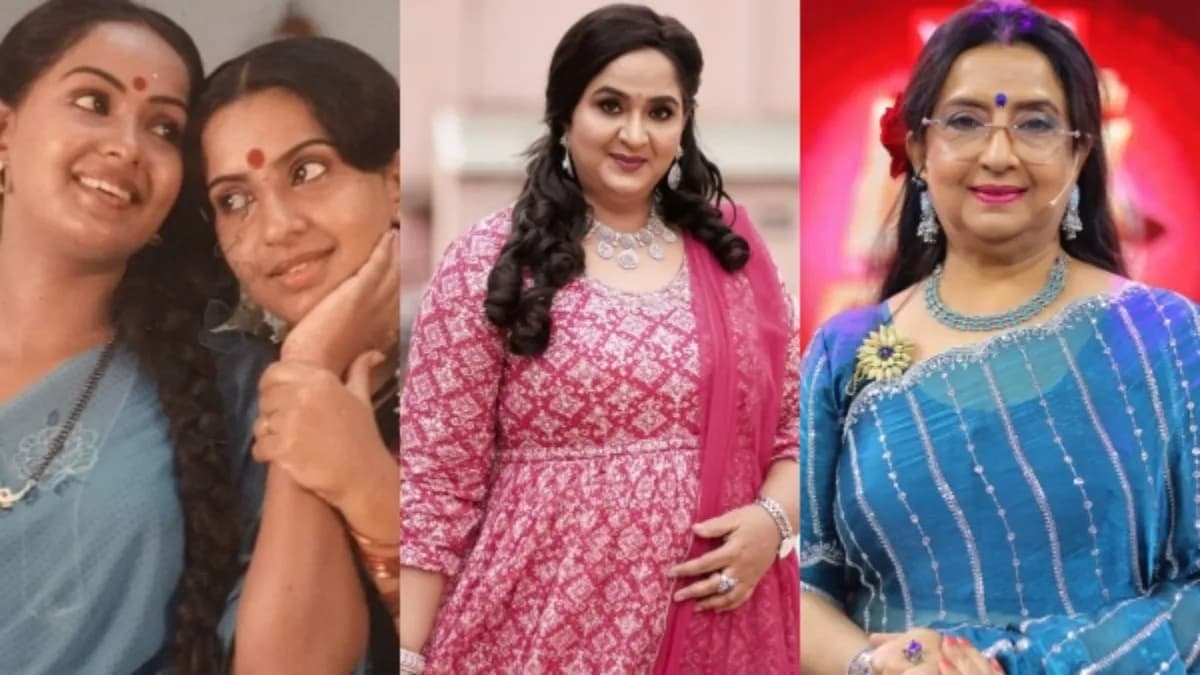
Veteran Malayalam actress Ambika has opened up about a life shaped as much by hardship as by the arc lights, recalling a childhood in which she stepped into the film world as a teenager and, from that island of cinema, reached back to keep her siblings from going hungry. In a reflective interview that has circulated widely among Malayalam film followers, she spoke about the responsibility that arrived early and never fully left her, and about how the many meanings attached to the name Radha - a character she is closely identified with - have given her career what she described as a hundred tongues.
The phrase that has travelled furthest is her insistence that her younger siblings should not go hungry. It is a line that reads simply on paper but carries the weight of a family's circumstances, and it explains, in her telling, why a teenage girl who might otherwise have stayed far from a studio floor ended up making a home there.
Ambika entered the industry at a time when Malayalam cinema was producing some of its most enduring family dramas and when a young performer's workload could be punishing. She has described arriving in cinema almost as reaching an island - a place set apart from ordinary life, with its own rules, its own language of lights and call sheets, and its own demands on whoever wished to remain. For her, that island was not an escape but a livelihood, and the decision to stay on it was tied directly to the people waiting at home.
A name with a hundred tongues
Central to the conversation is the figure of Radha. In the 1980s, Ambika appeared in a series of films as Radha, a character whose name recurred across productions and became, for audiences, almost inseparable from the actress herself. The roles were not identical from film to film, but the name created a continuity that audiences followed with unusual devotion.
That is the sense in which she speaks of Radha giving her a hundred tongues. A single character name, repeated across stories, allowed her to say many different things - to be the steadfast sister in one film, the wounded lover in another, the woman carrying a household in a third. Where an actor's range is usually measured role by role, Ambika's case suggests something else: that a recurring name can itself become a kind of vocabulary, accumulating meaning with each new film until the audience hears an entire history in two syllables.
For Malayalam viewers of that era, the association was reinforced by her pairing with leading actors of the period in melodramas built around family honour, separation and reunion. The Radha films were not a franchise in the modern sense, but they functioned as a recognisable strand, and Ambika became its face.
The sister who stayed responsible
What comes through most clearly in her reflections is the persistence of the elder-sibling role. Long after the immediate financial pressure eased, she has continued to describe herself in relation to her family - as someone who took on obligations at an age when most people are still being looked after.
She has spoken about that early entry into the industry without dressing it in nostalgia. Cinema, in her account, was work before it was art, and the discipline it demanded suited a young person who could not afford to be careless. The sets were demanding, the schedules long, and the margin for error small. That she built a career of more than a hundred films out of that beginning is, in her own framing, less a story of ambition than of steadiness.
Her words carry particular resonance in Malayalam cinema, where the gap between a performer's public image and private circumstance is a familiar theme. Actors of her generation frequently came from families that needed the income, and the industry absorbed them young. Ambika's account is a reminder that the screen sister so many audiences trusted was, off camera, performing a version of the same duty for real.
What the reflection says about the industry
There is a broader point in the way she tells it. A teenage entrant in that period had little formal protection - no structured support for young performers, no clear separation between a working child and an adult professional's schedule. The fact that Ambika survived it, and then thrived, owes something to luck and a great deal to temperament.
Her recollection also underlines how durable certain screen identities can be. Radha outlived the individual films that carried the name, and Ambika, decades on, is still asked about a character she played as a young woman. Very few performers in any language are granted that kind of afterlife for a role, let alone for a name.
In the end, her reflection turns on a simple contrast. On one side, the island of cinema, glittering and apart. On the other, a household that needed feeding. Ambika's career sits in the space between them - a young woman who crossed to the island not to lose herself in it, but to make sure that the people she left behind never went without. That is the story she tells, and it is the reason a single name from her filmography still carries so many voices.
Source: Filmibeat Malayalam