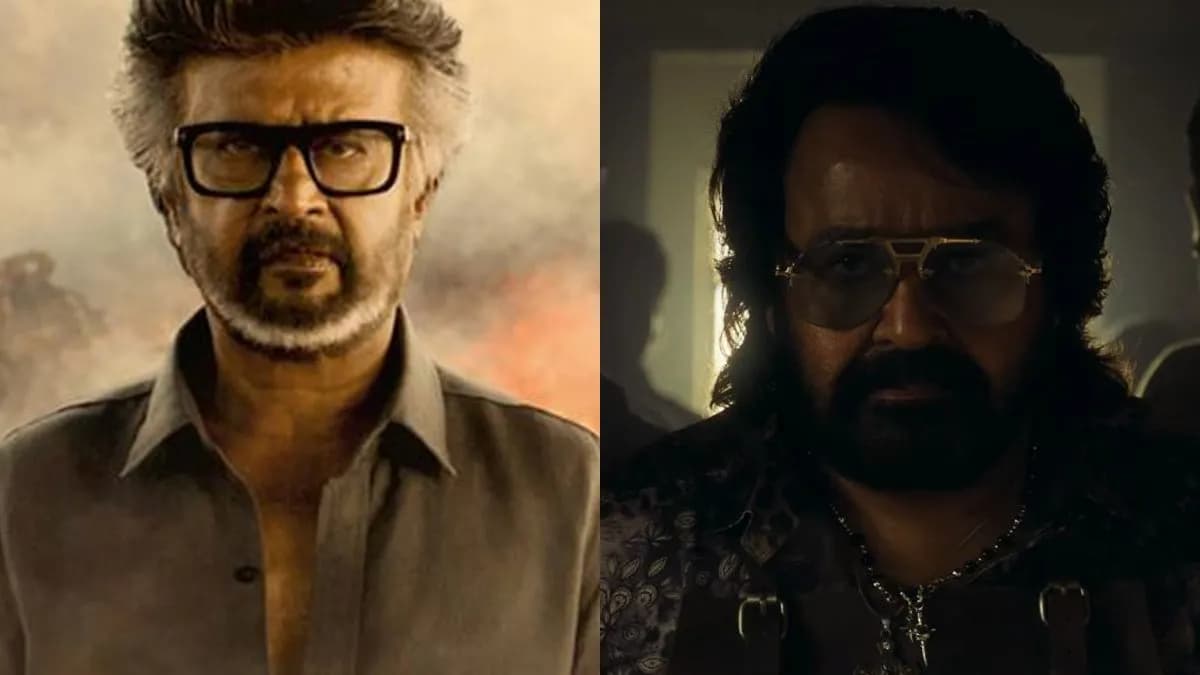
The buzz around what is being described as a record-shattering opening day has once again put the spotlight on the economics of superstar cinema, with early trade chatter suggesting a first-day figure in the region of 125 crore. That number, if it holds, would place the project in rarefied company - but the more interesting conversation doing the rounds in industry circles is not about the collection itself. It is about where that money ultimately travels, and how the two biggest names associated with the conversation, Rajinikanth and Mohanlal, figure in the arithmetic.
For now, the one thing that can be stated with certainty is that Rajinikanth is at the centre of the story. Beyond that, details remain in the realm of speculation, and this publication is not in a position to confirm a cast list, a release date, a runtime, or any officially audited box-office figure. What can be examined is the broader pattern that the headline gestures towards: the growing weight of star remuneration in the budgets of large-scale Indian films, and the way two veterans of south Indian cinema are positioned very differently within that economy.
Why the 125 Crore Talk Matters
Opening-day numbers in Indian cinema have become a genre of their own. Trade analysts track them the way financial journalists track quarterly earnings, with morning shows, evening updates and midnight revisions. A 125 crore first day is no longer unthinkable for a event-scale release, particularly one headlined by a star whose fan base spans multiple states and generations. Yet the leap from a headline figure to actual profitability is rarely a straight line. Theatre rentals, distributor shares, GST and the split between the producer and the exhibitor mean that a spectacular opening does not automatically translate into a spectacular return for the people who bankrolled the film.
That is precisely why the salary conversation refuses to die down. When a star commands a significant slice of the budget before a single frame is shot, the risk profile of the entire project changes. Marketing spends balloon. Post-production timelines stretch. And the pressure on the opening weekend becomes almost existential.
The Rajinikanth Phenomenon
Rajinikanth's commercial standing has been dissected for over four decades, and it remains a subject of genuine fascination. He is among the very few actors in the country whose name alone can move a project from speculative to greenlit. Producers have historically been willing to structure deals around him - sometimes with upfront fees, sometimes with back-end participation, occasionally with a combination of both.
What makes his case unusual is longevity. Very few stars sustain this level of opening-day pull across five decades, and fewer still do it while working at a pace that is, by his own admission, carefully managed. Any discussion of him "raking in" a salary has to be understood in that context: the fee reflects not just his acting time but the risk he absorbs on behalf of everyone downstream. Whether that premium is proportionate is a debate the industry has every few years, and it rarely reaches a tidy conclusion.
Mohanlal and the Question of Space
The second half of the headline is more provocative. The suggestion that Mohanlal has "no space" but still commands a substantial payday points to something subtler than a simple comparison of bank balances. Mohanlal's career has been defined by range rather than scale - a willingness to disappear into character roles, to work with directors who prioritise craft over spectacle, and to keep a punishing schedule across multiple industries.
If there is a perceived lack of "space" for him in the current market, it is less about his standing and more about the kind of films that dominate opening-day records. The event film, the pan-Indian spectacle, the franchise tentpole - these are formats that reward a particular kind of star presence. Mohanlal's strength has historically lain elsewhere, in narrative-driven cinema and in collaborations that build slowly rather than explode on day one. That he continues to command a formidable fee despite this structural mismatch is, in its own way, a testament to his value.
The Wider Salary Economy
It would be a mistake to read this as a two-man story. The remuneration question touches every tier of the industry. Character actors, technicians and writers have watched their share of budgets shrink even as top-line star fees have climbed. Several producers have begun experimenting with profit-sharing models, deferred payments and equity arrangements, hoping to align incentives more closely.
None of this is unique to any one language or region. It is a structural feature of star-driven cinema everywhere. But in the south Indian context, where fan culture carries enormous emotional weight and where a single opening weekend can determine a film's fate, the stakes feel amplified.
What remains unclear is whether the 125 crore figure being discussed will be substantiated, and whether the salary comparisons being drawn will survive scrutiny once official numbers emerge. Until then, the conversation is best treated as what it is: an industry talking about itself, using its two most enduring symbols as reference points. Rajinikanth's name guarantees attention. Mohanlal's name guarantees debate. Between the two, the business of cinema keeps its own counsel.
Source: Filmibeat Malayalam