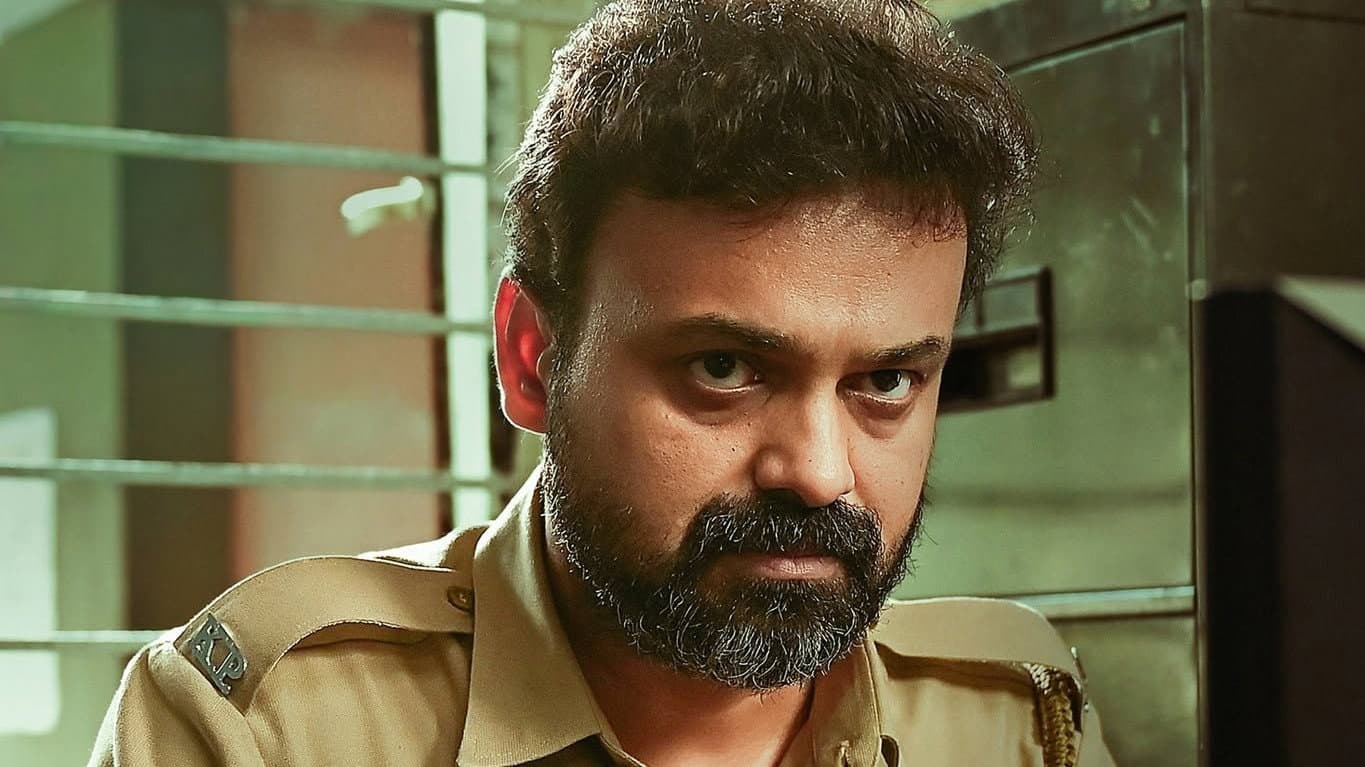
The opening image of Kiran Das’s Unmadham is deceptively simple: a police constable, CPO Shelly K, staring at a filing cabinet that has gathered dust like sediment. The year is 2026, and the case inside is older than his service record. But the film, which hit Mollywood screens on July 31, is not a procedural drama in any conventional sense. It is a slow-burn descent into psychological murk, a thriller that trades gunfights for goosebumps and car chases for quiet, creeping dread.
Kunchacko Boban plays Shelly, a constable whose unremarkable posture suggests a man comfortable with the margins of the force. He is not a hotshot detective or a brooding anti-hero. He is, initially, a uniform. The film’s first act spends deliberate time establishing the mundane rhythms of station life - the lukewarm tea, the banter, the clock-watching. Then, a stray remark about a “long-forgotten case” snags Shelly’s attention. Why him? Why now? Das, working from a lean screenplay, refuses easy answers. Instead, he lets Shelly pull a single thread, and the entire fabric of his reality begins to unravel.
What follows is less an investigation than an infection. Shelly’s reopening of the file - a missing person’s report from years ago, involving a woman and a house that no longer appears on any map - slowly bleeds into his off-duty hours. The film’s unsettling power comes from its visual grammar. Das and cinematographer (credited simply as “the lens team”) favor long, static takes where the shadows seem to breathe. Doors creak on their own. A reflection in a window lags a half-second behind its subject. These are not jump-scare tactics; they are atmospheric pollutants, and they get under your skin.
The supporting cast elevates the material from genre exercise to character study. Lijomol Jose, as a woman who claims to have known the missing person, delivers a performance of coiled anxiety; her eyes carry the weight of someone who has seen the thing Shelly is only beginning to glimpse. Raina Radhakrishnan appears in a role that oscillates between witness and warning, her composed demeanor cracking at precisely the wrong moments. Veteran Siddique lends gravitas as a senior officer who advises Shelly to drop the case, his warning delivered in a tone so placid it feels like a threat. Kottayam Nazeer, often a comic presence in Malayalam cinema, is repurposed here as a man whose joviality hides a terrible knowledge. The ensemble works as a chorus of misinformation, each character a potential key or a potential lock.
At 141 minutes, Unmadham asks for patience, and it rewards it unevenly. The TMDb rating of 6.5/10 feels honest: this is not a crowd-pleaser engineered for whistles. The middle section, in particular, risks testing the viewer’s attention, as Shelly’s investigations loop back on themselves, visiting the same locations with diminishing returns. But this repetition is intentional. The film wants you to feel the obsessive fog that descends on its protagonist. The world becomes smaller, maddeningly so, until every mundane detail - a flower pot, a chalk mark, a child’s drawing - pulses with sinister significance.
What makes Unmadham distinct within the current Mollywood thriller boom is its restraint. There is no dramatic score hammering you over the head; the sound design is spare, favoring silence and ambient hum. Kiran Das, whose previous work hinted at a fondness for the uncanny, directs with a confidence that suggests he knows exactly what he is doing, even when the narrative veers into hallucinatory territory. The final act abandons the pretense of a police investigation altogether, plunging Shelly - and us - into a subjective nightmare where identity and memory are negotiable.
Is it a masterpiece? No. Some viewers will leave frustrated, arguing that the ambiguity is a cop-out. But for those who surrender to its wavelength, Unmadham offers a rare thing in mainstream cinema: a thriller that genuinely disturbs the sleep, not because of gore, but because of implication. Boban, shedding his everyman charm, plays Shelly as a man slowly dissolving into his own obsession. By the closing shot - a freeze-frame of his face, half-lit, eyes hollow - you understand why the case was forgotten in the first place. Some files are sealed not because they are closed, but because they are cursed.
As of late August, the film continues to find its audience on streaming platforms and select theaters, where word-of-mouth is doing the work that conventional marketing cannot. For Malayalam cinema, Unmadham is a reminder that the industry’s biggest risks often don’t look like risks on paper. They look like a constable, a file, and a question that refuses to stay buried. The answer, when it comes, is not the one you expect. It’s worse.